
Agnico-Eagle unveils investment decision for Nunavut gold mine
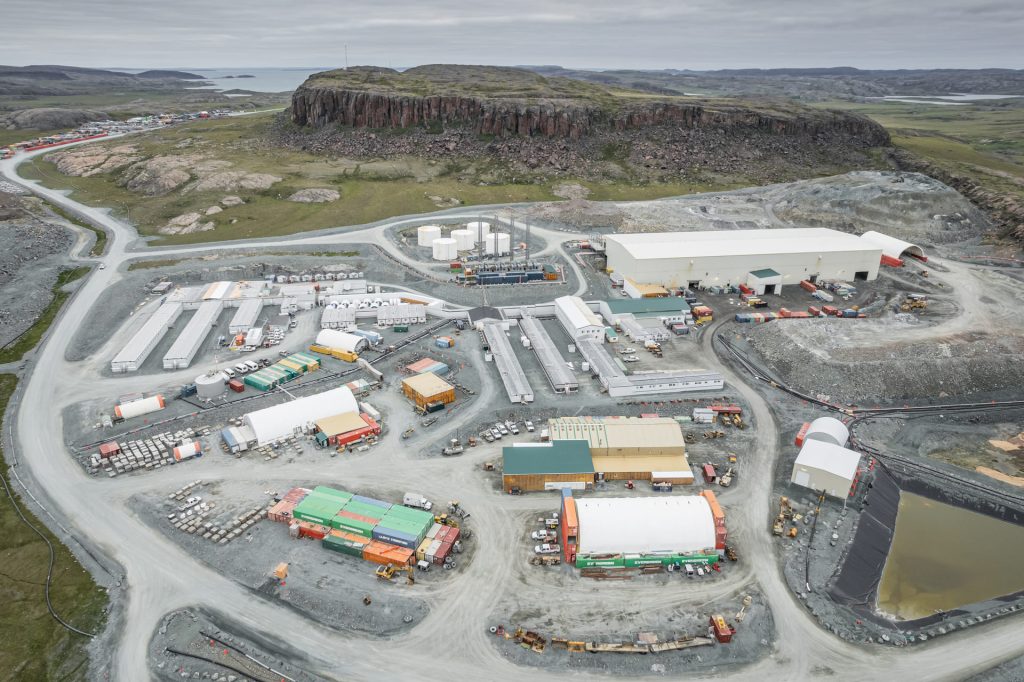
Agnico-Eagle Mines Ltd. [AEM-TSX, AEM-NYSE] has announced a positive investment decision for the Hope Bay project in Nunavut, where production is expected to begin as early as 2030. Following significant exploration success in recent years, the company has completed a preliminary economic assessment (PEA), which contemplates an underground mining operation supported by a 6,000 tonnes per day processing facility with estimated annual gold production of between 400,000 and 435,000 ounces over an initial mine life of 11 years. However, the company said it sees substantial upside potential from regional exploration across the highly-prospective greenstone belt, extending south from the Doris mine to the Boston deposit, where the company continues to pursue an aggressive exploration program.
“With expected annual production of over 400,000 ounces and total cash costs below US$1,000 per ounce, based on only half the declared mineral resource drilled, Hope Bay has the potential to evolve into a long-life, district-scale mining camp for decades to come,’’ said Ammar Al-Joundi, Agnico’s President and CEO. “The construction and redevelopment of Hope Bay will support the long-term sustainability of our Nunavut operating platform at between 800,000 ounces and one million ounces of annual gold production and represents the first major milestone toward delivering our targeted 20% to 30% production growth over the next decade.”
On Tuesday, Agnico-Eagle shares eased 6.2% or $16.44 to $247.83. The shares trade in a 52-week range of $348.94 and $144.21.
The PEA is based on a large and high quality mineral resource base of 5.79 million ounces ( 31.97 million tonnes of grade 5.63 g/t gold) in the measured and indicated category, and 3.33 million ounces of gold (17.33 million tonnes of grade 5.97 g/t gold) in the inferred category.
The startup plan contemplates three mining fronts (Doris at the Doris deposit; and Madrid and Patch 7 at the Madrid deposit).
Initial development capital expenditures are estimated at approximately $2.4 billion, including reconstruction of the processing facility, addition of 37 megawatt diesel generator power plant, mobile equipment, upgrades to the tailings facility and approximately 33 kilometres of underground development, positioning the project for multi-decade potential.
Agnico said the cost structure is below the company’s current peer-leading cost profile, with projected average total cash costs per ounce and all-in-sustaining costs (AISC) per ounce of approximately US$958 and US$1,214, respectively, using current gold prices of US$4,500 per ounce and a C$/US$ exchange rate of 1.36.
The Hope Bay project is located in the Kitikmeot region of western Nunavut, approximately 125 kilometres southwest of Cambridge Bay and east of the Bathurst Inlet, about 160 kilometres north of the Arctic Circle. The project covers a land package of around 1,951 square kilometres. The project hosts the Doris, Madrid, and Boston deposits, which contain orogenic-style gold mineralization associated with major deformation zones within the Hope Bay Greenstone Belt.
Resource World Magazine Inc. has prepared this editorial for general information purposes only and should not be considered a solicitation to buy or sell securities in the companies discussed herein. The information provided has been derived from sources believed to be reliable but cannot be guaranteed. This editorial does not take into account the readers investment criteria, investment expertise, financial condition, or financial goals of individual recipients and other concerns such as jurisdictional and/or legal restrictions that may exist for certain persons. Recipients should rely on their own due diligence and seek their own professional advice before investing.