
West Point Gold extends Tyro Gold Zone at Gold Chain Project, Arizona
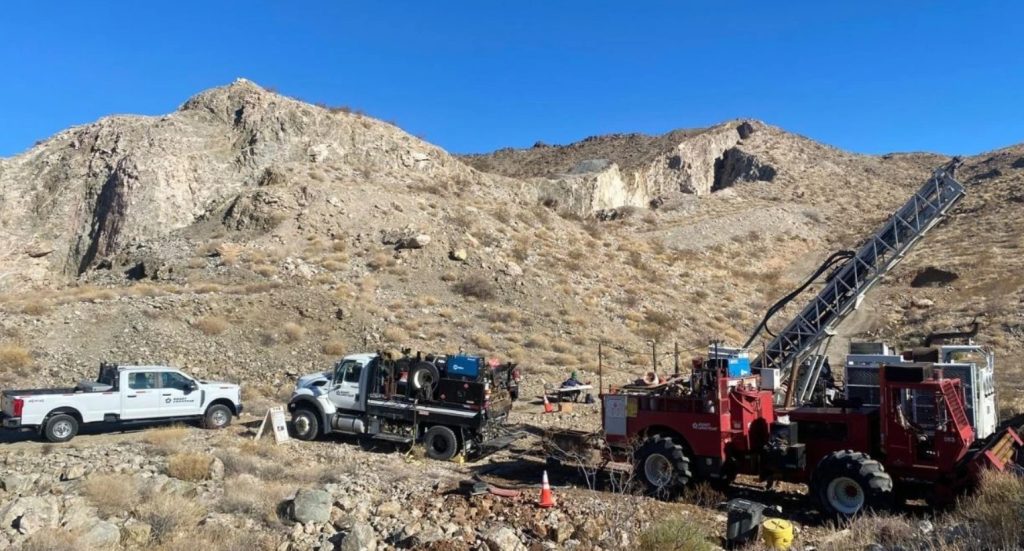
West Point Gold Corp. [TSXV: WPG; OTCQX: WPGCF; FSE: LRA0] reported results from five drill holes within the high-grade Northeast (NE) Tyro Zone at its flagship Gold Chain Project, Arizona. Hole GC26-169 was a reverse circulation (RC) hole that intersected 51.9 metres of 2.5 g/t gold from 276 metres, including 21.4 metres at 4.72 g/t. This intercept has an estimated true width of 38 metres. These holes continue to extend the zone at NE Tyro down-dip where it remains open to depth and to the northeast towards the prospective Frisco Graben target.
The company is reporting assay results for five drill holes (1,542m), GC26-142, GC26-157, GC26-159, GC26-165 and GC26-169. Results from 14 holes representing 4,378 metres of the recently completed 21,079-metre program are still pending. All results from Tyro Main and NE Tyro are expected to contribute to the company’s upcoming maiden resource estimate to be released later in 2026.
Highlights: Hole GC26-169 (Line 1100) intersected 51.9 metres at 2.5 g/t Au, including 21.4 metres at 4.72 g/t Au beginning approximately 300 metres below surface.
Hole GC26-157 (Line 1050) cut 32.0 metres at 3.4 g/t Au about 60 metres below GC25-085 (29m at 5.24 g/t Au).
Hole GC26-159 (Line 1200) intersected 36.5 metres at 2.79 g/t Au, including 9.1 metres at 6.46 g/t Au within the NE Tyro vein at about 350 metres below surface.
Results from all three sections (L1050, L1100 and L1200) metres below the surface. NE Tyro remains open to depth and to the northeast towards the Frisco Graben.
“Drilling at NE Tyro continues to demonstrate consistent grades and widths. This set of results also confirms consistent mineralization in multiple sections and bodes well for the pending maiden resource. As we move towards the Frisco Graben, we have been able to define the gold zone in areas with little to no surface expression. Drilling continues to validate the depth potential in this area, as we have demonstrated gold mineralization vertically over 300 metres at NE Tyro, supporting our view that NE Tyro remains open at depth. We remain on track to deliver the maiden resource at Tyro later this year,” stated Derek Macpherson, President and CEO.
Line 1050 (GC26-157): Section L1050 reveals that the NE Tyro vein system is not exposed at the surface and is considered to be ‘blind’. Holes GC25-045 and GC25-046 confirmed this and identified vein-related alteration but without quartz vein and associated gold values. The exposure of the gold zone at the surface a short distance to the southwest (L1025) suggests a northeast-trending plunge at about 30 degrees.
Drill sections to the southwest, where gold mineralization is documented in surface exposures, i.e. Lines 875 to 1025, reveal robust gold deposition up to 300 metres vertically (down-dip) that remains open to depth. Sections to the northeast of Line 1050 show the top of the ‘gold zone’, which begins below the surface; this zone of gold deposition continues deeper as exploration proceeds to the northeast.
Hole GC26-157 intersected 32.0 metres at 3.4 g/t Au from 253 to 285 metres and contained 9.1 metres at 7.85 g/t Au, including a thick zone of vein and hydrothermal breccia (>50% vein). The elevation of this intercept is about 620 metres ASL and about 175 metres below the ‘top’ of the vein system and 230 metres below surface.
Line 1100 (GC26-142, GC26-165 and GC26-169):
Section L1100 contains Holes GC26-165, GC26-142 and GC26-169. These holes were designed to test the vein zone both above and below Holes GC25-088 and GC26-091, where drilling revealed 44.2 metres at 5.46 g/t Au and 21.3 metres at 13.48 g/t Au, respectively. Hole GC26-142 crossed the vein system about 40 metres below Hole GC25-088 and intersected 23.6 metres at 1.51 g/t Au.
The upper hole, GC26-165 (core), drilled to identify the upper limit of the vein system, identified several metres of quartz veinlets and local breccia with anomalous, low-level gold values. Alteration of the Precambrian granite across this zone consisted of moderate to strong illite-pyrite alteration replacing chlorite in the propylitic selvage. This hole better defines the upper limit of gold mineralization.
Hole GC26-169 crossed the vein system about 60m below Hole GC26-142 and encountered 51.9 metres at 2.5 g/t Au from 275.8 to 327.7 metres; this envelope contained 21.4 metres at 4.72 g/t Au in mostly quartz stockwork and breccia. Relative to Hole GC26-142, the mineralized package appears to be widening at depth and remains open below the 550 metres ASL elevation or about 150 metres below the upper extent of the vein package and about 300 metres below surface.
Line 1200 (GC26-159): Hole GC26-159 was designed to test the down-dip extension of gold mineralization intersected in Holes GC26-140, GC26-145, GC26-147 and GC26-151. Section L1200 reveals an interpretation showing the top of the vein model at an elevation of about 725 metres ASL, about 125 metres below surface, which is consistent with sections to the southwest.
The uppermost hole on this section, GC26-140, intersected 18.3 metres at 6.05 g/t Au (True Width = 15 metres) while GC26-145, about 60 metres down-dip, cut 28.9 metres at 1.22 g/t Au (TW ~ 16m). Hole GC26-159, about 100 metres deeper, traversed 36.6 metres (TW ~ 17m) at 2.79 g/t Au, containing 9.14 metres at 6.46 g/t Au. The vein here appears to be steeper than observed in sections to the southwest. This intercept is about 150m below the top of the vein envelope and well above vein depths observed to the south; the vein system remains open.
West Point Gold is an exploration and development company focused on four projects along the Walker Lane Trend in Nevada and Arizona. The company’s near-term priority is advancing its flagship Gold Chain Project in Arizona.
Resource World Magazine Inc. has prepared this editorial for general information purposes only and should not be considered a solicitation to buy or sell securities in the companies discussed herein. The information provided has been derived from sources believed to be reliable but cannot be guaranteed. This editorial does not take into account the readers investment criteria, investment expertise, financial condition, or financial goals of individual recipients and other concerns such as jurisdictional and/or legal restrictions that may exist for certain persons. Recipients should rely on their own due diligence and seek their own professional advice before investing.