
Vault Strategic Mining samples 1,100 ppm tungsten at War Bond Project, Nevada
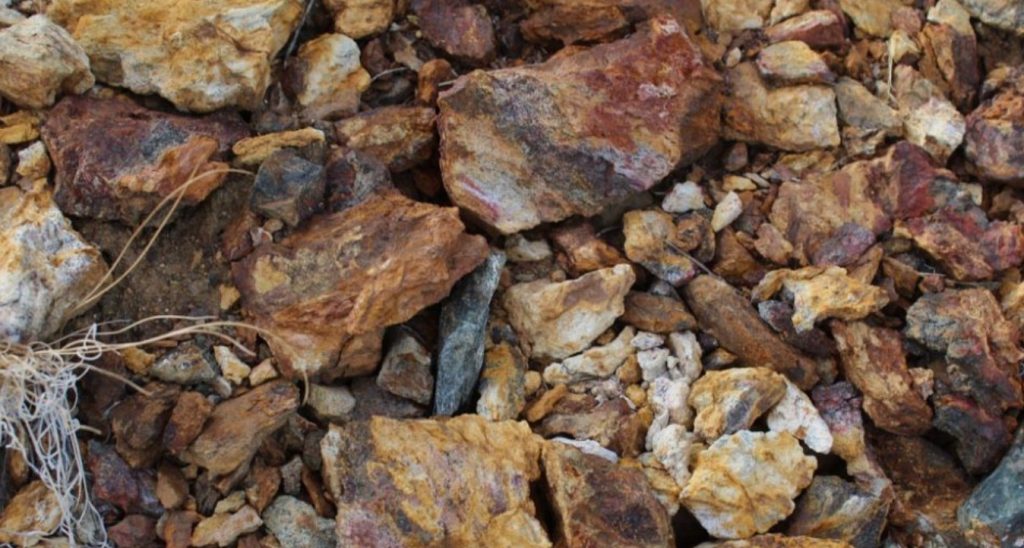
Vault Strategic Mining Corp. [TSXV: KNOX; OTC: KNXFF; FSE: M850; WKN: A41WE4] reported assay results from 42 rock and soil samples collected during phase 1 exploration program have returned widespread anomalous tungsten values across the War Bond tungsten project, Nevada, including rock results of up to 1,100 parts per million tungsten and manganese values of up to 4,430 parts per million. The results support an emerging, structurally controlled tungsten-skarn model across the project, which encompasses the historical War Bond, Tactite and Thursday tungsten mine areas in western Nevada.
Nevada was ranked the world’s top mining jurisdiction in the Fraser Institute’s Annual Survey of Mining Companies, released on February 26, 2026.
A total of 42 samples, comprising 30 rock-chip samples and 12 soil samples, were collected from six field areas and submitted to ALS Geochemistry in Reno, Nevada, for analysis. Results will be integrated with the company’s previously announced drone-borne magnetic survey and historical data to refine geological interpretations, prioritize follow-up mapping and sampling, support drill target generation and drill-permitting activities, and form part of the technical foundation for the company’s maiden NI 43-101 technical report being prepared by veteran geologist William (Bill) Feyerabend and Amazona Enterprises, as announced on July 15, 2026.
Quinn Field-Dyte, CEO of Vault Strategic Mining, stated: “Phase 1 has produced a very encouraging set of results across War Bond. Rock assays reached 1,100 ppm tungsten, the caved adit returned an average of 780 ppm tungsten across three samples and soils along the interpreted structural trend returning up to 187 ppm tungsten.
“Equally important, the strongest tungsten values closely correlate with garnet-bearing tactite and a consistent molybdenum-bismuth-copper-manganese pathfinder signature, giving us a clear exploration model for follow-up work. The elevated manganese values appear to form part of this broader skarn geochemical signature and will be evaluated alongside the tungsten data. By integrating these results with the drone-borne magnetic survey and historical information, we expect to refine priority targets, advance drill-permitting activities and support the maiden NI 43-101 technical report being prepared by Bill Feyerabend and Amazona Enterprises.
“We believe War Bond’s historical production, Nevada location and expanding modern data set position the project as a compelling North American tungsten opportunity at a time when secure domestic critical mineral supply is increasingly important.”
Phase 1 geochemistry highlights: Tungsten values are strongly anomalous across most sampled areas, with rock assays up to 1,100 ppm W (0.11% W), approximately three orders of magnitude above average crustal background of approximately one to two ppm W.
The caved adit returned the highest average tungsten value of the sampled zones at 780 ppm W across three rock samples, with individual results ranging from 460 to 1,050 ppm W. The Tactite East and West pits averaged 370 ppm W and 308 ppm W, respectively.
At the War Bond pit, garnet-rich tactite samples TT-16 through TT-20 returned 155 to 1,100 ppm W while nearby garnet-poor altered rocks returned 3.6 to 16 ppm W, supporting a strong relationship between skarn development and tungsten enrichment.
Soils collected along the interpreted structural and mineralized trend returned up to 187 ppm W and clearly distinguished the Tactite and War Bond areas from background-level soils elsewhere on the property, providing a practical geochemical vector for follow-up exploration.
The highest-tungsten samples contain coherent molybdenum, bismuth, copper and manganese enrichment. Elevated iron, together with manganese, also appears to be a useful indicator of proximal tungsten-skarn mineralization.
Collectively, the first-pass data support a structurally controlled tungsten-skarn system developed near diorite-granodiorite intrusive contacts with marble and metasedimentary rocks. Field observations and geochemically trace mineralization exposed intermittently through soil and aeolian sand cover for an approximately one-mile (1.6-km) north-south structural corridor. The sampled mineralization appears to occur across broader fractured and skarn-altered zones rather than being confined to a single quartz vein. Estimated exposed surface widths reach approximately 160 feet (48.8 metres) at the War Bond open cut and 100 feet (32.3 metres) at the Tactite open cut; these are field estimates and do not represent confirmed true widths or continuity.
The company further highlights the growing strategic importance of its War Bond tungsten project amid escalating geopolitical tensions, concerns surrounding global shipping routes and continued restrictions on critical mineral exports. As the United States, Canada and allied nations work to strengthen secure domestic supply chains, tungsten has emerged as an essential defence and industrial metal due to its exceptional hardness, density and heat resistance. Tungsten is classified as a critical mineral by both the United States and Canada and is used in armour-piercing ammunition and kinetic energy penetrators; missile guidance and weapons systems; aerospace and aviation components; high-performance cutting and machining tools; semiconductor manufacturing equipment and energy infrastructure and advanced industrial technologies.
Located within one of Nevada’s prolific mineral belts, the War Bond project includes the historical War Bond, Tactite and Thursday tungsten mines, each of which produced tungsten during previous periods of heightened demand. Vault is applying modern exploration techniques to evaluate the district, expand known mineralization and identify additional opportunities within the historically productive tungsten camp. With global demand supported by rising defence spending, infrastructure investment, electrification, advanced manufacturing and artificial-intelligence-related industrial expansion, the company believes War Bond is well positioned to benefit from the long-term shift toward secure North American tungsten production.
The War Bond claim package consists of 20 unpatented lode mining claims, covering approximately 400 acres, located in the Delaware mining district of western Nevada. The land package includes the historical War Bond tungsten mine and the Tactite and Thursday historical tungsten workings and historical tungsten mine area.
Available on-line historical records appear to use War Bond, Tactite, Thursday, Old Discovery and Knight claims as related or overlapping names within a broader tungsten occurrence rather than as distinct modern projects. Western Mining History’s MRDS-derived War Bond mine record identifies War Bond as a tungsten mine in Douglas County, Nevada, and lists Tactite & Thursday, Old Discovery, and Knight claims as secondary names.
A separate MRDS-derived War Bond tungsten mine record identifies Tactite & Thursday, the Old Discovery claim, the Knight claims, the Tungsten Valley claim, the Yellow Problem claim, and the Margret claim as related secondary names. That record also identifies Carson Tungsten Co. as owner, with an information year of 1952, and lists the operation category as past producer.
Historical descriptions indicate that tungsten mineralization in the area is associated with scheelite-bearing tactite or skarn developed near granite-limestone contacts. The Nevada Bureau of Mines and Geology publication Mineral Resources of Douglas, Ormsby and Washoe Counties describes the Tactite & Thursday claim as located about 15 miles southeast of Carson City in Section 9, T. 14 N., R. 21 E., and states that scheelite occurs in a small tactite area near a granite-limestone contact.
The MRDS-derived Tactite & Thursday record describes the occurrence as a tungsten skarn with scheelite as mineral and epidote, garnet, quartz and calcite as gangue minerals. The same record reports two principal mineralized areas, including a western zone with scheelite in narrow widths up to 0.3% WO3 (tungsten trioxide) and an eastern zone where scheelite is reported in small shoots with values ranging from 0.25% to 0.45% WO3 over widths of four to eight feet.
Historical assay and laboratory records in the Nevada Bureau of Mines and Geology Digital Library file titled Preliminary Examination of Tactite and Thursday Group include selected and dump sample results from 1942 and 1943. The file reports a selected sample from the upper location hole on Tactite claim No. 1 at 14.40% WO3, two additional 1942 samples reporting 0.8% WO3 and 0.9% WO3, and a 1943 University of Nevada State Analytical Mining Laboratory report describing metamorphosed rock with garnet and traces of scheelite reporting 0.35% WO3.
Historical production-related references are limited but relevant for exploration context. The War Bond mine MRDS-derived record lists production for 1953, a time period of 1952 to 1953 and a reported grade description of approximately 0.3-0.45% WO3. The Tactite & Thursday MRDS-derived record further states that a 250-ton test lot of material averaging 0.3% WO3 was mined from the Old Discovery East pit.
Collectively, these records describe a historically explored tungsten skarn system with documented scheelite-bearing tactite mineralization, surface workings, sampling, and limited historical mining or test-lot production.
The mineral properties comprising the company’s portfolio have been the subject of extensive historical exploration, development work and, in several cases, past production. The historical exploration results, sampling, drilling and other technical information referenced were completed prior to the adoption of NI 43-101 standards.
Management believes that the existence of extensive historical work and past production creates a compelling foundation for modern exploration, particularly when reassessed using contemporary geological models, exploration technologies, metallurgical processes and prevailing commodity prices.
To define current mineral resources, assess metallurgy and evaluate economic viability, the company will be required to complete confirmation drilling, modern metallurgical studies, updated technical evaluations, and NI 43-101-compliant mineral resource estimates and feasibility or economic studies.
Vault Strategic Mining is focused on the acquisition and advancement of strategic and critical mineral projects located in top-tier mining jurisdictions.