
Prospectiva Resources drills near-surface high-grade copper at São Francisco Project, Brazil
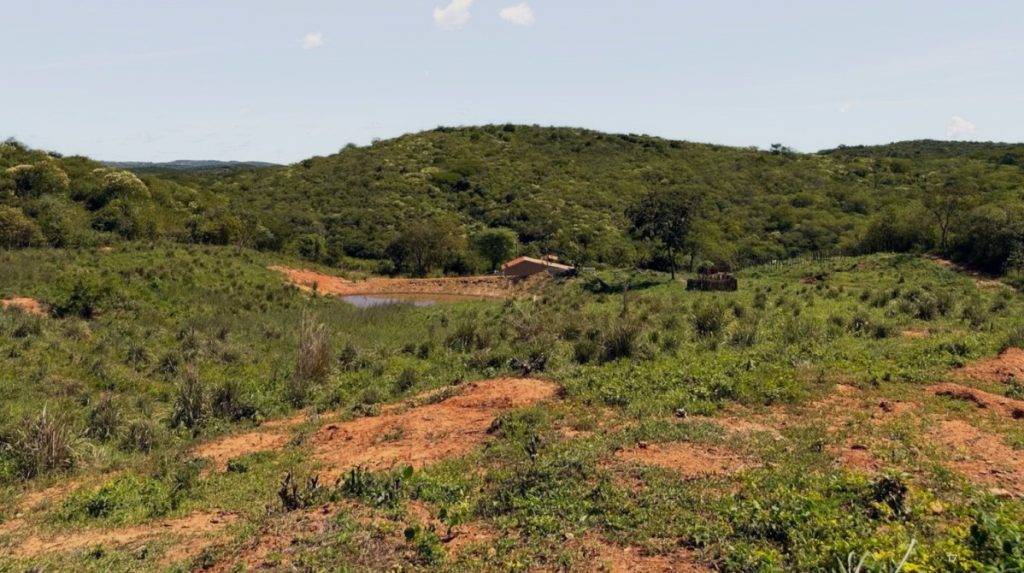
Prospectiva Resources Ltd. [TSXV: PSVA], a Brazil-focused copper and gold exploration company advancing a portfolio of 100%-owned projects in the highly-prospective but underexplored Borborema Belt, northeastern Brazil, reported initial assay results from the first three diamond drill holes of its maiden exploration program at its flagship São Francisco Copper-Gold Project in Pernambuco State.
All three holes intersected massive, semi-massive and heavy disseminated copper-bearing sulphide mineralization. These results confirm that the mineralised zone is strongly consistent with the geophysical anomalies generated by the recently completed Fixed Loop Electromagnetic (FLEM) survey.
Highlights: Key mineralized intervals from the initial three drill holes include SF_26_003 that intersected 7.15 metres at 4.78% Cu, 0.19 g/t Au and 0.65% Zn, including 3.60 metres at 9.17% Cu, 0.35 g/t Au and 1.17% Zn.
SF_26_002 intersected 2.50 metres at 3.24% Cu, 0.42 g/t Au and 0.44% Zn, including 1.50 meytres at 5.05% Cu, 0.69 g/t Au and 0.68% Zn.
SF_26_001 intersected 4.00 m at 1.93% Cu, 0.23 g/t Au and 0.38% Zn, including 1.10 metres at 6.03% Cu, 0.30 g/t Au and 0.68% Zn.
These initial results indicate that the high-grade near-surface copper mineralization continues from the surface “discovery outcrop”, to these current drill holes located approximately 600 metres to the east, along the interpreted down-plunge trend.
Drilling is ongoing with two drill rigs now active on site as the Company works towards completing this initial 10-hole drilling program.
Dan James, CEO of Prospectiva, said, “The first three holes of our maiden drill program at São Francisco have returned very strong results with all three intersecting high-grade copper mineralization at shallow depths. These intersections, when combined with the historical drilling results, suggests good continuity of high-grade, near-surface mineralization. The results also include encouraging associated gold and zinc grades. Our recent structural mapping and geophysical surveys have been key to defining drill targets, with drilling consistently intersecting mineralization at the target horizons.
Our new geological work also suggests that we are seeing a stratabound system, interpreted to be VMS-style. These systems typically occur as clusters, raising the potential for further zones of mineralization within the same geological setting.
We now have two drill rigs active on the project and we are systematically drilling eastwards to extend the zone of known mineralization at SF1. In parallel, our field team is undertaking further ground geophysics on targets around SF1. We look forward to reporting further drill results as we progress to the completion of the Phase 1 drill program”.
To date, Prospectiva has completed six planned diamond drill holes (SF_26_001 to SF_26_006). Assay results have been received for the first three holes, with results from the remaining completed holes pending. The fully funded program is on-going, now with two drill rigs on site, and is expected to complete in mid-Q4 2026.
Drilling is progressing eastwards along the interpreted down-plunge extension of the mineralized system, as guided by historical exploration work, a new structural model, FLEM and Downhole Electromagnetic (DHEM) surveys all completed by Prospectiva over the last 6 months.
Prospectiva has completed a detailed geological and structural review of the São Francisco mineralized system, incorporating historical drill-core relogging, field mapping, structural measurements and geophysical interpretation. The review, undertaken with specialist geological consultants, has refined the company’s three-dimensional geological model and is guiding the ongoing drilling program.
The São Francisco mineralization comprises massive to semi-massive pyrrhotite–chalcopyrite hosted within a deformed sequence of metamorphosed schists and gneisses. The stratabound sulphide mineralization is interpreted to have undergone significant deformation and local remobilization, forming broad and elongated mineralised horizons parallel to fold axes, which is likely hosted within fold hinges. Historical drilling and structural measurements suggest that the mineralized system is associated with a gently east-plunging structural trend of approximately 5–15°. This interpretation provides a framework for targeting potential extensions of known mineralization.
The current program is designed to test down-plunge extensions of the mineralization, gaps between historical drill intersections and new geophysical targets identified through FLEM and DHEM surveys.
The first three drill holes intersected massive to semi-massive copper-bearing sulphides at depths broadly consistent with the revised geological interpretation (between 60 and 95m depth). These results provide strong support for the structural model, while further drilling is required to establish continuity for resource definition.
The principal sulphide-bearing horizon is interpreted to represent a structurally modified, potentially remobilized VMS-style mineralizing system, hosted within an approximately 60-metre thick prospective schist package. This provides a geological framework for tracing favourable stratigraphy along strike and down plunge. Prospectiva’s structural review has identified the potential for additional sulphide mineralization beyond the currently drilled areas, including prospective positions around the interpreted fold hinge and elsewhere within the broader stratigraphic sequence
Prospectiva intends to continue integrating geological mapping, structural interpretation, geochemical sampling and electromagnetic surveys to evaluate these opportunities while advancing drilling along the established São Francisco mineralized trend.
Resource World Magazine Inc. has prepared this editorial for general information purposes only and should not be considered a solicitation to buy or sell securities in the companies discussed herein. The information provided has been derived from sources believed to be reliable but cannot be guaranteed. This editorial does not take into account the readers investment criteria, investment expertise, financial condition, or financial goals of individual recipients and other concerns such as jurisdictional and/or legal restrictions that may exist for certain persons. Recipients should rely on their own due diligence and seek their own professional advice before investing.