
American Lithium expands Macusani Uranium resource, Peru
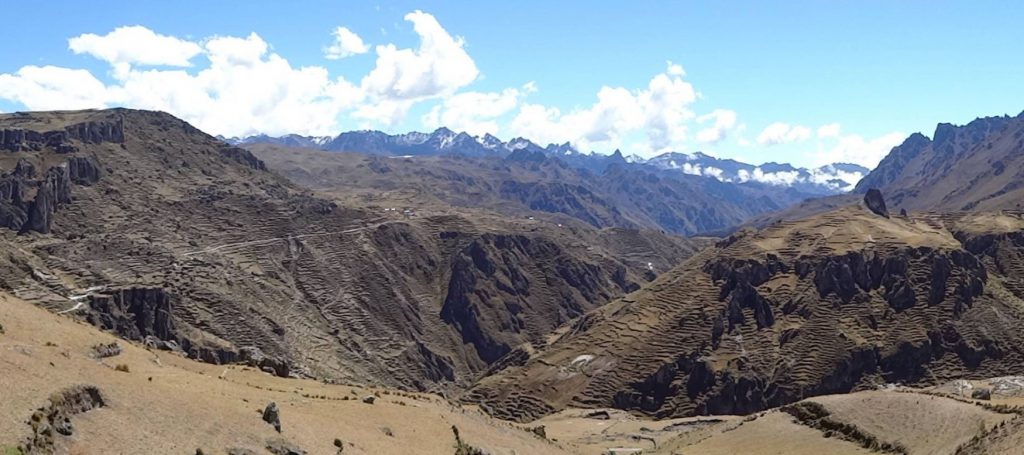
American Lithium Corp. [TSX-V: LI; OTCQX: AMLIF; FSE: 5LA1] posted an updated Mineral Resource Estimate (MRE) for the Macusani Uranium Project, located in southeastern Peru. The updated resource estimate, with a larger share of the resource now classified as Measured and Indicated, positions Macusani as the largest known, undeveloped uranium project in South America.
The updated Macusani Project MRE is as follows: Measured: 10.482 million tonnes (Mt) at 179 parts per million (ppm) U3O8 totaling 4.13 million pounds (Mlbs) U3O8. Indicated: 111.426 Mt at 216 ppm U3O8 totaling 53.03 Mlbs U3O8. Inferred: 114.873 Mt at 258 ppm U3O8 totaling 65.32 Mlbs U3O8.
Macusani benefits from near surface uranium mineralization, favourable historical metallurgical results, including rapid leach times and low acid consumption, and established regional infrastructure. Combined with community support and exploration upside, these characteristics support the Project’s potential to become a competitive, low-cost uranium producer.
“The updated Macusani Mineral Resource Estimate represents another important step forward for the Project and reinforces our confidence in its long-term potential,” stated Alex Tsakumis, CEO. “With more than 40 undrilled uranium surface occurrences across the project area, we see significant opportunity for Macusani to grow, particularly with the dedicated focus it deserves. It remains the Company’s intention to transition Macusani into a stand-alone uranium-focused company. With the world entering what many believe to be a nuclear renaissance, we look forward to participating in this exciting period as we continue to advance Macusani,” he added.
With the updated MRE complete, work on an updated Preliminary Economic Assessment (PEA) is well underway, incorporating current uranium pricing and development costs. The company also plans to advance expansion and infill drilling, metallurgical piloting and ultimately a Pre Feasibility Study (PFS). These next steps will further evaluate Macusani’s economic potential and establish a clearer pathway toward future development.
The updated MRE has been established using conservative parameters for demonstrating reasonable prospects for eventual economic extraction (RPEEE). Current Peruvian mining costs, updated processing cost estimates combined with a long-term uranium selling price of US$100/lb U3O8 result in an open pit-constrained cut-off of approximately 47 ppm Uranium (U) and an underground mining block constrained cut-off of approximately 111 ppm U. The historical MRE used a global 75 ppm U cut-off, costs established in 2015 along with a US$50/lb U3O8 selling price assumption.
The revised resource estimate also reflects changes to Mineral Resource reporting practices introduced in 2020, several years after the previous MRE was completed in 2015. These changes include the application of stricter pit and stope constrained resource reporting, with differences between the historical and updated resource estimates reflecting updated reporting requirements and economic constraints rather than changes to the underlying geological model.
The updated MRE was completed by the Deloitte Consulting (Pty) Ltd., Qualified Person (QP) based in Johannesburg, South Africa, in accordance with the latest NI NI 43-101 standards.
The previous Macusani MRE, prepared by The Mineral Corporation (TMC), was last included in the NI 43-101 Preliminary Economic Assessment (PEA) report dated March 2015.
Deloitte updated the MRE effective July 01, 2026. The QP had previously contributed to the development of the MRE while employed by TMC and has conducted multiple site visits to the Macusani uranium deposits, most recently in March 2025.
The MRE used a total of 1,152 diamond drillholes completed across the Project, comprising 114,576 metres (m) of drilling. Sampling intervals varied to preserve the integrity of higher-grade mineralized zones. All assay data were vertically composited into 1.5 metres bench composites, which formed the basis of the estimation process.
Geological interpretation and block modelling were undertaken using Datamine® software. Mineral Resources were estimated using Multiple Indicator Kriging (MIK) for two mineralized domains (Zones A and B), which are oriented sub-parallel to the basal mineralization surface. Dynamic anisotropy was applied to permit the rotation of search ellipsoids and variogram models on a cell-by-cell basis, thereby reflecting the gently dipping geometry of uranium mineralization.
The block models were constructed using parent cell dimensions of 50 m × 50 m × 3 m in well-informed areas and 100 m × 100 m × 3 m in less informed areas, accommodating both potential open-pit and underground mining scenarios.
The selected estimation approach appropriately reflects the highly skewed uranium grade distribution and the interpreted geometry of the mineralized horizons. Tonnage estimates were derived using measured bulk density data. Mineral Resource classification was based on a combination of geostatistical parameters, including kriging efficiency, geological confidence, drillhole spacing, and quality assurance and quality control (QAQC) considerations.
As part of the update, the QP reviewed and validated the existing models through statistical analyses, visual validation, and swath plot assessments. The QP also reassessed the classification criteria to incorporate drillhole spacing, geological continuity, estimation confidence, and practical mining considerations. The updated MRE was subsequently constrained within conceptual open-pit shells and, where applicable, evaluated for underground extraction potential. RPEEE was demonstrated using assumptions relating to long-term uranium price (US$100/lb), mining and processing costs, metallurgical recovery, pit slope parameters, and appropriate cut-off grades (~47 ppm U for open pit and ~111 ppm U for underground).
American Lithium is developing two of the world’s largest, advanced-stage lithium projects, along with the largest undeveloped uranium project in Latin America. They include the TLC claystone lithium project in Nevada and the Falchani hard-rock lithium project in southern Peru, which also hosts a globally significant cesium resource, as well as the Macusani uranium project located in the same region.
All three projects have completed robust preliminary economic assessments, exhibit significant expansion potential and enjoy strong community support.