
Dryden Gold identifies broad mineralized gold system, Ontario
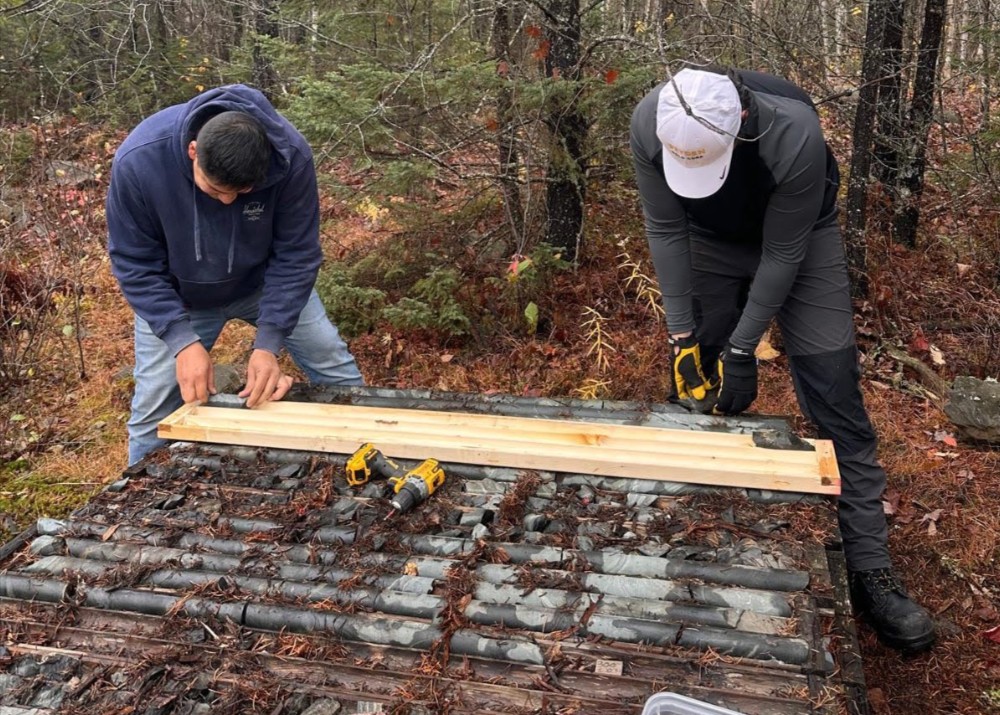
Dryden Gold Corp. [TSXV: DRY; OTCQB: DRYGF; FSE: X7W] reported drill results from its initial three-hole, first pass exploration program at the Sherridon Project in the Dryden Gold District, northern Ontario. Using the company’s revised structural interpretations and complete assaying, drilling intersected several broad zones of anomalous gold mineralization.
Sherridon is located approximately 35 km south of the Gold Rock Camp and represents the second regional discovery in the 2025 exploration program. The broad zones of gold mineralization are hosted within an east-west trending deformation corridor with an approximately 5-km geophysical anomaly. This corridor is a different style of mineralization than seen in the Gold Rock camp with a large anomalous gold zones representing a lower-grade bulk-tonnage target. The first pass drilling tested only 350 metres, along strike, of the 5-km geophysical anomaly.
The company is also pleased to announce that it has purchased two of the net-smelter return royalties (NSRs) covering certain claims currently being explored at Sherridon.
Drill Highlights: DSH-25-001 intersected 1.28 g/t gold over 19.00 metres including 2.55 g/t gold over 9.00 metres and including 36.40 g/t gold over 0.50 metres in a wide mineralized structure (Zone 4).
DSH-25-001 intersected 0.40 g/t gold over 39.00 meters, including 1.82 g/t gold over 7.00 metres in a second broad mineralized structure (Zone 3).
A very extensive zone of anomalous gold mineralization of up to 136 metres was intersected in all three holes (Zone 1).
Trey Wasser, CEO of Dryden Gold, stated, “I am very excited to see our two-pronged exploration strategy being validated once again. While we remain laser-focused on expanding the mineralized footprint at Gold Rock, our regional efforts at Sherridon and Hyndman are beginning to prove the district-scale potential of Dryden Gold’s large strategic land package.
These new gold assays indicate broad zones of mineralization with a different alteration style than we see at Gold Rock or Hyndman. The geology team is excited about the potential for a completely different deposit model with potential bulk-tonnage scale at Sherridon. I am also pleased to have closed the transaction to buy the royalties on Sherridon. Purchasing royalties, at attractive prices, increases both property and shareholder value.”
Dryden Gold’s geology team has begun resampling historical core drilled adjacent to the new drill holes as historical assays are incomplete to identify these broader zones of mineralization. The resampling program is expected to further define these zones. The company is also awaiting further geochemical results from these three initial holes at Sherridon, which will further aid in understanding this deposit model and unveil potential sources of gold bearing fluids.
Multi-element geochemistry is anticipated to provide the ability to target potential higher-grade sections within the zone by modelling the distribution of more consistently anomalous elements such as arsenic or tellurium. In addition, the geochemical results will determine if there are other elements of interest due to the potential variety of fluid/metal sources and potential remobilization.
On October 3, 2025, the company closed a transaction whereby it purchased, or otherwise cancelled, two 2% NSRs from two private individuals. The total purchase price was CAN$20,000 in cash. The NSRs covered certain claims at Sherridon that were purchased from Manitou Gold (a wholly owned subsidiary of Alamos Gold Inc. [NYSE: AGI] in March 2025. The remaining royalty on these claims is 1% payable to Alamos Gold of which one-half (0.05%) can be bought down for CAN$500,000. All other mining
Dryden Gold controls a 100% interest in a dominant strategic land position in the Dryden Gold District of Northwestern Ontario. Dryden Gold’s property package includes historic gold mines but has seen limited modern exploration. The property hosts high-grade gold mineralization over 50km of potential strike length along the Manitou-Dinorwic deformation zone. The property has excellent infrastructure, enjoys collaborative relationships with First Nations communities and benefits from proximity to an experienced mining workforce.