
Quartz Mountain conducts geophysical survey at Maestro Project, British Columbia
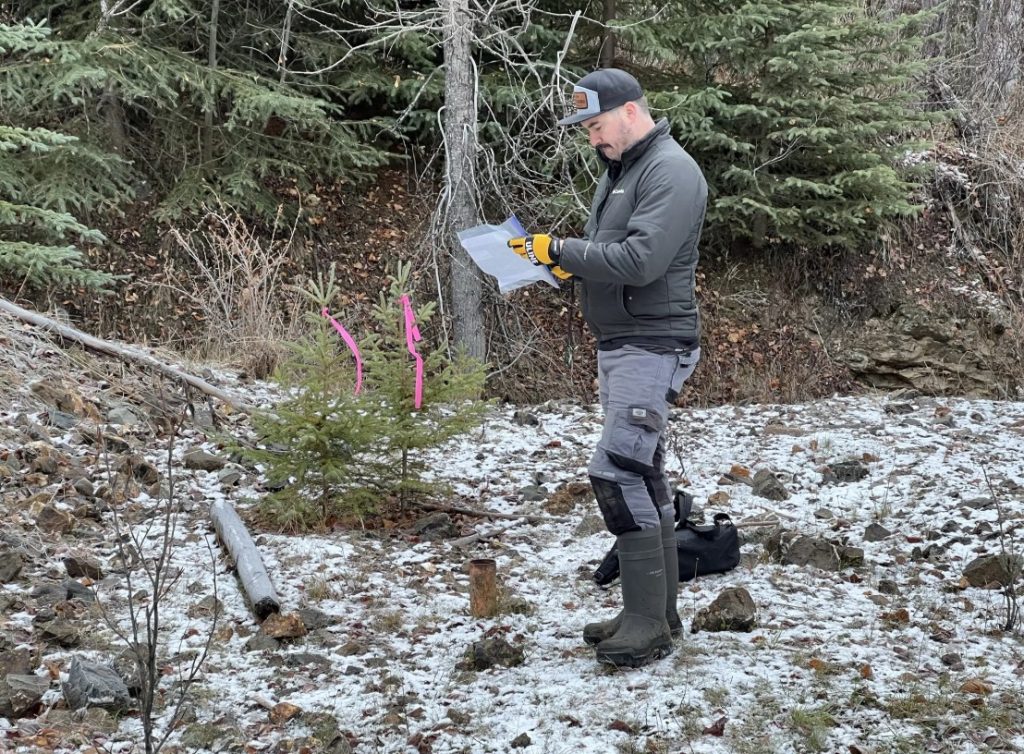
Quartz Mountain Resources Ltd. [TSXV: QZM; OTC PINK: QZMRF] reported that Peter E. Walcott and Associates Limited have completed a detailed, 4.3 km2 induced polarization (IP) survey over key portions of its Maestro property, British Columbia. Quartz is targeting exciting precious metal mineral systems that occur up to several kilometers outboard of the large Lone Pine molybdenum deposit, all within the extensive Maestro property.
The goal of the IP survey is to outline sulphide systems both near surface and to depths of up to 500 metres associated with mineralization discovered in and outboard of the Prodigy gold-silver zone and over additional important scale deposit targets on the Maestro property. The IP data is currently being processed and analyzed. The resulting data will then be announced and integrated into Quartz’s detailed planning underway for sequential drill programs being planned for Maestro during 2026.
Bob Dickinson, Quartz’s Chairman commented, “Quartz was built with the mission to discover and transact high-value gold-silver-copper projects that are coveted by major operators. This IP survey and upcoming drill program in 2026 are part of our focused efforts to create significant shareholder value at both the Maestro and Jake projects. The potential for these projects is significant and we are looking forward to the additional drill programs and survey results coming in 2026.”
Drilling at Prodigy has intersected three classic but integrated mineral deposit types. They are classed as Epithermal Au-Ag-Mo-Cu, Porphyry Au and Porphyry Cu-Mo or Mo-Cu as described below. Adding to the potential is recent age dating of Prodigy gold-silver mineralization compares favorably to the age of the mineralizing event at BC’s new Blackwater Gold Mine. IP surveying is widely known to be very useful in successfully outlining mineralization associated with all three of these types of mineral systems and is expected to significantly enhance effective drill targeting.
Early porphyry Mo-Cu mineralization is cut and overprinted by a stockwork of quartz-ankerite veins and vein breccias containing molybdenite, tetrahedrite, chalcopyrite, pyrite, and locally sphalerite and galena assemblages typical of high-to intermediate Au-Ag sulfidation systems developed above porphyry deposits. This alteration has destroyed mafic minerals and magnetite, producing a magnetic low anomaly.
Porphyry Au Mineralization: An intrusive body (quartz monzonite) at depth, along with the surrounding volcanic rocks (andesite) host a distinct style of mineralization characterized by pervasive green sericite alteration enriched in gold. Much of the gold mineralization is associated with pyrite rich zones, either as disseminated mineralization or massive, vein-type pyrite. The disseminated pyrite and pyriterich zones within and around the quartz monzonite are classified as Porphyry Au mineralization.
Porphyry Mo-Cu (Mo dominant) and Cu-Mo (Cu dominant) Mineralization: The quartz monzonite and the overlying volcanic rocks are affected by strong K-feldspar and biotite alteration, respectively. Both host rocks are cut by quartz Mo-Cu veins. This early porphyry-type Mo-Cu mineralization has been intersected in several drill holes located on the east and northeast of the magnetic low “EYE”. Notably, drilling has identified increasing Cu grades to the northeast, indicating a potential Porphyry Cu-Mo deposit target located in that direction.
Quartz Mountain Resources owns 100% of the Maestro gold-silver project and 100% of the Jake porphyry copper-gold-silver project. Both projects are permitted by the British Columbia government for drilling activities with access to infrastructure and high potential for the development of substantial resources for significant future transactions.
Quartz is associated with Hunter Dickinson Inc. (HDI), a company with over 35 years of successfully discovering, developing and transacting mineral projects in Canada and internationally.
The Maestro Project, located in central British Columbia, lies adjacent to Highway 16, 15 km north of Houston and 45 km south of Smithers, providing year-round road access to the project and nearby infrastructure including, rail, hydroelectricity, and natural gas. This logistical advantage, near resource supporting centres, positions the Maestro Project favourably for potential development. Covering 2,309 hectares, it has a rich exploration history dating back to 1914, primarily focusing on the Lone Pine Mo-Cu porphyry deposit and not the precious metals potential of the surrounding area.
Since acquiring the property, Quartz has conducted comprehensive geochemical and geophysical surveys, including soil/silt sampling, induced polarization geophysics, airborne magnetic surveys, hyperspectral studies, detailed relogging of historical drill core and assaying for gold only, 976 pulp samples derived from historical assaying of numerous core holes located across the Maestro Property.
Phase 2 and Phase 3 delineation-type drilling of the new Prodigy discovery at Maestro was completed in August 2025. This staged drilling is outlining a unique gold-rich porphyry system that is closely integrated with Epithermal Au-Ag and Porphyry Cu-Mo mineral systems. It is expected that drilling at Maestro will be consistently advanced with multiple drill program stages going forward. Mineralization remains open, promising significant further potential and multiple other deposit targets exist to be considered.
The 100%-owned Jake Property is located 160 km north of Smithers in north central BC. It is accessible by helicopter and close to the Minaret airstrip and historical logging roads which lead to mining support towns of Smithers, Fort St. James and Hazelton.
Mineralization at Jake is situated within a prominent rusty coloured gossan measuring 3.5 km long by 1.5 km wide. The combination of extensive historical and recent exploration work has outlined a very expansive altered area at Jake hosting epithermal and porphyry-style sulphide disseminations and veinlets containing Cu-Au-Ag-Zn-Mo and Re. A series of modern surface exploration programs were first completed by Quartz to build on compelling historical data on the property developed by porphyry copper explorers, including Kennco, Canadian Superior, Cities Service, Placer Development and Teck Corp. Taken together this comprehensive technical database defined a significant-scale porphyry Cu-Au deposit target which Quartz tested with 3,418 metres of drilling in seven holes during 2024. This drill program successfully discovered a new porphyry Cu-Au-Ag system, wide open to expansion. Upon discovery, Quartz acquired a 100% interest in mineral tenures over an entire new BC porphyry Cu-Au district surrounding the Jake Property. The next milestone towards a transaction will be delineation drilling of the new Jake discovery, currently being planned to commence after substantially advancing delineation drilling at Maestro.