
BCM Resources drills 550-metre mineralized zone at Thompson Knolls Project, Utah
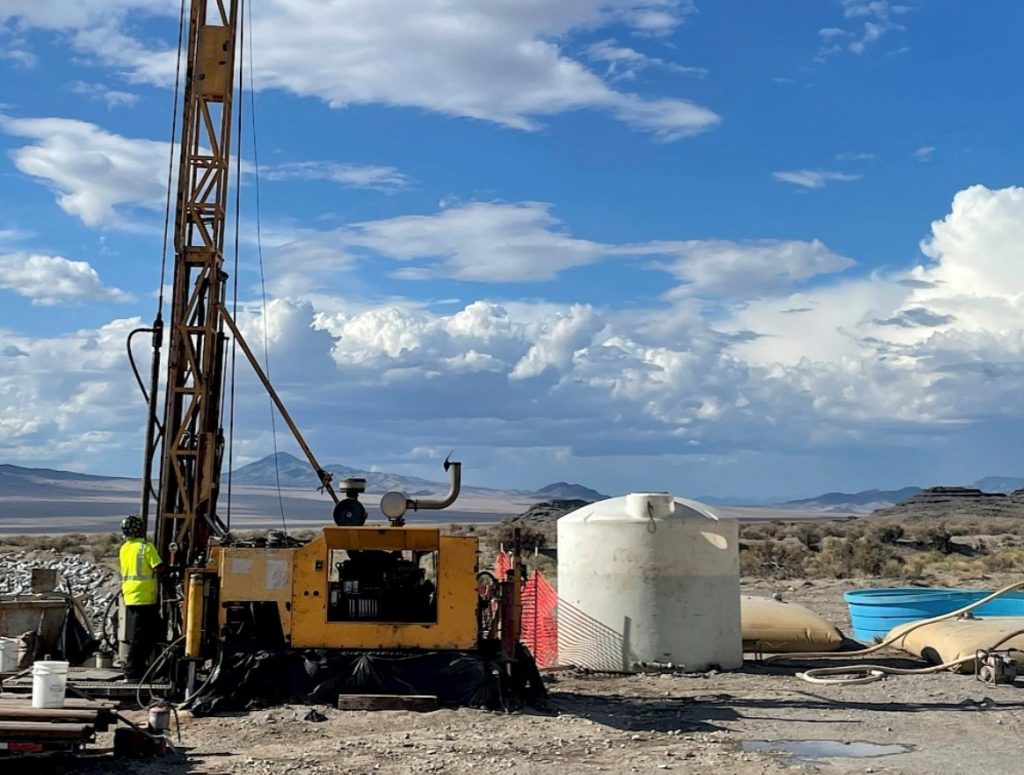
BCM Resources Corp. [TSXV: B] reported diamond drill hole TK20, currently in progress, has encountered over 550 metres of strongly mineralized porphyry and intercalated skarn mineralization at its 100%-controlled Thompson Knolls Project, Utah.
Hole TK20 is a vertical drill hole collared 208 metres northeast of discovery hole TK8 that intercepted 510 feet (155.4 metres) of mineralized skarn grading 0.66% Cu (copper), 0.12 g/t Au (gold) and 7.4 g/t Ag (silver). Drilling of TK20, currently at a depth of 4,062 feet (1,238.4 metres), is continuing in mineralized rock. As part of this announcement, the company has composed a summary presentation accessible on-line.
“We are very happy to observe such a long interval of strongly mineralized core in hole TK20,” commented Sergei Diakov, president and CEO of BCM Resources. “Our interpretation of this hole is that it represents the most highly mineralized drill intercept encountered to date at Thompson Knolls. Given the continued presence of strong mineralization at the current bottom of the hole, we are pushing this hole further. And after completion of hole TK20, we have immediate plans to start another hole, TK21, in an area to the west where we believe mineralization projects. As I have learned making multiple discoveries throughout my career, persistence pays off. We have that at BCM.”
Highlights from hole TK20: TK20 is unquestionably the most strongly mineralized hole drilled to date at Thompson Knolls. Mineralization commences at the top of bedrock at a depth of 1,930 feet (588.4 m) and persists to the current depth of 4,062 feet (1,238.4 m). Given the strong mineralization observed in core, the company is aggressively pushing this hole deeper.
Approximately 70% of the mineralized core encountered to date comprises mineralized intrusive rocks, both quartz monzonite porphyry and latite porphyry. These rocks are commonly strongly potassically altered and intensely and complexly stockwork-quartz-veined. The nature of this alteration and veining suggests TK20 has encountered the high-temperature core of a large, strong porphyry mineralizing system. This conclusion is supported by the fact that many phases of stockwork veins display abundant ore minerals including molybdenite plus/minus chalcopyrite.
Other than a short interval of oxidized non-magnetic skarn occurring immediately below the top of bedrock, the remaining 30% of the core from TK20 comprises mineralized magnetic skarn that is intercalated with the porphyry phases. In many places, abundant sulfides including chalcopyrite and pyrite are associated with magnetite mineralization. Locally, molybdenite is also present in skarn.
Logging, sawing and sampling of core is continuing as hole TK20 advances. Samples will be submitted for analyses upon completion of the hole.
Given the importance of hole TK20, BCM has immediate plans to extend its 2026 drill program by commencing another vertical hole, TK21, in a position 250 metres west-southwest of TK20. This hole will effectively twin hole TK5, a hole drilled in 2022 that was abruptly terminated in mineralization due to bad ground conditions. The bottom of TK5 encountered magnetic skarn mineralization like that observed in TK20. The company believes that extensions of the strong porphyry-skarn system encountered in hole TK20 project towards TK5.
BCM Resources is primarily focused on advancing exploration of its 100%-controlled Thompson Knolls porphyry copper, gold, silver, molybdenum discovery. The company also controls prospective copper, gold and molybdenum exploration projects in British Columbia.