
BP Silver reports 1,328 g/t silver equivalent over 3.0 metres at Pocañita Chica target, Cosuño Silver Project, Bolivia
BP Silver Corp. [TSXV: BPAG; OTCQB: BPSCF] reported assay results from the first two drill holes of its Phase 2 drill program at the Cosuño Silver Project, Bolivia. To date, 19 drill holes have been completed, and additional assay results will be released as they become available.
Highlights: Hole CO-0013 intersected a high-grade feeder structure grading 314.3 g/t silver, 2.62% bismuth and 0.74% antimony over 3.0 metres, equivalent to 1,328.8 g/t AgEq, within a broader 7.0-metre interval grading 168.8 g/t silver, 1.20% bismuth and 0.35% antimony, equivalent to 634.1 g/t AgEq.
The high-grade silver-bismuth-antimony mineralization associated with the silver system, demonstrates the potential for multiple critical and strategic metal by-products at Cosuño.
The company also reports that the high-resolution drone magnetic (MAG) survey has been completed, covering approximately 37.5 km², and the induced polarization (IP) survey has commenced. The geophysical surveys are designed to assist in identifying and refining additional mineralized structures and drill targets across the large silver-rich hydrothermal system.
Dr. Stewart D. Redwood, Director and Qualifying Person, stated: “The Pocañita Chica target continues to demonstrate high-grade silver mineralization within feeder structures occurring within broader intervals of silver mineralization. Hole CO-0013 is particularly significant, intersecting a three-meter feeder structure grading 1,328 g/t silver equivalent (AgEq), comprised of high-grade silver, bismuth and antimony. Within a lithocap system, feeder structures can represent important conduits for mineralizing hydrothermal fluids and may connect to broader vein systems at depth.
“Importantly, elevated bismuth and antimony were also identified in Phase 1 drilling at Cosuño, including in holes CO-0008 and CO-0009. The increasing silver grades observed down-hole in these holes and in the Pocañita Chica area are particularly encouraging and may potentially indicate that higher-grade mineralization continues down dip and at greater depth. Testing this possibility will be an important focus of the ongoing exploration program.”
Dr. Redwood continued: “The high-grade bismuth and antimony encountered in CO-0013 are very significant as these metals may represent valuable by-products to the silver mineralization. Bismuth and antimony are classified as critical minerals by the United States government, the Canadian government, the European Union, and other jurisdictions. The world’s only primary bismuth deposit, the Tasna bismuth deposit, is located approximately 65 kilometers southeast of the Cosuño Project, further highlighting the presence of significant bismuth mineralization within the broader regional geological setting.”
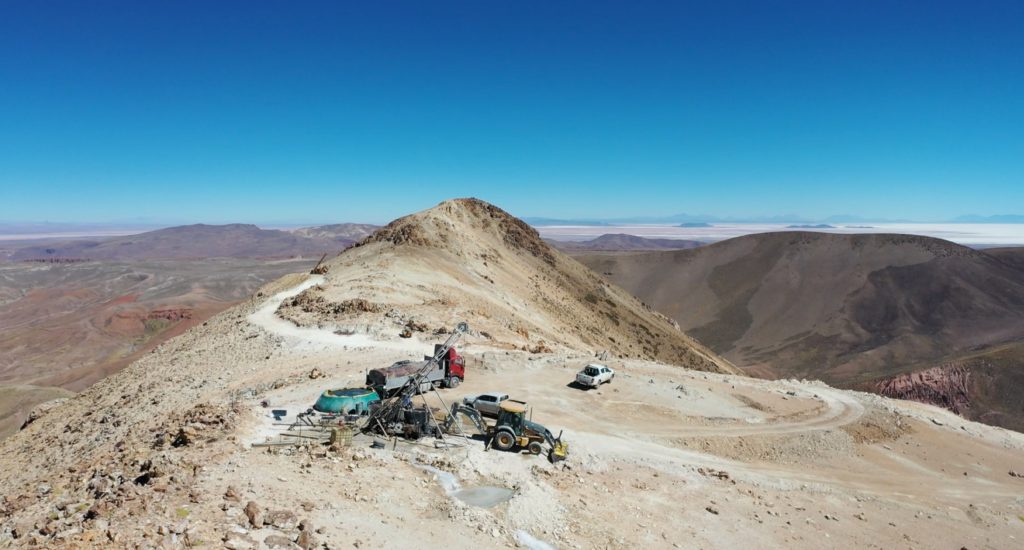
Assay results from the first two drill holes, CO-0012 and CO-0013, continue to demonstrate silver, bismuth and antimony mineralization over approximately 450 metres of strike at the Pocañita Chica Target.
These assays provide further evidence of continuity of high-grade feeder structures along strike and highlight the potential significance of bismuth and antimony as critical and strategic metal by-products.
Tim Shearcroft, Founder and CEO, stated: “Hole CO-0013 is the best hole drilled to date at Cosuño. With 19 holes now completed and several more remaining as part of our expanded Phase 2 drill program, the potential at the Pocañita Chica Target and across the broader Cosuño system continues to be very encouraging. We look forward to testing this potential as drilling continues.”
The Cosuño Project is an emerging silver-rich polymetallic discovery containing bismuth (Bi), and antimony (Sb). Locally there are enriched areas also containing indium (In), gold (Au), copper (Cu), lead (Pb), zinc (Zn) and tin (Sn). Polymetallic mineralization encountered by the Phase 1 drill program was previously reported.
Assay results have been received for the first two holes of the Program. Drill-holes CO-0012 and CO-0013 both drilled at the Pocañita Chica Target.
The most significant result was returned from CO-0013, which intersected 3.0 metres at 314.3 g/t Ag, 2.62% Bi and 0.74% Sb (1,328.8 g/t AgEq) from 56.0 to 59.0 metres. This high-grade interval occurs within a broader 7.0-metre interval averaging 168.8 g/t Ag, 1.20% Bi and 0.35% Sb (634.1 g/t AgEq).
The mineralization occurs within a broader 74.0 m interval averaging 31.7 g/t Ag, 0.13% Bi and 0.04% Sb (82.3 g/t AgEq), representing approximately 65% of the total 115.0-metre hole length.
Hole CO-0012 intersected broad intervals of lower-grade silver mineralization, including 37.0 metres at 27.3 g/t Ag, 0.02% Bi and 0.02% Sb (39.3 g/t AgEq) within which narrower higher-grade intervals occur (e.g., 3.0 metres at 48.5 g/t Ag, 0.05% Bi and 0.07% Sb (85.8 g/t AgEq.
Notably, anomalous to highly anomalous bismuth and antimony were also encountered in holes CO-0008 and CO-0009 ranging from 0.17 to 2.14% bismuth and 0.01 to 0.73% antimony, located approximately 450 m from CO-0013, providing additional evidence of the broader polymetallic nature of the mineralized system.
BP Silver has completed 19 drill holes totaling 2,289.7 m as part of the extended Phase 2 exploration program at Cosuño. A minimum of eight additional drill holes remain to be completed under the current program, with drilling continuing to test and expand the mineralized structures identified to date.
In parallel with drilling, geological mapping and surface sampling continue across the project, while an IP geophysical survey is also underway. The Company has now completed its MAG survey, with the data currently being processed and interpreted. Results will be released once the analysis is complete.
Results from a total of 17 completed drill holes are currently pending and are expected to be released as they are received, reviewed and verified by the company.
Geochemistry Results: To date, the Company has collected a total of 699 surface samples across the project collected during ongoing geological mapping, as well as from newly exposed outcrops created during the construction of drill roads and drill pads.
The results have identified anomalous silver mineralization at the Jalsuri North target, supporting continued exploration of this area.
At Pocañita Grande, sampling to date has been limited to the northern and southern ends of the target, where silver values have been relatively low. Importantly, the main outcropping vein/breccia structures, consisting of zones of silicification and advanced-argillic alteration and which represent a key area of exploration and geologic interest, have not yet been sampled. Channel sampling will commence as soon as road access is completed, allowing the Company to systematically evaluate this previously unsampled portion of the target.
The high-resolution drone magnetic survey has been completed. In detail the survey covered a total of 375-line-km over an area of approximately 37.54 km² (3,754 hectares). The data is currently being processed and interpreted. It is anticipated that the finalized product will enable the exploration team to better define geological contacts, structural corridors, and the broader architecture of the large hydrothermal system.
The next stage of the geophysical program, which is a patented Arce Geofísicos Distributed Array System (AG-DAS) Induced Polarization survey which is in progress. The IP survey is expected to complement the magnetic dataset by providing additional information on the subsurface response of the principal structural and mineralized corridors.
Importantly, the two methods provide different but complementary information: the MAG survey is helping to define the geological and structural architecture of the system, whereas the IP survey is expected to assist in identifying subsurface zones potentially associated with sulfides.
BP Silver is advancing high-grade silver projects in Bolivia. The company’s flagship asset, the Cosuño Project, is strategically located in the prolific Bolivian silver belt, a region with a rich mining history and significant untapped discovery potential.
Resource World Magazine Inc. has prepared this editorial for general information purposes only and should not be considered a solicitation to buy or sell securities in the companies discussed herein. The information provided has been derived from sources believed to be reliable but cannot be guaranteed. This editorial does not take into account the readers investment criteria, investment expertise, financial condition, or financial goals of individual recipients and other concerns such as jurisdictional and/or legal restrictions that may exist for certain persons. Recipients should rely on their own due diligence and seek their own professional advice before investing.