

Copper Fox Provides execution plan for PFS on Van Dyke ISCR Project, Arizona
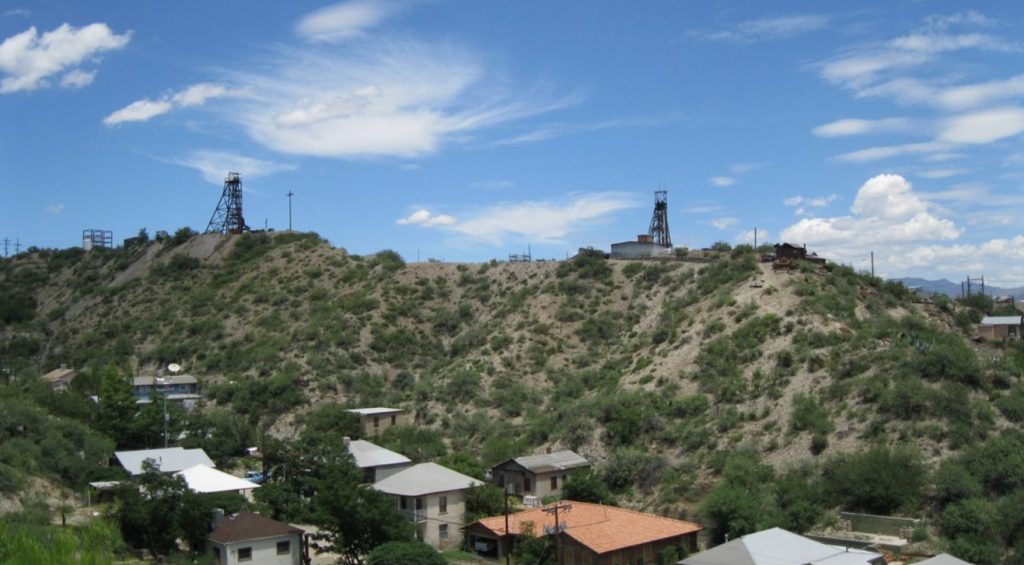
Copper Fox Metals Inc. [TSXV: CUU; OTCQX: CPFXF; FSE: HPU] through its wholly owned subsidiary Desert Fox Van Dyke Co., reported completion of the Project Execution Plan For Van Dyke Prefeasibility Study prepared by Stantec Consultants Services Inc. on its 100%-owned Van Dyke in-situ copper recovery (ISCR) project located in the Globe-Miami Mining District, Gila County, Arizona.
In 2020, Copper Fox completed an updated Mineral Resource Estimate (MRE) and Preliminary Economic Assessment (PEA) on Van Dyke using a US$3.15/lb copper price for the base case economic model. The significant increase in copper price, the potential social and financial benefit to the town of Miami and surrounding communities support Copper Fox’s decision to prepare the Plan to assess the timeline, work programs and estimated cost to complete a Prefeasibility Study (PFS) on the Van Dyke project. Among other findings, the PEA indicated: each US$0.25/lb increase in copper price increased the project’s after-tax NPV by ~US$90 million (M); significant exploration potential to increase the project’s mineral resources, and recommendation to advance the project to PFS stage.
Highlights of the Plan: Outlines plan for completion of a PFS level report on the Van Dyke project. Outlines the objectives, work programs and expected timelines for the main components of the study.
A two-phase, multi-purpose drilling program (12,620 meter (m)) focused primarily on expanding and upgrading the resource categories within the Van Dyke copper deposit.
Estimated three years completion time, subject to time required to complete metallurgical testwork. Estimated cost of ~ US$23.4M including a 10% (US$2.17M) contingency.
Elmer B. Stewart, President and CEO of Copper Fox, stated, “Copper Fox thanks the team of mining professionals led by Stantec, a global leader in surface and underground mining engineering, design, and project delivery, for preparation of the Plan. The team’s knowledge and work experience at two other advanced-stage ISCR projects in Arizona contributed to the development of a concise, focused plan, including a permitting strategy to achieve a PFS level study on the Van Dyke project. A decision to proceed to advance the project to the PFS stage is expected to be made before the end of October 2025.”
A brief discussion of the main components of the Plan follows. The consultants and responsibilities of the team are preparing the plan.
A two-phase drilling program is proposed focused on upgrading the mineral resource categories to meet the requirements of a PFS level study and allows for additional metallurgical and geotechnical sampling, and installation of hydrogeological monitoring and water quality sampling stations.
The program consists of 12,620 metres of reverse-circulation (RC) and diamond core (core) drilling in 25 locations. Phase I (estimated six months to complete) focuses primarily on resources and consists of 11,120 metres in 21 holes with Phase II consisting of 1,500 metres in four holes for additional hydrogeology monitoring wells, a deeper aquifer pump test well and two geotechnical core holes if required for portal selection. The timing between Phase I and Phase II depends on laboratory turnaround, particularly for metallurgical testwork plus time for analysis and interpretation.
The plan outlines additional metallurgical, geotechnical, hydrogeological and water quality testwork to enable completion of prefeasibility studies and engineering works to support a PFS level of study.
Metallurgical testing includes sample characterization, mineralogy, locked-cycle and/or small pilot-scale leaching tests to evaluate/confirm optimum acid addition and consumption, leach cycle, and copper recovery; tracer tests to evaluate effluent conductivity over time (indicative of copper leaching progression in-situ); and pressurized rinse tests.
Geotechnical testwork includes core sampling to determine rock strength and elastic properties of the Gila Conglomerate, small-scale direct shear tests, Atterberg limits testing, and USCS particle size classification of bulk samples to characterize material properties.
The water quality monitoring wells and vibrating wire piezometers (VWPs) established during the drilling program allows for the collection of hydrogeological data, water level measurements, and sampling for ground water quality analysis in accordance with EPA and Arizona state requirements.
Results of the proposed drilling program would be used to complete an updated MRE in accordance with NI 43-101 standards incorporating updated geological, structural, mineral zonation and hydrogeological models, geotechnical data, and estimated copper recoveries by zone/material type. Provided that a PFS level of study is achieved, a reserve statement would be completed that quantifies mineralization with reasonable expectation of economic extraction.
Additional geotechnical characterization of the site incorporating geotechnical and structure orientation data from the Gila Conglomerate to access the Van Dyke copper deposit is required. The mine plan would be scheduled to a PFS level and incorporate trade-off studies related to the portal type and site selection, mining methodology, mine design, ventilation, ground support design and an assessment to determine if the historical mine workings could be incorporated into the mine plan. The mine plan also includes lateral and vertical development distances, tonnages and rock volumes that follows a leaching schedule and the mobile equipment to support the life-of-mine (LOM) activities.
Understanding the hydrogeological conditions is a significant parameter in predicting future copper production in an ISCR operation. The mineralization in the Van Dyke deposit is hosted in oxidized and weathered Pinal Schist primarily in fractures with lesser concentrations occurring along schistosity surfaces and in quartz veinlets.
The injection and recovery wellfield would be designed using a distributed pattern of injection and recovery wells, typically consisting of one central injection well to four surrounding recovery wells, with calculated spacing between collars.
The infrastructure required for an ISCR operation includes the solvent extraction/electrowinning (SX/EW) plant, water treatment/neutralization, power distribution, surface infrastructure and all infrastructure associated with the underground wellfield.
Base engineering criteria would include significant infrastructure areas (e.g., surface civil) to support a PFS level of study and lay the foundation for each major engineering discipline (civil, mechanical, electrical, instrumentation and controls, and structural) for future engineering studies/designs in compliance with applicable codes and standards. Prefeasibility and engineering studies include data analysis, modeling, trade-off evaluations, and engineering design to identify risk, explore potential options, and assess the viability of the project to optimized cost and schedule outcomes.
The preparation of a market study that includes the sale of copper and aggregate based on product pricing, marketability, offtake or sales agreements, long-term view of the copper market and local supply/demand for aggregate is planned.
The plan outlines the estimated timeline and anticipated permitting requirements to complete the work programs required to support completion of the PFS. The project permitting strategy would be to apply for all inclusive APP and UIC permits after completion of the proposed PFS level study outlined in the plan.
The principal assets of Copper Fox and its wholly owned subsidiaries, being Northern Fox Copper Inc. and Desert Fox Copper Inc., are the 100% ownership of the Van Dyke oxide copper project located in Miami, AZ, the 100% interest in the Mineral Mountain and Sombrero Butte porphyry copper exploration projects located in Arizona, the 25% interest in the Schaft Creek Joint Venture with Teck Resources on the Schaft Creek copper-gold-molybdenum-silver project and the 100%-owned Eaglehead polymetallic porphyry copper project each located in northwestern British Columbia.
Resource World Magazine Inc. has prepared this editorial for general information purposes only and should not be considered a solicitation to buy or sell securities in the companies discussed herein. The information provided has been derived from sources believed to be reliable but cannot be guaranteed. This editorial does not take into account the readers investment criteria, investment expertise, financial condition, or financial goals of individual recipients and other concerns such as jurisdictional and/or legal restrictions that may exist for certain persons. Recipients should rely on their own due diligence and seek their own professional advice before investing.