
Fortuna Mining drills 0.96 g/t gold over 350 metres at Lindero Mine, Argentina
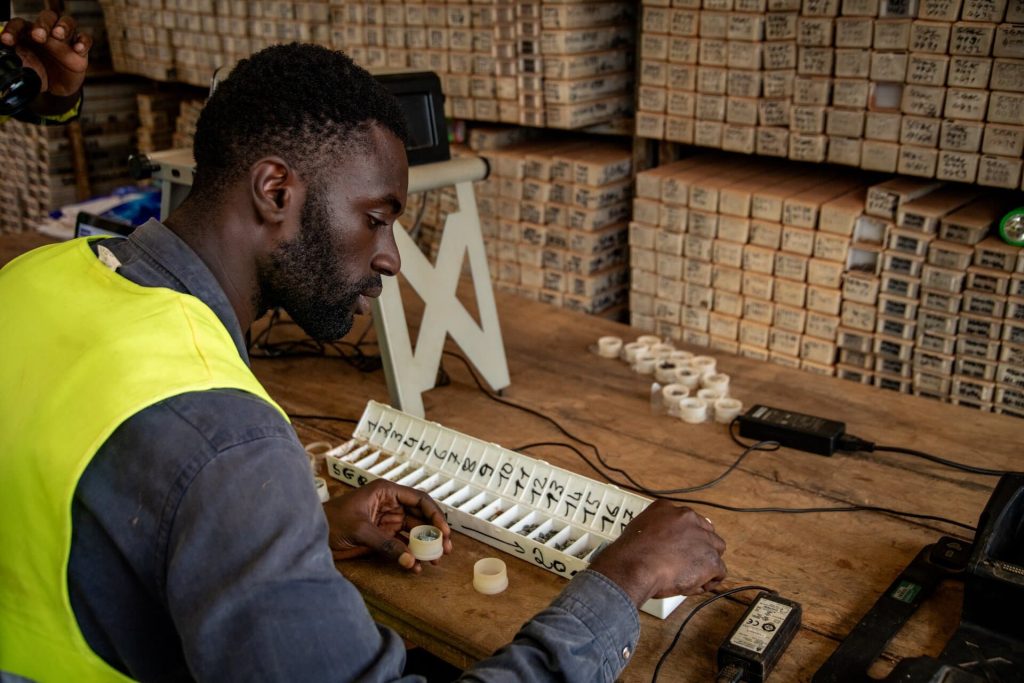
Fortuna Mining Corp. [NYSE: FSM; TSX: FVI] reported results from infill drilling designed to test open mineralization at depth and upgrade Inferred Mineral Resources below the current life-of-mine (LOM) pit design of the gold porphyry deposit at the Lindero Mine in Argentina. The results confirm that gold mineralization extends significantly below the current reserve pit design.
Eric Chapman, Senior Vice President of Technical Services, commented, “The 2026 infill drilling program returned multiple intersections with gold grades consistent with or higher than the corresponding grades estimated in the block model.”
Mr. Chapman added, “We are incorporating the drill results into an updated block model and pit design, targeted for completion by year-end. This work will support a revised LOM plan and an updated Mineral Reserve estimate for Lindero, incorporating both the upgraded gold mineralization and existing Indicated Mineral Resources currently located below the pit.” Mr. Chapman concluded, “This zone remains open at depth.”
Lindero Mine Drilling highlights – LDH-259: 0.85 g/t Au over over a drilled length of 236 metres from surface.
LDH-260: 0.98 g/t Au over a drilled length of 281 metres from surface.
LDH-261: 1.05 g/t Au over a drilled length of 143 metres from surface, including 2.35 g/t Au over a drilled length of 10 metres from 17 metres; 0.72 g/t gold over a drilled length of 149.6 metres from 149 metres, including 2.07 g/t gold over a drilled length of 4 metres from 163 metres, and 5.52 g/t gold over a drilled length of 2 metres from 205 metres, and 3.95 g/t Au over a drilled length of 2 metres from 253 metres.
LDH-262: 0.67 g/t Au over a drilled length of 164 metres from 2 metres.
LDH-265: 0.60 g/t gold over a drilled length of 224 metres from surface.
LDH-267: 0.70 g/t gold over a drilled length of 263 metres from surface, including 2.79 g/t gold over a drilled length of 2 meters from 38 metres.
LDH-271: 0.94 g/t gold over a drilled length of 134 metres from 144 metres.
LDH-272: 0.96 g/t gold over a drilled length of 350 metres from surface, including 2.20 g/t Au over a drilled length of 6 metres from 10 metres, and 2.45 g/t Au over a drilled length of 4 metres from 302 metres, and 2.22 g/t Au over a drilled length of 2 metres from 316 metres.
LDH-273: 0.71 g/t Au over a drilled length of 203 metres from 156 metres, including 2.02 g/t Au over a drilled length of 2 metres from 184 metres.
LDH-286: 1.02 g/t Au over a drilled length of 134 meters from surface, including 2.06 g/t Au over a drilled length of 13 metres from 0 metres.
LDH-288: 0.56 g/t Au over a drilled length of 254 meters from surface.
Gold mineralization at Lindero is circular in nature and associated with a porphyry intrusive; therefore, a specific azimuth or dip cannot be defined for reporting estimated true widths.
The 2026 drill program consisted of 31 diamond drilling (DD) holes, totalling 8,534 metres, having been extended from the initially planned 6,000-metre program due to the success from the initial holes.
The program was designed with two objectives, firstly to upgrade Inferred Mineral Resources below the current LOM pit design in the south portion of the Lindero Deposit, where higher gold grade mineralization was identified at depth. Secondly, to obtain metallurgical samples to affirm projected recoveries in areas planned for mining in the next two years. The upgrade drilling successfully encountered higher than expected gold mineralization in several holes, such as, LDH-259 that intersected 0.85 g/t Au over 236 metres from surface, including 94 metres averaging 0.66 g/t Au below the current pit design and LDH-272 that intersected 0.96 g/t Au over 350 metres from surface, including 98 metres averaging 0.91 g/t Au below the pit design.
An updated Mineral Resource and Mineral Reserve estimate will be prepared for inclusion in the year-end consolidated report, planned for release in the first quarter 2027.
Gold mineralization at the Lindero Deposit forms a circular body approximately 600 metres in diameter and extends vertically more than 300 metres below the current topographic surface. The distribution of gold mineralization shows a strong relationship to lithology, stockwork veinlets, and alteration assemblages.
Higher gold grades of more than 1 g/t Au, characterized by native, free-milling gold, are commonly associated with sigmoidal quartz, quartz-magnetite-sulfide, biotite-magnetite-chalcopyrite, magnetite-chalcopyrite, and quartz-limonite–hematite stockworks that are strongly associated with K-feldspar alteration. This association is most common in the southern and eastern portions of the deposit, where the highest gold grades occur. Where one or more stockwork types are absent or fracturing is less intense, mineralization tends to be weaker and gold grades lower at approximately 0.4 g/t Au.
Fortuna Mining has three operating mines in Argentina, Côte d’Ivoire, and Peru, and the feasibility-stage Diamba Sud Gold Project in Senegal.
Its exploration portfolio spans its operating jurisdictions as well as Guinea and Guyana.
Resource World Magazine Inc. has prepared this editorial for general information purposes only and should not be considered a solicitation to buy or sell securities in the companies discussed herein. The information provided has been derived from sources believed to be reliable but cannot be guaranteed. This editorial does not take into account the readers investment criteria, investment expertise, financial condition, or financial goals of individual recipients and other concerns such as jurisdictional and/or legal restrictions that may exist for certain persons. Recipients should rely on their own due diligence and seek their own professional advice before investing.