
From Ore to Reactor
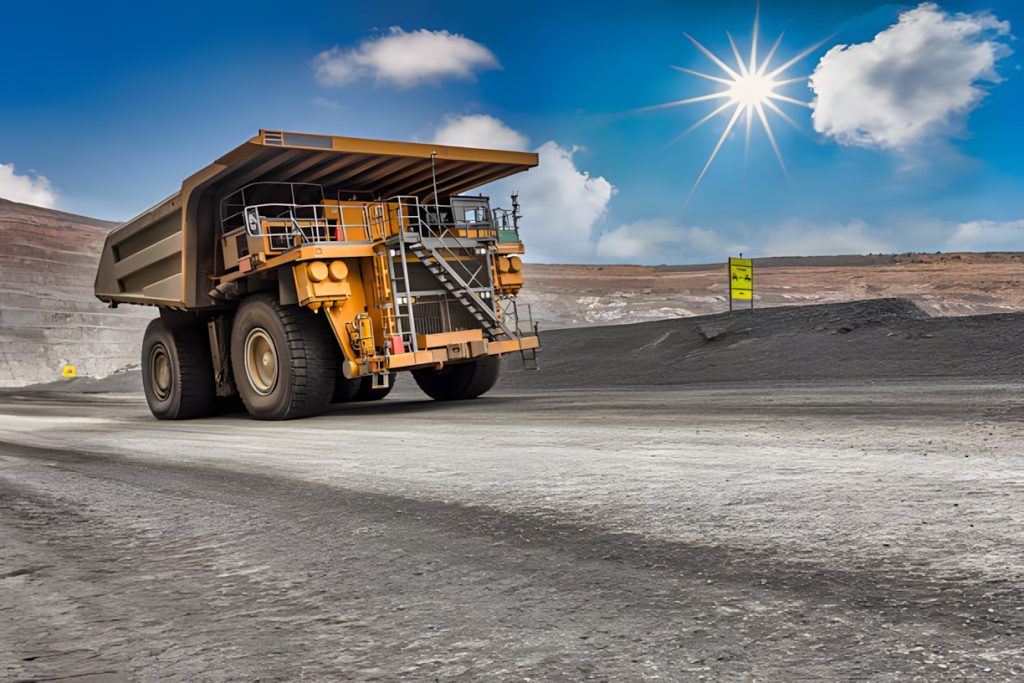
Canada already mines most of what an Arctic reactor is made of. The rest is a matter of choosing to build it.
Part 2 of a four-part series on Canada’s Arctic opportunity. Part 1 argued that Canada holds nearly every piece of the Arctic energy puzzle. This part moves from strategy to inventory.
By David Parry
Here is a thing I did not expect to find fascinating: the parts list for a nuclear reactor. Strip one down to its bill of materials and the mystique falls away, leaving a shopping list for an unusually specialised hardware store. Uranium for the core, and cladding, the metal tubing the fuel sits inside. Nickel-chromium-molybdenum steels for the vessel, copper for the generators, rare earths and graphite and boron for the magnets and shielding, lithium and cobalt for the batteries, and a heroic quantity of concrete formulated to cure in the cold. An unromantic document, and also, I think, the whole argument, because Canada sits on very nearly all of it.
Only a handful of countries could mine and refine those materials at home and then assemble the reactor. Russia is one. Canada is the other serious candidate, and it brings what Moscow cannot: independent courts, transparent markets, a mature regulator and a seat inside NATO. Capability without credibility is not investable.
I spent a working life in the exploration game, in Africa, Asia, Europe and the South Pacific, and the lesson that outlasted them all is that geology was usually the easy part. Ore bodies are indifferent to politics; ministries are not. I have seen permits become negotiable, royalty terms reopened after the money was spent, a joint-venture partner acquire influential relatives, and a title deed mean whatever the government of the month wanted. Canada delays too, as anyone who has waited out a federal impact assessment knows. But the rules are written down, the courts will hear you, and nobody serious expects the country to be materially different in five years. On a twenty-year project that predictability beats an extra point of grade, though I am aware it sounds like something a man says after his third unhappy jurisdiction.
Start with the fuel. Canadian mines produced 14,300 tonnes of uranium in 2024, worth some C$3bn, nearly all from freakishly rich orebodies in Saskatchewan’s Athabasca Basin. Grade is how much metal a given weight of rock contains. In the Athabasca it is quoted in whole percentage points, while most of the world makes do with fractions of one per cent, combing the ground as you might comb a beach for a dropped earring. Cameco (TSX: CCO; NYSE: CCJ) anchors the sector, Orano Canada mills alongside it, and behind them stand developers such as NexGen Energy (TSX: NXE), Denison Mines (TSX: DML; NYSE American: DNN) and IsoEnergy (TSX: ISO). Aiming that output at Arctic reactors is a matter of contracts, not geology.
Fuel needs a wrapper, and here the inventory looks thinner. Many designs clad their rods in zirconium alloy, prized because neutrons pass through it as if it were not there. The difficulty is hafnium, which occurs alongside zirconium in nature, absorbs neutrons greedily, and must be stripped out to a few parts per million. Canada does not do this at scale today, though the problem is chemistry rather than geology, and a separation plant could go up inside a single parliamentary term. Allies can supply the interval, and newer designs avoid the question by leaning on graphite, which Ottawa lists as a nuclear material.
Then the metal. A reactor vessel must shrug off radiation, sustained pressure and high operating temperatures, while the surrounding plant must continue working when the air outside falls to forty below, which calls for steels alloyed with nickel, chromium and molybdenum. Canada mined just over 125,000 tonnes of nickel in 2024, fourth in the world, and unusually refines it at home, at Fort Saskatchewan, Sudbury and Long Harbour. Canada Nickel (TSXV: CNC), with its Crawford project in Ontario, and Teck Resources (TSX: TECK.B; NYSE: TECK) give the sector depth. Molybdenum, which keeps steel strong when hot, is produced here too, and titanium comes from ore Rio Tinto (NYSE: RIO) has processed in Quebec for seventy years, longer than many countries have had an industrial policy.
A reactor is also an electrical machine wrapped around a very hot rock, and the copper matters as much as the steel. Canadian mines turned out more than 514,000 tonnes of copper in concentrate last year, 6.2% up on 2023, from Teck, Hudbay Minerals (TSX: HBM; NYSE: HBM) and First Quantum Minerals (TSX: FM), and the list carries on into lithium, graphite, cobalt and the rare earths, where Vital Metals (ASX: VML) at Nechalacho and Ucore Rare Metals (TSXV: UCU) are building the separation capacity a non-Chinese supply chain needs. Above it sits the layer Part 1 called the brainware: the sensors, inverters, magnets and power electronics through which Aegis Critical Energy Defence Corp. (CSE: QESS), via HyprC Systems, intends to build reactor-aware controls and storage.
Stomping Tom should have written a song about aggregate, but Canada has it, with the cement inputs, potash and aluminium, and Ottawa is writing the construction rules through its Enabling Small Modular Reactors programme. Winter roads, permafrost mines and the port at Churchill are already there, and pouring cold-rated concrete above the treeline is a trade here.
Being honest about what is missing strengthens the case. Three gaps stand out: nuclear-grade zirconium; enrichment, the step that raises the proportion of the useful uranium isotope, which Canada still buys abroad; and some high-precision instrumentation from foreign specialists. Each is a plant to be built rather than a resource to be found, and Canada has the orebodies, the metallurgy, the fabrication base and the engineers. It lacks the decision. Put to a minister, that decision is industrial strategy. Put to an investor, it is a set of high-margin openings in a market whose largest customer has published its budget.
That customer is the state. Ottawa’s northern plan of March 2026 commits more than C$40bn to clean energy, minerals and trade corridors, roughly C$35bn of it to five new permanent military bases and expanded operations at Churchill. None of it runs on diesel convoys a three-day blizzard can cancel. A buyer that size, committed in advance, turns a mining prospect into a financeable project and a startup into a supplier.
Russia’s Arctic supply chain genuinely is its own, but it sits inside a closed system exposed to sanctions and political whim, and allies would rather buy from countries whose courts they can name. Closer to home, for northern and Indigenous communities a made-in-Canada supply chain offers a route away from diesel and towards ownership of the mineral wealth trundling past their doors, as the Fort Liard battery project has begun to show.
Line the shopping list up against the map and the columns very nearly balance: fuel at world scale, structural metals with refineries to finish them, the minerals behind the controls and batteries, and more cold-weather construction experience than any country has a right to expect. Very few countries could fill in that table at all, and Canada can complete most of it today and the rest within a few years of choosing to, which leaves it resting on a decision nobody has yet taken.
Access Part 1: https://resourceworld.com/canada-holds-the-pieces-of-an-arctic-energy-puzzle-now-it-has-a-reason-to-build-it/