
Hannan Metals intersects gold in every hole at Stavaträsk Project, Sweden
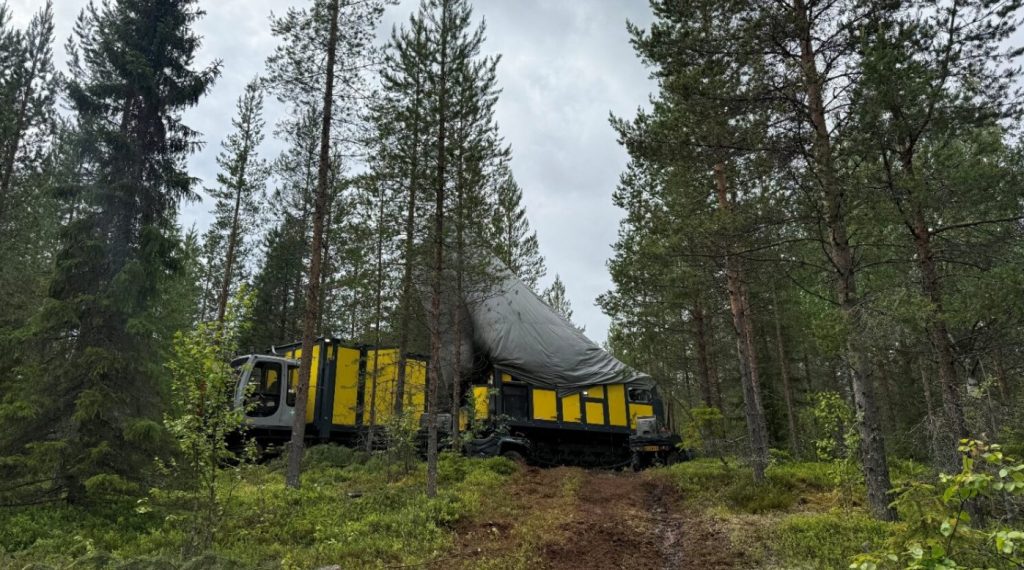
Hannan Metals Limited [TSXV: HAN; OTC Pink: HANNF] reported the first assay results from its maiden diamond drill program at the Stavaträsk gold project in the Skellefteå district of northern Sweden. The program comprised seven holes for a total of 1,040 metres drilled over a strike length of 650 metres that is located within a 7 km trend. Results from the first five drillholes are reported here while assay results for the final two holes (ST2606 and ST2607) remain pending.
Gold mineralization was intersected in all drillholes reported here (ST2601 – ST2605). Highlights so far include 9.2 metres at 1.3 g/t Au (including 0.4 m at 5.6 g/t Au) and 1.1 m at 15.6 g/t Au, (including 0.6 m at 27.8 g/t Au). In addition, a polymetallic sample in hole ST2601 returned 0.5 metres at 8.9 g/t Au, 47.5 g/t Ag and 0.74% Cu.
Key Points: The drill program comprised seven holes for a total of 1,040 metres drilled over a strike length of 650 metres. Results reported are from the first five holes (ST2601–ST2605), with assays for the final two holes pending. Gold mineralization was intersected in every hole released.
Best drill intercepts in each hole (0.5 g/t Au cut-off, maximum 2 metres internal dilution; higher-grade sub-intervals reported at a 3.0 g/t Au cut-off) are as follows. ST2601: 4.5 metres at 1.4 g/t Au, 8.2 g/t Ag from 80.0 metres, including 0.5 metres at 8.9 g/t Au, 47.5 g/t Ag.
ST2602: 5.6 metres at 1.4 g/t Au, 1.3 g/t Ag from 79.4 metres, including 0.4 metres at 9.9 g/t Au, 4.4 g/t Ag. ST2603: 1.3 metres at 2.6 g/t Au, 1.9 g/t Ag from 12.0 metres.
ST2604: 9.2 metres at 1.3 g/t Au, 0.7 g/t Ag from 29.9 metres, including 1.0 metre at 3.7 g/t Au, 2.0 g/t Ag; 0.8 mettres at 5.0 g/t Au, 1.8 g/t Ag.
ST2605: 1.1 metres at 15.6 g/t Au, 2.9 g/t Ag from 35.6 metres, including 0.6 metres at 27.8 g/t Au, 5.0 g/t Ag.
The Stavaträsk mineralized corridor is interpreted to lie along a structural trend within the regional-scale Vidsel-Röjnoret Shear System which the Company’s mapping and interpretation trace as a prospective corridor of up to approximately 7 km.
Michael Hudson, CEO, stated: “These first results delivered exactly what we hoped for at Stavaträsk – gold in our first five drillholes, from very shallow levels (from 12 m down hole), over a strike length of 650 metres. Importantly, the occurrence of high-grade gold up to 27.8 g/t Au is a fabulous start for this discovery. This drilling suggests we have discovered a large, gold-bearing corridor of mineralization consisting of a quartz-vein-swarm hosted within a persistent granodiorite host-unit. This gold-bearing corridor is interpreted to be 50 metres to 65 metres wide, with several higher-grade structurally controlled zones of quartz-veining observed, returning several gold-rich intervals, such as; 9.2 metres at 1.3 g/t Au (including 0.4 m at 5.6 g/t Au) and 1.1 metres at 15.6 g/t Au (including 0.6 m at 27.8 g/t Au). In addition, a polymetallic sample in hole ST2601 returned 0.5 metres at 8.9 g/t Au, 47.5 g/t Ag and 0.74% Cu, demonstrating potential silver and copper upside to this strongly-mineralized system. The consistent association of gold with arsenic, silver and tellurium gives our geologists a simple, reliable way to vector toward the best of the system as we plan the next stage. Assays from the final two holes are imminent, with an IP gradient array geophysical program commencing over the coming weeks and a second drill program to follow.”
The Stavaträsk mineralized corridor is interpreted to lie along a structural trend within the regional-scale Vidsel-Röjnoret Shear System which the company’s mapping and interpretation trace as a prospective corridor of up to approximately 7 km of strike cutting across several lithologies: a granodiorite-hosted vein swarm delivering broad, consistent lower-grade gold (holes ST2601-ST2603), with higher-grade veins on or close to the granodiorite contact, passing into silica-arsenopyrite shear zones in mudstone that carry higher grades (holes ST2604-ST2605).
Initial drilling at the Stavaträsk project consisted of seven holes measuring between 75 and 260 metres in length. The best drill intercepts in each hole are as follows. ST2601: 4.5 metres at 1.4 g/t Au, 8.2 g/t Ag from 80.0 metres, including 0.5 metres at 8.9 g/t Au, 47.5 g/t Ag. ST2602: 5.6 metres at 1.4 g/t Au, 1.3 g/t Ag from 79.4 metres, including 0.4 metres at 9.9 g/t Au, 4.4 g/t Ag. ST2603: 1.3 metres at 2.6 g/t Au, 1.9 g/t Ag from 12.0 metres. ST2604: 9.2 metres at 1.3 g/t Au, 0.7 g/t Ag from 29.9 metres, including 0.4 metres at 5.6 g/t Au, 2.1 g/t Ag. ST2605: 1.1 metres at 15.6 g/t Au, 2.9 g/t Ag from 35.5 metres, including 0.6 metres at 27.8 g/t Au, 5.0 g/t Ag.
Drillholes ST2601-ST2607 were planned to investigate the sub-surface geology of the surface float and outcrop areas as documented in the previous news release (dated June 10, 2026). Five drillholes (ST2601-ST2603, ST2606 and ST2607) were drilled underneath the southern high-grade surface float samples, while ST2604 and ST2605 were drilled underneath high-grade gold outcrops 650 metres to the north. In the southern drill area, a swarm of extensional-style gold-bearing quartz-arsenopyrite veins and associated gangue are hosted by a silica-chlorite-sericite-altered granodiorite.
Higher-grade, gold-rich zones were intercepted on or close to the granodiorite contact (ie., ST2601; 0.5 m at 8.9 g/t Au), while a broader mineralization style was encountered within the bulk of the granodiorite body (ie., ST2602; 5.6 m at 1.4 g/t Au). The granodiorite body trends in an approximate 330° strike, and dips approximately 70° to the east. In the northern drill area, drillholes ST2604 and ST2605 intercepted a more discrete quartz-arsenopyrite-bearing interval hosted in a mudstone lithology in which higher-gold grades are encountered (ie., ST2605; 1.1 m at 15.6 g/t Au, including 0.6 m at 27.8 g/t Au). While this more narrow-style of mineralization is hosted within a different host-rock lithology, the consistency of the quartz-arsenopyrite vein-morphology and their structural geological orientation (ie., both aligned along the dominant ~330° structural corridor) demonstrate both a genetic and probable spatial connectivity of the two areas, separated by ~650m of strike length.
The two deepest holes of the program, ST2606 and ST2607 were drilled into the granodiorite zone in order to test down-dip continuation of the granodiorite-hosted vein-swarm; drillhole ST2606 intercepted strong and continuous arsenopyrite-silica-alteration along the entirety of the granodiorite interval (ca. 214 metres drilled thickness). Assay results of these two holes are pending.
Across the five holes assayed (320 samples, ~242 m of assayed core), 101 samples (32%) run at or above 0.1 g/t Au, totalling ~67.5 metres of the sampled length. The length-weighted grade of that anomalous population is ~0.96 g/t. The median anomalous sample is 0.3 g/t with 49 of the 101 samples in the 0.1 to 0.3 g/t band.
In addition, an individual 0.5-metre sample from ST2601 (80.5 m to 80.9 m) returned 0.5 metres at 8.9 g/t Au, 47.5 g/t Ag and 0.74% Cu, highlighting the polymetallic (gold-silver-copper) character of the mineralization and consistent with the surface and boulder-field sampling.
Preliminary analysis of results suggest that elevated gold-concentrations display systematic correlation with several other metal elements, particularly arsenic (ie., arsenopyrite), followed by silver, tellurium and bismuth. This arsenic geochemical affinity with gold largely agrees with visual observations of the drillcore (and earlier surface observations) in that, gold-rich intervals are closely tied to arsenopyrite formation (±pyrite and chalcopyrite) demonstrating a likely genetic relationship between the two. As such, this mineralogical relationship should prove very useful for further steps in exploration works (i.e. geophysical surveys and surface geochemical sampling).
This drilling at Stavaträsk suggests mineralization is hosted in a continuous, structurally-controlled, gold-bearing corridor, hosted within both the igneous and sedimentary rocks found in the region. This relationship is typical of known multi-million ounce, structurally controlled orogenic gold deposits from the Nordics, including Agnico Eagles Kittila mine, Goldsky Resources Barsele project, and Dragon Minings Fäboliden deposit.
The Stavaträsk Project is located in the Skellefteå Mining District of northern Sweden, 20 km north of the Boliden deposit (4.2 Moz at 15.5 g/t Au historic production). The project occupies a strategic position on the Vidsel-Röjnoret Shear System (VRSS), the same regional-scale terrane boundary that hosts Boliden.
Gold, silver and copper mineralization is structurally hosted, with massive to semi-massive arsenopyrite, pyrite and chalcopyrite with silica alteration. Outcrop samples return grades of 93 g/t Au and 24 g/t Ag. A boulder field located 650 metres southeast of the main outcrop yielded 8 samples averaging 3.2 g/t Au (range 0.1 g/t to 11.2 g/t Au), 67 g/t Ag (range 1 g/t to 154 g/t Ag) and 0.83% Cu (range 0.003% to 2.43% Cu) and is surrounded by historic drill collars for which assay data is largely unavailable. True thickness of the mineralized intervals reported here is not known at this stage.
Drill hole intervals have been calculated using 0.5 g/t Au cut-off with a maximum 2 metres internal dilution; higher-grade sub-intervals reported at a 3.0 g/t Au cut-off with 2 m internal dilution.
Sweden is positioning itself as the cornerstone of Europe’s domestic mineral supply under the EU Critical Raw Materials Act. The efficiency of its permitting regime is demonstrated firsthand at Stavaträsk, where a drill permit was secured in four weeks. The country ranks among the world’s top 10 most attractive mining jurisdictions in the Fraser Institute’s most recent survey, offering stable policy, established infrastructure, low-cost hydropower and a skilled workforce. The district also supports near year-round drilling: an established forestry road network enables access through the summer, while winter snow cover allows rigs to move broadly across the terrain, with only a short shoulder season around April-June.
Maintaining Momentum in Peru: The large Previsto gold-copper prospect (Amanecer project) in Peru remains the Company’s flagship asset and primary focus, and the Swedish projects complement – rather than replace – that priority.
Hannan Metals is an exploration company with a primary focus on advancing its Previsto gold-copper prospect (Amanecer project) in Peru, and an option to earn 100% in three high-grade gold projects in Sweden.
Resource World Magazine Inc. has prepared this editorial for general information purposes only and should not be considered a solicitation to buy or sell securities in the companies discussed herein. The information provided has been derived from sources believed to be reliable but cannot be guaranteed. This editorial does not take into account the readers investment criteria, investment expertise, financial condition, or financial goals of individual recipients and other concerns such as jurisdictional and/or legal restrictions that may exist for certain persons. Recipients should rely on their own due diligence and seek their own professional advice before investing.