
Leading Edge to diamond drill Woxna Graphite Project, Sweden
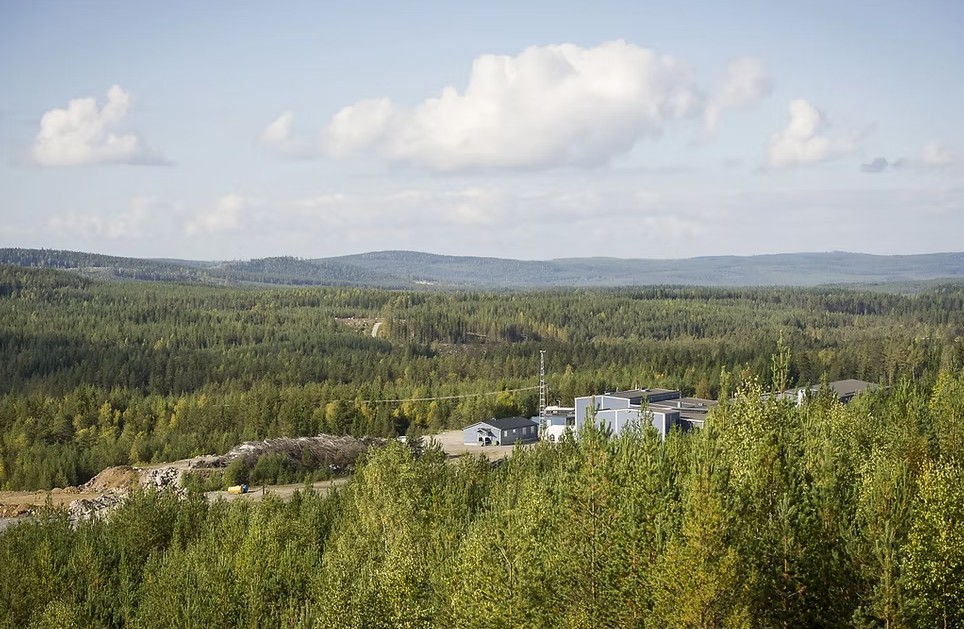
Leading Edge Materials Corp. [TSXV: LEM; OTCQB: LEMIF; FRA: 7FL] reported that it will commence a first-pass diamond drilling program on September 8, 2026, at its 100%-owned Woxna Graphite Project in Sweden. The program has been designed to test whether the Kringeltjarn, Rattjarnamyren and Svartboberget graphite occurrences represent parts of the same, larger regional graphite-bearing system.
Woxna already hosts one of the few fully built and permitted natural flake graphite mines in Europe, centred on the Kringelgruvan open pit and processing plant. The new drilling program, which consists of five holes, looks beyond the existing mine, testing the idea that three separate graphite occurrences in the wider Woxna area – Kringeltjarn’s eastern extension, Rattjarnamyren (to the northwest) and Svartboberget – are not isolated pockets of mineralization, but different parts of the same, larger graphite-bearing system.
The hypothesis is supported by two independent lines of historical evidence. First, an earlier drill hole at Svartboberget intersected a thick sequence of graphite-bearing rock at depth. Second, historical geophysical survey data, collected using the Slingram (induction coil) electromagnetic method in the 1980s and 1990s, together with reinterpreted airborne geophysical data, highlight several conductive targets within the Svartboberget, Rattjarnamyren and Kringeltjarn areas.
The geophysical data points to the continuation of a conductive trend from Rattjarnamyren toward Svartboberget. Slingram data also define conductive targets that may indicate shallow graphitic mineralization and potential bedrock exposure, between Svartboberget and the know mineralization at Kringeltjarn. Graphite is highly conductive, so these conductive anomalies are considered priority targets (as they may indicate the presence of graphite-bearing rock at shallower depth) that have not yet been drill-tested.
Structural drivers behind the graphite market remain strong. According to Benchmark Mineral Intelligence, global demand for natural flake graphite is forecast to rise from around 1.3 million tonnes in 2026 to approximately 2.7 million tonnes by 2036, more than doubling within a decade and outpacing demand growth for almost every other major battery raw material other than lithium. China continues to dominate the supply chain, accounting for roughly 70% of global natural graphite mine production, more than 80% of the world’s spherical graphite processing capacity and over 90% of global anode manufacturing capacity.
China’s announcement No. 72 (November 9, 2025) suspended the graphite dual-use export controls introduced in December, 2024, and is affecting the United States. The suspension expires on November 27, 2026. The suspension eased near-term trade tensions but has done little to change the underlying, structural reliance on Chinese supply that continues to concern battery makers, automakers and governments across Europe and North America.
Against this backdrop, the European Union has set a target under the Critical Raw Materials Act of sourcing at least 10% of its strategic raw material consumption domestically by 2030. The exploration program announced today also comes as the Swedish government’s newly published mineral strategy places critical raw materials and mining at the centre of the country’s industrial and national security policy, reinforcing a supportive backdrop for the resurgence of projects such as Woxna.
The company also reported that, further to its news releases dated July 12, 2026, and August 18, 2026, relating to the launch of its non-brokered private placement and first-tranche closing, the company has received approval from the TSX Venture Exchange to extend the closing of the private placement. The company now expects to close the private placement on or before September 25, 2026, subject to the receipt of all required regulatory approvals. The terms of the private placement remain unchanged from those previously announced.
The company intends to use the net proceeds to advance the company’s projects in Sweden and Romania as well as for general working capital and corporate purposes. In particular, following the recent award of a 25-year mining lease for the Norra Karr heavy rare earth elements project, proceeds will support prefeasibility study workstreams and environmental permitting for that project, alongside studies related to a possible restart of the Woxna graphite mine and processing plant. The company continues to seek alternative capital for its Romanian exploration activities.
Kurt Budge, CEO of Leading Edge Materials, commented: “Woxna is one of the few fully built and permitted natural flake graphite mines in Europe, and this drilling program is a straightforward, low-cost way to test whether we are sitting on a larger, connected graphite system. The historical intersection at Svartboberget, combined with our reinterpretation of the geophysical data, gives us a clear and specific hypothesis to test.
“If the results confirm what we expect, this could extend the resource growth potential at Woxna, at a time when Europe’s need for a secure, domestic source of graphite has rarely been more pressing. This near-mine drilling program also comes as the Swedish government’s new mineral strategy places critical raw materials and mining at the centre of the country’s industrial and national security policy, reinforcing the supportive backdrop for advancing projects such as Woxna. We look forward to reporting results once the drilling program is completed in the coming months.”
Leading Edge Materials is focused on developing critical raw material assets across the European Union. Its primary focus is the wholly owned Norra Karr heavy rare earth element project in Sweden, one of the world’s most strategically significant heavy rare earth deposits and among the few advanced-stage projects within the European Union capable of producing dysprosium, terbium and yttrium at meaningful scale.
Situated in one of the globe’s most politically and regulatory stable mining environments, Norra Karr is well positioned to contribute directly to the objectives of the European Union’s Critical Raw Materials Act, including the bloc’s target of sourcing 10% of its critical raw material consumption domestically by 2030. Beyond rare earths, the company also holds the Woxna graphite mine in Sweden – a fully constructed and permitted facility – as well as a 90% stake in the Bihor Sud nickel-cobalt exploration alliance in Romania.
Resource World Magazine Inc. has prepared this editorial for general information purposes only and should not be considered a solicitation to buy or sell securities in the companies discussed herein. The information provided has been derived from sources believed to be reliable but cannot be guaranteed. This editorial does not take into account the readers investment criteria, investment expertise, financial condition, or financial goals of individual recipients and other concerns such as jurisdictional and/or legal restrictions that may exist for certain persons. Recipients should rely on their own due diligence and seek their own professional advice before investing.