
McIlvenna Bay reaches first production — nearly 50 years after discovery
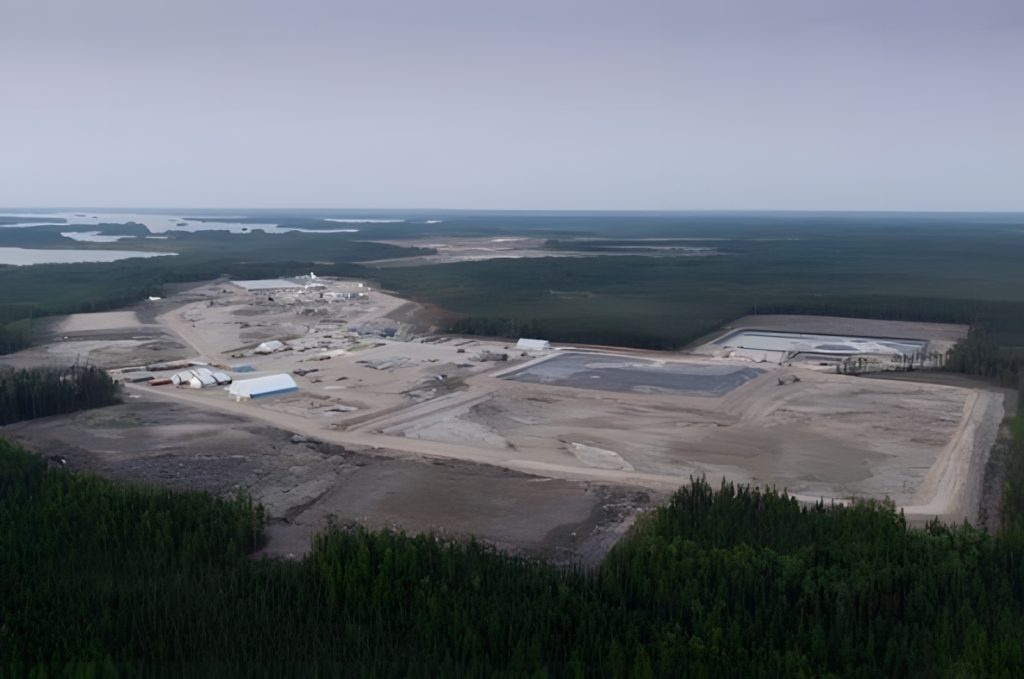
The mine currently employs approximately 380 full-time workers, with employment expected to increase to about 450 once commercial production is reached. - Image from Foran Mining Corporation
The long road from an Esso Minerals drill discovery to a producing Saskatchewan copper-zinc mine — and what McIlvenna Bay may tell us about the exploration potential at Searchlight Resources’ Wapawekka Lake project.
My old colleagues at Esso Minerals had every reason to celebrate.
Jack Marr, Randy Turner and Zig Dobrzynski had just helped drill into a new massive sulphide discovery at McIlvenna Bay in Saskatchewan. It was the kind of result exploration geologists spend their careers hoping to find.
Then they were summoned back to the office on Monday morning.
The good news was the discovery. The bad news was that Esso Minerals was shutting down its minerals division.
The geologists were out of a job, and McIlvenna Bay was left for others to carry forward.
Nearly 50 years later, that discovery has become a mine.
McIlvenna Bay has now reached first production, marking the culmination of a remarkable exploration story that survived changes in ownership, shifting corporate priorities, difficult commodity cycles and decades of work by successive geological and development teams.
What began as a geophysical target followed by a drill hole eventually became a significant copper-zinc mining operation.
There is an important lesson in that history: an orebody does not care about the corporate circumstances surrounding its discovery.
Good geology remains good geology.
That is one reason the McIlvenna Bay story is particularly relevant to Searchlight Resources Inc. [SCLT-TSXV] and its Wapawekka Lake VMS Project in Saskatchewan.
Searchlight is exploring prospective volcanogenic massive sulphide terrain and has assembled a substantial inventory of geophysical targets exhibiting characteristics consistent with the type of copper-zinc mineralization being sought.
At this stage, they are targets — not discoveries. That distinction matters.
Exploration is the process of systematically narrowing the possibilities: mapping the geology, interpreting geophysics, identifying the strongest anomalies and ultimately drilling them. The drill determines whether a promising geophysical response represents something economically meaningful.
McIlvenna Bay is a reminder of why that work matters.
Every mine begins as an anomaly, an interpretation or an idea on a geological map. Most targets do not become mines. But occasionally, one drill hole changes the story.
At McIlvenna Bay, that happened nearly half a century ago.
The people who made the original discovery could hardly have known how long the road ahead would be — or that the deposit they uncovered would eventually become part of Saskatchewan’s growing critical-minerals industry.
For exploration companies working the same broader geological environment today, McIlvenna Bay offers something more useful than optimism. It provides a real-world example of what Saskatchewan’s VMS terrain is capable of hosting.
Congratulations are due to the geologists who first found McIlvenna Bay, the generations of people who kept the project moving forward, and the team that ultimately turned a decades-old discovery into a producing mine.
And somewhere in Saskatchewan, another geophysical anomaly may be waiting for its first drill hole.
Disclosure: The author is a director of Searchlight Resources Inc. This post is commentary and is not investment advice.