
Purepoint Uranium drills 5.6 metres of radioactivity at Nova discovery, Dorado Project, peaking at 53,300 CPS, Saskatchewan
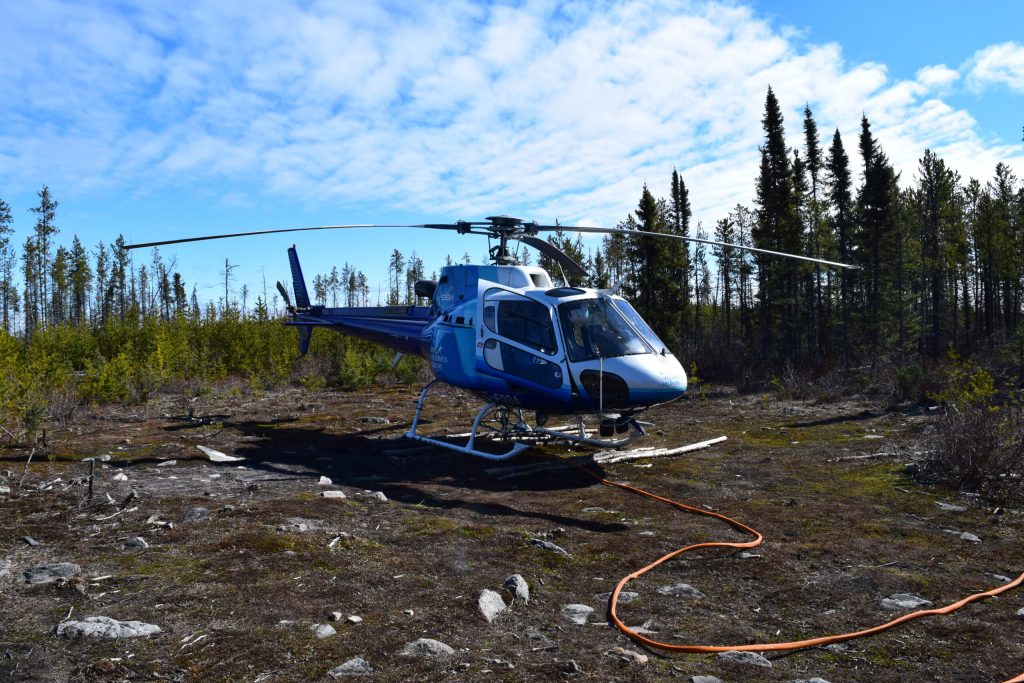
Purepoint Uranium Group Inc. [TSXV: PTU; OTCQB: PTUUF] reported results from the first phase of its 2026 summer drill program on the Dorado Project, Saskatchewan. The final hole completed prior to a scheduled mid-program break, NV26-11, intersected 5.6 metres of continuous radioactivity averaging 11,730 cps from the downhole probe, including a peak reading of 53,300 counts per second (cps), at the Nova Discovery.
The radiometric response is consistent with the high-grade uranium mineralization previously intersected at Nova, with laboratory assays pending. Purepoint operates the Dorado Project as part of its 50/50 joint venture with IsoEnergy Ltd. [TSX: ISO; NYSE AMERICAN: ISOU].
“This last hole provided another data point supporting our geological model at Nova,” said Chris Frostad, President & CEO of Purepoint Uranium Group. “The continuity of the radioactive interval and the strength of the downhole probe response reinforce our understanding of the mineralized system and help guide our exploration priorities when drilling resumes in two weeks. During the break, we will integrate these results with the broader geological dataset before determining our next drilling priorities.”
Highlights: Four drill holes were completed during the first phase of the 2026 program. Hole NV26-11 intersected 5.6 metres of continuous radioactivity from 337.9 to 343.5 metres, averaging 11,730 cps. The interval includes 1.7 metres averaging 31,800 cps.
A higher-intensity core averaged 43,480 cps over 1.1 metres. Maximum downhole probe reading reached 53,300 cps.
The results provide additional information supporting the interpreted continuity and orientation of the Nova mineralized system. Laboratory assays are pending.
The first phase of this summer drilling tested both the Q23 and Nova target areas. The first three holes encountered localized radioactive intervals that contributed to the Company’s understanding of the geological setting and structural controls. The final hole, NV26-11, intersected 5.6 metres of radioactivity averaging 11,730 cps between 337.9 and 343.5 metres, from a strongly hematite altered granitic gneiss / pelitic gneiss contact. The intercept represents the broadest continuous radioactive interval encountered during the program. The latest holes have provided additional information regarding the continuity and orientation of the Nova mineralized system.
Detailed geological logging, structural interpretation and geochemical sampling are underway during the scheduled break before drilling resumes.
Hole PG26-08 at Target Area Q23 returned 2.0 metres at 850 cps with a maximum cps of 1,670 cps. Hole PG26-09 at Q23 returned 1.3 metres at 710 cps with a maximum cps of 1,170 cps, 1.7 meytres at 780 cps, 0.6 metres at 890 cps and 0.3 metres at 800 cps.
Hole NV26-10B at the Nova Target Area returned 0.8 metres at 700 cps with a maximum of 830 cps, 0.4 metres at 1,100 cps with a maximum of 1,670 cps and 0.5 metres at 1,650 cps with a maximum 3,010 cps,
Hole NV26-11 at the Nova Target Area returned 5.6 metres at 11,730 cps with a maximum 53,300 cps, including 1.7 metres at 31,800 cps.
PG26-08 is interpreted to represent a thorium-related radiometric response based on handheld spectrometer readings. *Downhole probe readings have been rounded and measure natural gamma radiation and are not uranium grades. Laboratory assays are pending.
Reported interval lengths represent downhole length. True width has not been determined.
The Dorado Project is located along the eastern margin of Saskatchewan’s Athabasca Basin, Canada. The property covers a prospective structural corridor considered favourable for unconformity-related uranium mineralization and is operated by Purepoint under a 50/50 joint venture with IsoEnergy Ltd.
Dorado hosts the Nova Discovery, where previous drilling returned assays of up to 8.1% U3O8 over 0.4 metres withing 1.62% U3O8 over 2.1 metres. Uranium mineralization has been identified along a prospective structural corridor extending approximately one kilometre and is associated with intense alteration, structural disruption and graphitic basement rocks.
The current drill program is designed to improve the understanding of the geometry and continuity of the Nova mineralized system while evaluating additional priority targets across the property.
A Mount Sopris 2PGA-1000 downhole total gamma probe was utilized for radiometric surveying and reported counts per second.
Purepoint Uranium Group is a uranium exploration company operating at the heart of the Athabasca Basin – the world’s premier high-grade uranium district. Purepoint actively operates exploration programs on behalf of joint venture partnerships with three of the world’s leading uranium companies: Cameco Corp., Orano Canada Inc. and IsoEnergy Ltd.
Purepoint’s strategy of advancing projects through partnerships with leading uranium companies allows the Company to leverage technical expertise and partner funding while maintaining meaningful exposure to discovery success.
Purepoint operates the Dorado Project under a 50/50 joint venture with IsoEnergy where the Nova Discovery returned confirmed assays of up to 8.1% U₃O₈ and a mineralized corridor now extends to one km.
The Company also operates the Hook Lake and Smart Lake projects under joint venture with Cameco Corp. and Orano Canada Inc. Purepoint’s wholly owned property portfolio includes additional exploration-stage uranium assets in the Athabasca Basin region.
Additionally, Purepoint holds a promising VMS project optioned to and strategically positioned adjacent to Eldorado Gold’s McIlvenna Bay project.