
Relevant Gold launches 5,000-metre drill program and updates exploration model at Lewiston Project, Wyoming
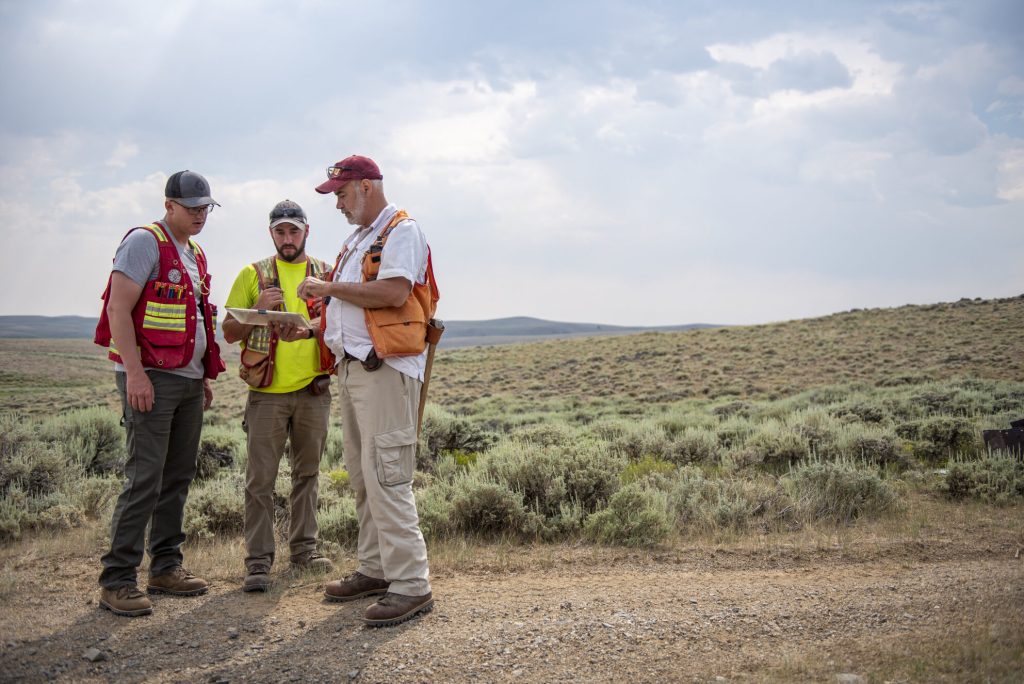
Relevant Gold Corp. [TSXV: RGC; OTCQB: RGCCF] has begun commenced a 5,000-metre oriented diamond drill program at the Burr target zone in its 100%-owned Lewiston Project in west-central Wyoming. This fully funded and permitted program is the first comprehensive drill test of an evolving integrated geological model developed through two years of drilling, structural mapping, surface geochemistry and geophysics.
The drill program is designed to follow the gold-bearing system identified at Burr beyond the limited 300-metre long zone drilled in 2024 as well as target newly defined parallel structures. The company has submitted an expanded drill permit that, if approved, will provide flexibility for drilling an additional 2.5 km of the Burr trend and the parallel Sweetwater trend.
2026 Lewiston Drill Program – Key Goals: Extend the Burr Corridor: Test mineralization indicators up to 500 metres beyond the 2024 drill footprint.
Extend the system to Depth: Select holes are targeted to 400 m vertical depth – approximately 225 metres deeper than 2024 drilling.
Test Parallel Structures: Drill select adjacent shears where structural mapping, geochemistry and 2024 drilling support the potential for parallel mineralized structures.
“Our 2024 drilling confirmed that the Burr target at Lewiston hosts a gold-bearing structural system. Over the past two years, we’ve built a much deeper understanding of that system through drilling, mapping, surface geochemistry and geophysics, with each new dataset strengthening our geological model. We’re returning to Burr with a clear strategy and a drill program designed to test whether this mineralized system extends well beyond the area drilled to date,” said Rob Bergmann, CEO of Relevant Gold.
In addition to drilling, a broader exploration program is underway to refine the company’s geological understanding of the overall Lewiston Project. Concurrent work will include geological mapping, surface rock sampling and ground verification of selected VTEM™ responses; selective overburden stripping across the Burr shear zone, followed by detailed lithological and structural mapping and systematic surface sampling; continued exploration along the southern Burr extension and parallel Sweetwater trend.;
Also, integration of new geological, geochemical and geophysical information into the company’s three-dimensional model; and submitted expanded Federal and State permit applications covering an additional 2.5 km of strike along the Burr and parallel Sweetwater trends.
The 2026 drilling program is a substantial follow-up to the initial six-hole, 1,026-metre, 2024 drill program targeted on the Burr structural zone at Lewiston, which cut shear-hosted gold mineralization in every hole along only 300 m of strike. Notably, gold mineralization was also cut in parallel structures within 150 metres of the Burr structure.
Drilling was shallow and the deepest hole only went to approximately 175 metres vertical depth. Subsequent mapping and sampling has extended the interpreted Burr mineralization trend by more than 2.5 km to the southwest, and VTEM™ and magnetic geophysical surveys have added subsurface information that helps identify priority targets for this year’s drill program.
The current program will evaluate an additional 500 metres of strike extent, with select holes targeted to approximately 400 metres vertical depth – approximately 225 metres deeper than prior drilling. Parallel structures supported by favorable geochemistry, alteration and mineralization will also be targeted to test the lateral extent of the mineralized corridor. Oriented HQ core will be used to help define shear geometry, vein orientation and the structural controls on gold mineralization. Hole sequencing, orientations, final depths and metre allocation will be modified in response to results.
In addition to the detailed surface mapping that underpins the Company’s broad geological model, the 2026 drilling program is informed by geophysics and detailed surface geochemical sampling. 2025 VTEM™ and magnetic geophysical surveys identified 44 electromagnetic anomalies across the South Pass Gold Camp, including 15 high-priority targets at Lewiston. The company interprets the geophysical results as identifying structural corridors over 3 km long with anomalies seen to more than 400 metres depth – the limit of survey penetration. These features correspond well with favorable structural settings, alteration, surface geochemistry and known mineralization. The conductive VTEM electromagnetic responses may reflect sulfide-bearing shear zones, graphite, reactive rock units, hydrothermal alteration, groundwater or clay-rich zones. These responses require geological validation and do not independently indicate gold mineralization.
Detailed geochemical surface sampling is conducted alongside mapping and provides important data for drill targeting. As previously announced, there were four overlimit samples, plus a coarse-gold evaluation process pending from the 2025 Lewiston surface mapping and sampling program. The four overlimits have been received and confirm high silver, copper, and lead results, which reinforce certain drill targets along the expanded Burr trend. These additional overlimit sample results support previously reported assays within the same target area and provide further confirmation of mineralization.
Final overlimit sample results from four high-grade 2025Lewiston samples: Sample C044413804 returned 134 g/t Ag and 2.71% Cu. C0413719 returned 486 g/t Ag and 4.50% Cu. C0413718 returned 506 g/t Ag and 5.38% Cu. C0413717 returned 2.67% Pb.
More important was the company’s assessment of the potential influence of coarse gold on the repeatability of elevated gold results. The company submitted new splits of retained coarse-reject material from 25 selected samples for metallic screen fire-assay analysis. This assay validation program is part of the company’s ongoing QA/QC and technical verification work. The metallic screen head grades show a general agreement with the original PhotonAssayTM results, supporting the analytical repeatability of the original PhotonAssayTM results.
Ten of the 25 samples contained coarse gold particles, exceeding 10% of the calculated metallic screen grade, including three exceeding 20%, which confirms that coarse gold locally contributes to variability in certain samples but does not overall degrade the original PhotonAssayTM analysis.
Because the work was conducted on selected retained material, it does not independently assess the representativeness of the original surface samples or demonstrate continuity of mineralization. The metallic screen assay results show general agreement with the original PhotonAssayTM gold results, supporting the repeatability of elevated gold results in the selected samples despite localized coarse gold.
Relevant Gold has a 100% interest in five district-scale projects across two gold camps covering more than 50,000 acres in west-central Wyoming.
Resource World Magazine Inc. has prepared this editorial for general information purposes only and should not be considered a solicitation to buy or sell securities in the companies discussed herein. The information provided has been derived from sources believed to be reliable but cannot be guaranteed. This editorial does not take into account the readers investment criteria, investment expertise, financial condition, or financial goals of individual recipients and other concerns such as jurisdictional and/or legal restrictions that may exist for certain persons. Recipients should rely on their own due diligence and seek their own professional advice before investing.