
Standard Uranium confirms strong radioactivity at surface and discovers new showings at Corvo Project, Saskatchewan
Standard Uranium Ltd. [TSXV: STND; OTCQB: STTDF; FSE: 9SU0] reported preliminary results from its 2026 ground exploration program at the Corvo Uranium Project, currently under a three-year earn-in option agreement with Aventis Energy Inc. [CSE: AVE]. The 12,363-hectare project is located 60 km due east of Cameco Corporation’s McArthur River mine in the eastern Athabasca Basin region, northern Saskatchewan.
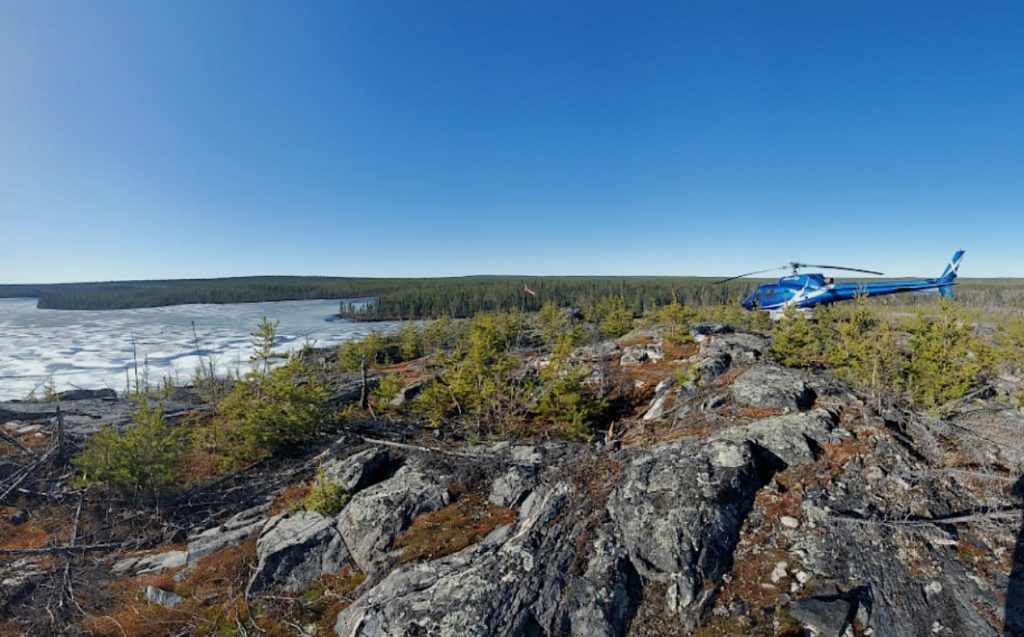
From October 1 to 9, 2026, the company completed a detailed prospecting and sampling program across historical uranium showings and zones of interest on the Project. The program confirmed multiple zones of strong radioactivity at surface and found showings that had not previously been documented on the project. The program was funded by Aventis and operated by Standard Uranium.
Highlights: Up to 48,000 cps at the Manhattan East showing: Handheld scintillometer readings of 20,000 to 48,000 counts per second (cps) in outcrop at the historical Manhattan East showing, where previous work reported readings up to 10,600 cps.
Strong readings beyond Manhattan East: Up to 36,000 cps at a known occurrence on the Brooklyn trend and 30,000 cps at Manhattan NE, approximately 130 metres northeast of the Manhattan East showing. In total, 56 readings above the 300-cps anomalous threshold were recorded, eight of them above 10,000 cps.
New showing on the Brooklyn trend: Prospecting discovered a previously undocumented radioactive occurrence reading up to 13,400 cps in altered pegmatite outcrop along the Brooklyn trend.
Favourable Uranium Host Rocks: Geological mapping along structural and electromagnetic (EM) trends across the Project confirmed the presence of deformed and hydrothermally altered basement lithologies including metasedimentary, calc-silicate, and granitic rocks, ideal for uranium and Rare Earth Element (REE) mineralization.
Assays pending: Nine outcrop grab samples are at Saskatchewan Research Council Geoanalytical Laboratories (SRC) in Saskatoon for uranium, REE, and whole-rock analysis.
Future Exploration: Following the success of the 2026 drilling and prospecting campaigns, additional geophysical programs are currently being planned to aid in target generation ahead of a 2027 drill program.
“Confirming strong, structurally-controlled radioactivity at the Manhattan East showing and discovering new radioactive showings along the Brooklyn Trend builds directly on the widespread uranium enrichment we intersected during our first drill program at Corvo,” said Sean Hillacre, President & VP Exploration of Standard Uranium. “The outcrop exposure on the project allows us to tie surface mapping and sampling to our new drilling and geochemical datasets, and these results will feed directly into drill target refinement ahead of our planned 2027 drilling.”
Beginning October 1 and concluding October 9, 2026, the Standard Uranium technical team completed a detailed mapping, prospecting, and sampling program to ground-truth and expand on historical uranium showings at surface on the project. The program followed up on the winter 2026 inaugural drill program, the first drilling on the Project in more than forty years, which returned anomalous uranium in all nine completed holes.
More than 100 detailed geological observations, structural measurements, and scintillometer readings were taken from outcrops across the Project along the Manhattan and Brooklyn trends, in addition to the Dorward, Unnamed, Finger, Hook, and Sheppard Lake areas.
Prospecting confirmed and upgraded the historical Manhattan East showing, where previous work reported readings up to 10,600 cps. The 2026 program measured 20,000 cps to 48,000 cps in outcrop at the showing, and a further reading of 30,000 cps approximately 130 metres to the northeast (Manhattan NE), with samples collected from both locations.
Newly discovered zone of highly anomalous radioactivity along the Brooklyn Trend measuring up to 13,400 cps within altered pegmatite outcrop.
Along the Brooklyn Trend, a historical occurrence previously reported at 20,000 cps was upgraded to 36,000 cps in hematite-altered alkali granite gneiss.
A total of 56 handheld scintillometer readings of anomalous radioactivity >300 cps were recorded, including eight measurements >10,000 cps at surface.
A total of nine outcrop grab samples were collected and submitted to Saskatchewan Research Council Geoanalytical Laboratories (SRC) in Saskatoon, Saskatchewan for whole-rock, uranium, and REE geochemical analysis.
Prospecting for radioactive boulders and outcrop was completed using handheld RS-120 Super-Scintillometers and RS-125 Super-Spectrometers manufactured by Radiation Solutions Inc.
Assay results from the nine grab samples will be released when they are received from SRC and reviewed by the qualified person. Standard Uranium is designing supplementary geophysical programs to refine drill targets, integrating the new surface data with the winter 2026 drilling and geochemical datasets. A second drill program is planned for 2027.
The Corvo Project lies at the eastern margin of the Athabasca Basin, consisting of 14 mineral dispositions totalling 12,363 hectares. The project was recently expanded to cover 29.3 km of prospective strike length along three northeast trending magnetic low/EM conductor corridors. A definitive property option agreement was signed and announced by the Company in May 2025 to allow Aventis Energy to acquire up to 75% interest in the Corvo Project by completing a 3-Year Earn-In Option totalling $4,500,000 in exploration expenditures and $950,000 in combined consideration payments and shares.
The company believes the project is highly prospective for the discovery of shallow, high-grade basement-hosted uranium mineralization akin to the Rabbit Lake deposit and the nearby Gemini and Ackio Mineralized Zones. Corvo boasts shallow drill targets with bedrock under minimal cover of glacial till. Several outcrop showings of mineralized veins and fractures are present on the Project, notably the Manhattan Showing that returned sample results up to 8.1% U3O8 at surface.
The winter 2026 inaugural drill program, the first drilling on the Project in more than forty years, completed 2,457 metres in ten reconnaissance holes at the Manhattan, Brooklyn and Tribeca target areas. Nine holes were completed and one was abandoned due to ground conditions. All nine completed holes returned anomalous uranium, including 13 metres of highly anomalous uranium (>100 ppm U, partial digestion). Intervals are drilled core lengths and true widths are not known.
Standard Uranium is a uranium exploration company and emerging project generator poised for discovery in the world’s richest uranium district. The company holds interest in over 272,035 acres (110,089 hectares) in the Athabasca Basin, Saskatchewan. Since its establishment, Standard Uranium has focused on the identification, acquisition, and exploration of Athabasca-style uranium targets with a view to discovery and future development.
Standard Uranium’s Davidson River Project, in the southwest part of the Athabasca Basin, comprises 10 mineral claims over 30,737 hectares. Davidson River is highly prospective for basement-hosted uranium deposits due to its location along trend from recent high-grade uranium discoveries. However, owing to the large project size with multiple targets, it remains broadly under-tested by drilling. Recent intersections of wide, structurally deformed and strongly altered shear zones provide significant confidence in the exploration model and future success is expected.
Standard Uranium’s eastern Athabasca projects comprise over 59,748 hectares of prospective land holdings. The eastern basin projects are highly prospective for unconformity related and/or basement hosted uranium deposits based on historical uranium occurrences, recently identified geophysical anomalies, and location along trend from several high-grade uranium discoveries.
Standard Uranium’s Sun Dog Project, in the northwest part of the Athabasca Basin, is comprised of nine mineral claims over 19,603 hectares. The Sun Dog Project is highly prospective for basement and unconformity hosted uranium deposits yet remains largely untested by sufficient drilling despite its location proximal to uranium discoveries in the area.