
Laurion Mineral Exploration reports multiple gold and polymetallic intercepts at Ishkōday Project, Ontario
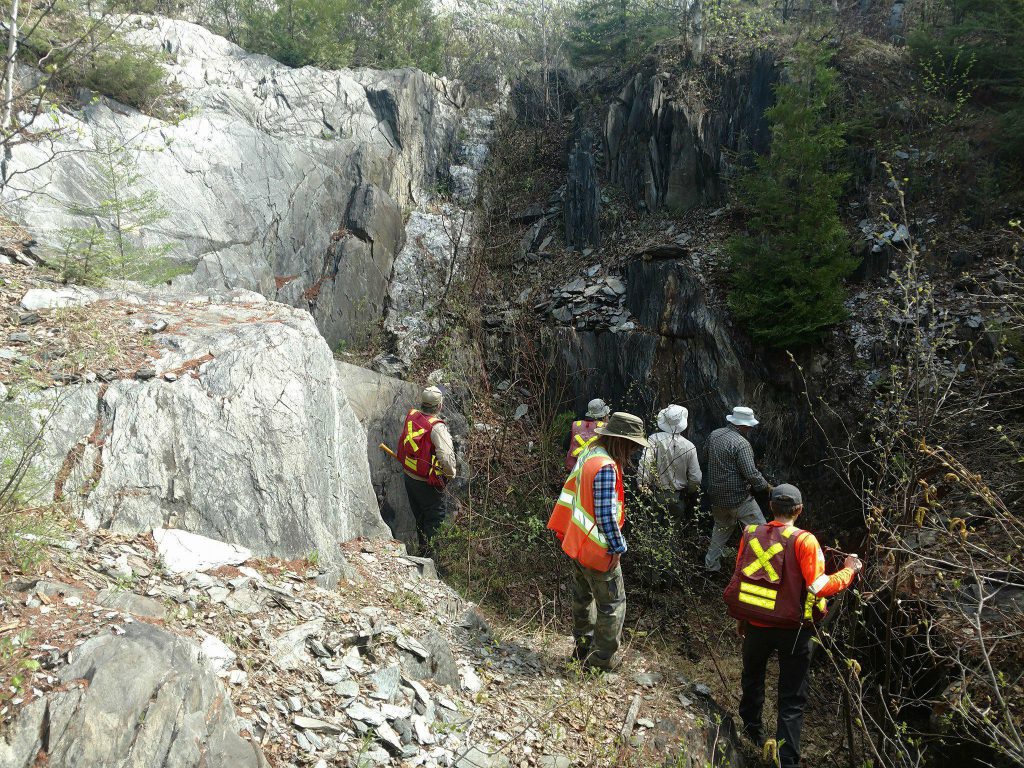
Laurion Mineral Exploration Inc. [TSX-V: LME; OTC: LMEFF; FSE: 5YD] reported assay results from drill holes LBX26-106 and LBX26-107 from its ongoing 2026 Phase 1 diamond drilling program at its 100%-owned Ishkōday Gold and Polymetallic Project, located approximately 220 km northeast of Thunder Bay and 28 km northeast of Beardmore, northwestern Ontario.
Highlights include LBX26-106: 3.75 metres grading 0.568 g/t Au, 12.40 g/t Ag, 0.46% Cu and 1.75% Zn (278.75 m to 282.50 m), including 2.30 m grading 0.886 g/t Au, 19.26 g/t Ag, 0.73% Cu and 1.64% Zn (280.2 m to 282.5 m); and 0.50 m grading 1.730 g/t Au, 43.20 g/t Ag, 1.51% Cu and 3.40% Zn (282.0 m to 282.5 m); 4.70 m grading 0.582 g/t Au, 2.53 g/t Ag, 0.07% Cu and 0.93% Zn (172.50 m to 176.50 m); 2.70 m grading 0.742 g/t Au, 3.88 g/t Ag, 0.10% Cu and 1.58% Zn (174.50 m to 177.20 m), including 0.50 m grading 3.220 g/t Au, 9.70 g/t Ag, 0.30% Cu and 6.29% Zn (174.50 m to 175.00 m).
LBX26-107: 1.15 m grading 1.374 g/t Au, 10.10 g/t Ag, 0.49% Cu and 2.01% Zn (239.80 m to 240.95 m), including 0.50 m grading 1.170 g/t Au, 20.10 g/t Ag, 1.03% Cu and 3.64% Zn (240.45 m to 240.95 m); 2.90 m grading 0.608 g/t Au, 11.93 g/t Ag, 0.34% Cu and 0.93% Zn (351.40 m to 354.30 m), including 0.80 m grading 1.975 g/t Au, 39.50 g/t Ag, 1.45% Cu and 2.72% Zn (353.50 m to 354.30 m).
Through targeted infill, expansion and exploration drilling, LAURION’s 2026 Phase 1 drill program is designed to systematically advance the A-Zone, which may support the evaluation of a potential maiden Mineral Resource Estimate (MRE). Drill holes LBX26-106 and LBX26-107 were designed to test the A-Zone and McLeod mineralized systems at depth and along strike, tighten drill spacing, and evaluate priority geophysical targets. Together, the drilling is providing additional information regarding the geometry and potential extent of mineralization and is being evaluated to assess continuity within the mineralized system.
LBX26-106 was designed to test the A-Zone down-plunge, including the down-plunge continuation of the vertical section of grade vectorization. The hole was intended to provide additional information to evaluate the continuity and geometry of mineralization at depth, and strengthen Laurion’s geological understanding of the A-Zone.
LBX26-107 was designed to test the McLeod mineralized horizon while reducing the pierce-point spacing between 2022 drill holes. The hole also provided an opportunity to simultaneously test a chargeability anomaly identified in the 2015 Abitibi geophysical survey, combining tighter drill coverage of the known mineralized horizon with testing of a geophysical target.
Building on the program to date, LAURION increased its planned Phase 1 drilling from 3,865 metres to 5,605 metres across 22 drill holes. The expanded program is being informed by SRK Consulting’s independent structural gap analysis of the A-Zone, which identified five priority target areas where additional drilling may address key gaps in the existing drill database and further strengthen geological understanding. LAURION is using this framework, together with ongoing drill results, to prioritize near-term drilling as it continues to systematically advance the A-Zone toward its potential maiden MRE. Specific targets, sequencing and timing remain subject to, among other things, ongoing results and available financing.
All Core lengths are drilled thicknesses; true widths have not yet been determined.
The Ishkōday Project covers approximately 57 km² within the prolific Beardmore–Geraldton and Onaman–Tashota Greenstone Belts and hosts a single 6.0 km by 2.5 km mineralised corridor. Historical and modern exploration programs have completed over 98,000 metres of drilling, confirming a large and evolving gold-rich base metal mineral system.
Resource World Magazine Inc. has prepared this editorial for general information purposes only and should not be considered a solicitation to buy or sell securities in the companies discussed herein. The information provided has been derived from sources believed to be reliable but cannot be guaranteed. This editorial does not take into account the readers investment criteria, investment expertise, financial condition, or financial goals of individual recipients and other concerns such as jurisdictional and/or legal restrictions that may exist for certain persons. Recipients should rely on their own due diligence and seek their own professional advice before investing.