
Standard Uranium launches exploration program at Corvo Uranium Project, Saskatchewan
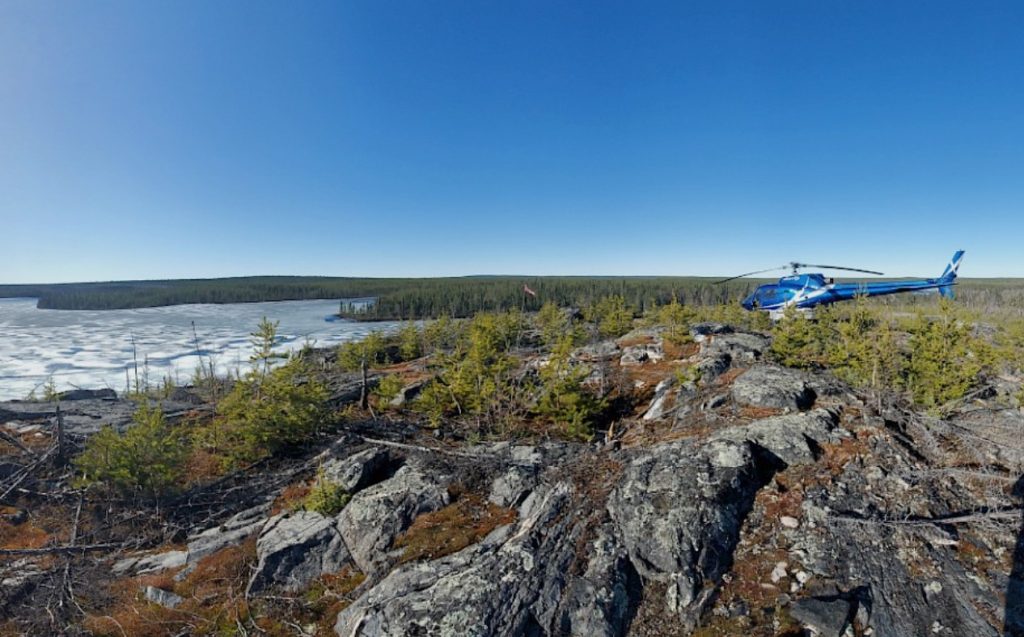
Standard Uranium Ltd. [TSXV: STND; OTCQB: STTDF; FSE: 9SU0] reported the start of additional ground exploration on its Corvo Uranium Project, Eastern Athabasca Basin, Saskatchewan currently under a three-year earn-in option agreement with Aventis Energy Inc. [CSE: AVE]. Exploration crews mobilized to site on October 1, 2026, to begin a detailed surface mapping and sampling program across historical uranium showings and newly identified zones of interest.
The fall 2026 Program will focus on prospective areas around and along strike of the winter 2026 inaugural drilling campaign which confirmed anomalous uranium in all nine completed drill holes. Results returned a total of 55 metres of weakly anomalous uranium (>10 ppm U, partial), including 23 metres of moderately anomalous uranium (>50 ppm U, partial), and including 13 metres of highly anomalous uranium (>100 ppm U, partial).
Highlights – High-Grade Uranium at Surface: A prospecting, mapping, and geochemical sampling program is underway to expand on newly identified and historical uranium-bearing outcrops including the Manhattan showing (1.19 to 8.10% U3O8) and SMDI showing 2052 (0.137% U3O8 and 2,300 ppm Th).
Integration with Drilling Results: The results of the inaugural drill program on the project clearly outlined a robust multi-kilometre uranium-bearing mineralized system across the Manhattan, Brooklyn, and Tribeca target areas. Drilling confirmed the presence of significant fault systems linked to uranium enrichment and prospective hydrothermal alteration in the basement rock, which will be further investigated in detail at surface during the Program.
Follow Up Targets & Next Steps: Following the integration of additional surface exploration results with drilling and geophysical datasets, a second phase drilling program is being planned to continue testing along strike of mineralized drill holes in addition to priority regional drill targets. Several priority uranium targets remain along >25 km of structural strike length.
“Following the initial success of our first drill program on the Project, we are eager to get boots back on the ground with new access to areas we know are highly prospective for significant uranium mineralization,” said Sean Hillacre, President & VP Exploration of Standard Uranium. “We are fortunate to have sufficient outcrop exposure at Corvo to allow us to link detailed mapping and sampling work with our new subsurface drilling and geochemistry data. We aim to expand on known mineralized areas on the Project and discover additional surface showings prior to follow-up drilling in 2027.”
Aventis will fund the fall exploration program with Standard Uranium operating the exploration as part of the option agreement with the company dated May 8, 2025.
The company’s technical team mobilized to the Corvo Project on October 1, 2026, to undertake a detailed mapping, prospecting, and surface sampling program to expand on known uranium showings and collect additional geological information at surface which can be linked to drill results. Collected grab samples will be transported to Saskatchewan Research Council Geoanalytical Laboratories in Saskatoon, SK for geochemical analysis.
Supplementary geophysical work programs across the Project are also being designed to further refine drill targets for a 2027 drill program. Ongoing geophysical interpretation and modeling is planned throughout the remainder of 2026 to integrate drilling, geophysics, and prospecting datasets, which will assist with drill targets generation across the Project prior to follow-up drilling next year.
The company believes the project is highly prospective for the discovery of shallow, high-grade basement-hosted uranium mineralization akin to the Rabbit Lake deposit and the recently discovered Gemini Mineralized Zone. Located just outside the current margin of the Athabasca Basin, Corvo boasts shallow drill targets within bedrock overlain by thin glacial till. Several outcrop showings of mineralized veins and fractures are present on the Project, notably the Manhattan Showing that returned modern sample results up to 8.10% U3O8 at surface.
Samples collected for analysis are sent to SRC Geoanalytical Laboratories in Saskatoon, Saskatchewan for preparation, processing, and ICP-MS multi-element analysis using total and partial digestion and boron by fusion. Basement samples were tested with ICP-MS2 uranium multi-element exploration package plus boron. All samples marked as radioactive upon arrival to the lab were also analyzed using the U3O8 assay (reported in wt.%). Basement rock split interval samples range from 0.1 to 1.0 m. SRC is an ISO/IEC 17025/2005 and Standards Council of Canada certified analytical laboratory.
Historical data disclosed in this news release relating to sampling results from previous operators are historical in nature. The company considers historical results to be relevant as an exploration guide and to assess the mineralization as well as economic potential of exploration projects.
Standard Uranium is a uranium exploration company and emerging project generator poised for discovery in the world’s richest uranium district. The company holds interest in over 272,035 acres (110,089 hectares) in the world-class Athabasca Basi, Saskatchewan. Since its establishment, Standard Uranium has focused on the identification, acquisition, and exploration of Athabasca-style uranium targets with a view to discovery and future development.
Standard Uranium’s Davidson River Project, in the southwest part of the Athabasca Basin, Saskatchewan, comprises ten mineral claims over 30,737 hectares. Davidson River is prospective for basement-hosted uranium deposits due to its location along trend from recent high-grade uranium discoveries.
However, owing to the large project size with multiple targets, it remains broadly under-tested by drilling. Recent intersections of wide, structurally deformed and strongly altered shear zones provide significant confidence in the exploration model and future success is expected.
Standard Uranium’s eastern Athabasca projects comprise over 59,748 hectares of prospective land holdings. The eastern basin projects are highly prospective for unconformity related and/or basement hosted uranium deposits based on historical uranium occurrences, recently identified geophysical anomalies, and location along trend from several high-grade uranium discoveries.
Standard Uranium’s Sun Dog Project, in the northwest part of the Athabasca Basin, is comprised of nine mineral claims over 19,603 hectares. The Sun Dog Project is prospective for basement and unconformity hosted uranium deposits yet remains largely untested by sufficient drilling despite its location proximal to uranium discoveries in the area.