
Copper Fox Metals updates geophysical program at Eaglehead Porphyry Copper Project, British Columbia
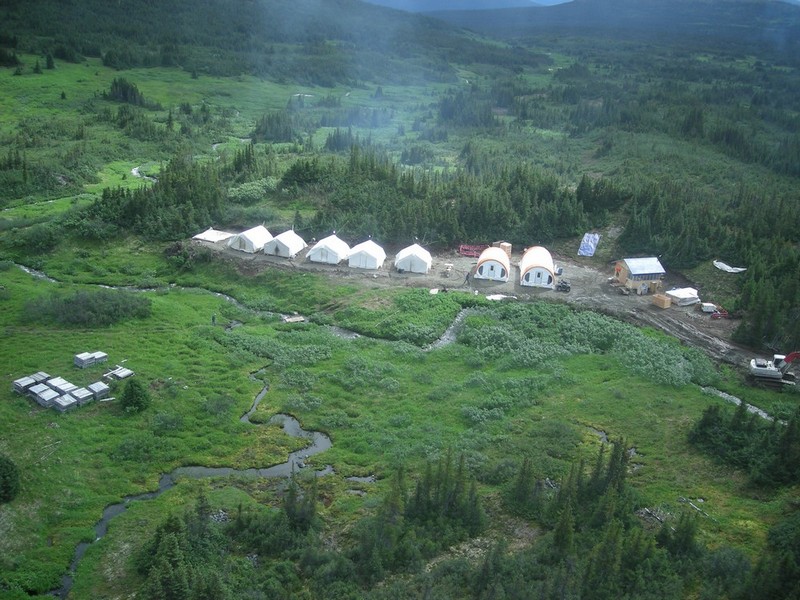
Copper Fox Metals Inc. [TSXV: CUU; OTCQX: CPFXF; FSE: HPU], through its wholly owned subsidiary Northern Fox Copper Inc., reported the completion of the 3D pole-dipole distributed DCIP survey at its 100%-owned Eaglehead porphyry copper project, British Columbia.
Highlights of the 2025 survey: A 2,800-metre long zone of anomalous chargeability (>8mv/s contour/~ 17mrads) occurs at surface in the same northwest trending valley that hosts the four zones of porphyry style mineralization. The anomaly dips to the north under propylitic altered quartz eye porphyry of the Eaglehead intrusive.
The surface expression of the anomalous chargeability exhibits a strong correlation to the anomalous chargeability identified in the 2014 geophysical survey. The chargeability anomaly occurs over a horizontal distance of 2,800m and extends down dip approximately 2,400m to the north.
Several pipe-like bodies of anomalous chargeability correspond to leached, mineralized hydrothermal breccia and secondary copper showings mapped on surface.
The anomalous chargeability occurs within a zone of lower resistivity and extends a significant distance north (down dip) and a short distance south of the mineral resource area.
Elmer B. Stewart, President and CEO, “The preliminary results of the 2025 survey significantly expanded the anomalous chargeability associated with the porphyry copper mineralization. The strong correlation between chargeability and porphyry mineralization combined with the expanded chargeability target has significant implications for the potential size of the mineralized envelopes associated with the open-ended mineralized zones outlined in the 2023 Mineral Resource Estimate (MRE). Going forward merging the chargeability and resistivity data from the 2014-2025 geophysical surveys, is expected to better define the extent of the biotite granodiorite, the primary host for the porphyry style mineralization, and alteration zones associated with the porphyry system to optimize future drilling programs.”
Since 2014, geophysical surveys mapped the chargeability and resistivity signatures of three contiguous areas of the property. The 2014 survey covered from the East zone to the Camp zone and indicated a linear open-ended zone of anomalous chargeability that was interpreted to be approximately 6,000m long by 900m wide. The four open-ended zones of porphyry style mineralization outlined in the 2023 MRE are located along the axis of the chargeability anomaly. Mapping programs completed after 2014 located a large number of secondary copper showings and leached mineralized hydrothermal breccias in a previously unexplored area that lies outside of the 2014 geophysical survey area north of the Camp zone. The 2021 geophysical survey (four lines) covered the mineralized area north of the Camp zone and extended the anomalous chargeability from the 2014 survey down dip to the north. The 2021 survey results suggested the anomalous chargeability was open to the southeast. The 2025 survey extended the 2021 survey results to the southeast and mapped to the north and down dip of the 2014 survey chargeability and resistivity signatures from the East zone to the Camp zone.
Copper Fox has tasked DIAS, to merge the data from the 2014-2025 geophysical surveys to provide updated chargeability and resistivity plans and sections covering an area measuring approximately 5,000m by 4,000m. Copper Fox plans to use these data sets to better define the distribution of the intrusive phases and alterations associated with the four deposits of porphyry style copper-gold-molybdenum-silver mineralization outlined in the 2023 MRE. The focus would be to better define the extent and geometry of the biotite granodiorite, the primary host for the porphyry style mineralization.
The geophysical survey totaled 19.7 line-km and was completed in 14 days (11 days for data acquisition, and 3 days for equipment layout) The Ground/Wire Length (infinity line) for the survey was 21.2km. DIAS 32 is a distributed array system, comprising single-channel receivers, equipped with battery, time series data recording, cable-free mesh networking and GPS.
The Eaglehead project covers an intrusion hosted calc-alkalic polymetallic (Cu-Mo-Au-Ag) porphyry copper system (i.e. like the porphyry deposits in the Highland Valley district of BC) located in the prolific Quesnel Terrain approximately 50 km east of Dease Lake, northern BC. The property covers 15,713ha centred over the Late Triassic-Early Jurassic (195Ma) granodioritic/dioritic Eaglehead batholith. The exploration target is an 8km by 3km zone of altered and mineralized rocks located along the southern margin of the batholith referred to as the “mineralized corridor” that hosts four open-ended deposits and two large zones of porphyry style copper-molybdenum-gold-silver mineralization and associated alteration located along the apex of an open-ended 6kms long chargeability anomaly. The spatial relationship between porphyry mineralization and chargeability suggests continuity of the mineralization between the deposits and down dip along the flanks of the chargeability anomaly.
The principal assets of Copper Fox, and its wholly owned subsidiaries being Desert Fox Copper Inc. and Northern Fox Copper Inc. are the 100% ownerships of the Van Dyke ISCR project, and the Mineral Mountain and Sombrero Butte porphyry copper exploration projects all located in Arizona, the 25% interest in the Schaft Creek Joint Venture with Teck Resources on the Schaft Creek copper-gold-molybdenum-silver project and the 100%-owned Eaglehead polymetallic porphyry copper project, each located in northwestern British Columbia.