
Zacatecas Silver options Lourdes Gold-Silver Project, Mexico
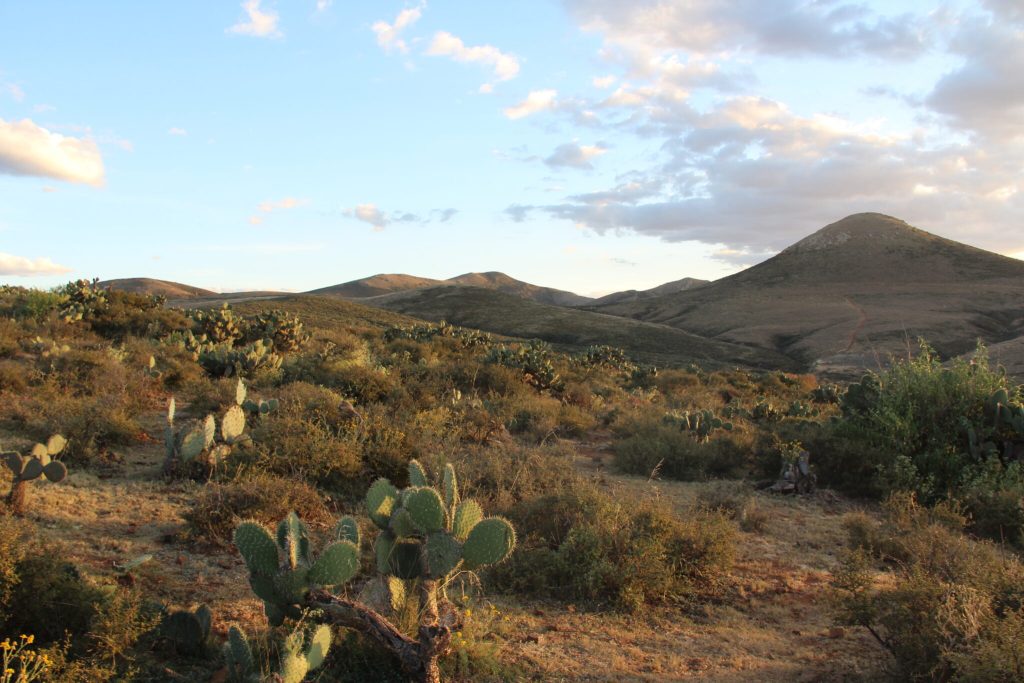
Zacatecas Silver Corp. [TSXV: ZAC; OTCQB: ZCTSF; FRA: 7TV] reported that it has entered into an option agreement with Guanajuato Silver Company Ltd. [TSXV: GSVR] and its subsidiary Mina Bolanitos, S.A. de C.V., under which the company may acquire a 100% interest in the Lourdes gold-silver project in Guanajuato State, Mexico. Lourdes is a low sulphidation epithermal vein system in a historical mining district that has seen only seven shallow drill holes.
Highlights: Low sulphidation epithermal gold-silver vein system in a historical mining district, with at least six mapped vein structures across three concessions totalling 509 hectares.
The El Tigre vein, the principal target, has been mapped over approximately 770 metres of strike at surface with widths of 0.35 to 6.0 metres. A silicified footwall stockwork zone measures approximately 400 metres long and 15 to 30 metres wide.
The only drilling on the Project consists of seven shallow core holes totalling 1,424 metres completed in 2003–2004, which had poor core recovery in the vein zones. Previous operators interpreted the system as exposed at a high epithermal level, with the deeper portions of the veins untested.
Total consideration of US$825,000 over two years, comprising US$225,000 in cash and US$600,000 in common shares, with no minimum exploration expenditure commitments.
The Project is located approximately 40 km northeast of Guanajuato City, with access by highway and dirt road.
Lourdes is located near the community of Buenavista del Cubo in the municipality of San Felipe, Guanajuato, approximately 18 km southeast of the town of San Felipe, within the El Cubo mineralized district of the Sierra del Cubo. The Project comprises three mining concessions totalling 509 hectares.
Lourdes hosts a low sulphidation epithermal vein system in Tertiary rhyolites. The veins strike northwest-southeast and dip steeply to the southwest. The principal mapped structures are the El Tigre, El PP, La Ordeñita, La Blanca, Tigre del Alto and El Lince veins. Vein textures include chalcedonic, banded, bladed and brecciated quartz, which previous operators interpreted as indicating a high level in the epithermal system.
Small-scale underground mining took place in the district between approximately 1906 and 1923. Several historical shafts remain on the Project and are currently flooded or inaccessible.
In 2003 and 2004, Minera Hochschild drilled seven core holes totalling 1,424 metres, testing the El Tigre, Tigre del Alto, El PP, La Ordeñita and Minas Viejas veins to approximately 100 to 150 metres below surface. Results were low grade, with the best intercept returning 0.7 g/t gold and 82 g/t silver over 0.4 metres core length in the El Tigre vein. Core recovery in the vein zones was reported to be below 50%. A subsequent review of the core by Endeavour Silver Corp., who previously held the concessions, concluded that the El Tigre holes did not intersect the footwall stockwork zone.
Between 2012 and 2013, Endeavour completed geological mapping over 157.5 hectares, including detailed mapping of the El Tigre and El PP structures, collected 1,093 rock chip samples, and completed trenching along the El Tigre, El Lince, El PP and La Ordeñita veins. Rock chip results ranged from below detection to 39.9 g/t gold and from below detection to 378 g/t silver. Samples from the El Tigre footwall stockwork returned 0.015 to 3.91 g/t gold. Endeavour recommended a first-phase drill program on the El Tigre vein targeting depths below the historical drilling.
Rock chip samples are selective by nature and may not be representative of the grade of the mineralization. The historical drill and sample results described above were generated by previous operators, have not been verified by the Company, and should not be relied upon.
The company plans to compile and review all historical data, including drill core and assay records where available, carry out confirmation sampling of the El Tigre vein and footwall stockwork, and refine drill targets to test the veins below the depth of the historical drilling.
“With Lourdes, our strategy is taking shape,” said Eric Vanderleeuw, CEO and director. “We’re building a pipeline of near-term drill targets – Oso Negro, Cumaro and now Lourdes – where a single discovery could change the scale of this company. Lourdes has the ingredients we look for: historical mining, a mapped vein system with grade at surface, and almost no meaningful drilling. Behind all of it we have two mineral resources, at Panuco and Esperanza. That’s what separates us from other explorers our size: a resource base that holds value, and a pipeline built to generate steady news and real discovery potential. Seeing this strategy come together is exciting, and we’re just getting started. We’re moving quickly, executing on every front, and staying focused on what creates value in this business: getting the drill bit on good targets.”
To exercise the option and acquire a 100% interest in Lourdes, the Company must pay Mina Bolanitos a total of US$225,000 in cash and issue to Guanajuato Silver (or its nominee) US$600,000 in common shares of the company in stages.
During the option period, the company will be the operator of the Project and will be responsible for all costs of maintaining the concessions in good standing.
On exercise of the option, the company will grant Mina Bolanitos a 2.0% net smelter return (NSR) royalty, of which 1.0% may be purchased by the Company for US$1,000,000 at any time prior to the commencement of production. The Project is also subject to an existing 3.0% NSR royalty, of which 2.0% may be purchased for US$2,000,000.
The agreement is subject to the acceptance of the TSX Venture Exchange. No finder’s fees are payable in connection with the transaction. The transaction is an arm’s length transaction.
Zacatecas Silver is a multi-asset precious metals exploration company with a portfolio of six projects across Mexico, spanning Zacatecas, Sonora, Morelos, and Oaxaca, and has entered into an option to acquire the Lourdes project in Guanajuato.
The Zacatecas Silver Project is located in Zacatecas State, within the highly prospective Fresnillo silver belt, which has produced over 6.2 billion ounces of silver. The Company holds 7,826 hectares of ground prospective for low-sulphidation and intermediate-sulphidation silver-base metal mineralization. A Mineral Resource Estimate at the Panuco deposit comprises 3.41 million tonnes at 187 g/t AgEq for 20.5 million ounces AgEq. The property is 25 km southeast of MAG Silver’s Juanicipio Mine and Fresnillo PLC’s Fresnillo Mine, and shares boundaries with Defiance Silver and Endeavour Silver.
Esperanza is an advanced stage, attractive low-cost, low-capital-intensity and low-technical-risk growth project located in Morelos state, Mexico. The Company announced a Mineral Resource Estimate at Esperanza consisting of a Measured and Indicated Mineral Resource Estimate of 45.4 million tonnes at 0.79 g/t AuEq (0.76 g/t gold and 8.5 g/t silver) for 1.15 million ounces AuEq (1.11 million ounces gold and 12.37 million ounces silver) and an Inferred Mineral Resource Estimate of 11.2 million tonnes at 0.57 g/t AuEq (0.53 g/t gold and 11.2 g/t silver) for 208,000 ounces AuEq (190,000 ounces gold and 4.02 million ounces silver.
The company also holds four exploration properties in Sonora and Oaxaca. Oso Negro (Sonora) is an undrilled, high-grade low sulphidation epithermal system with multiple veins mapped over more than 3 km of strike length. Cumaro (Sonora) is situated along trend from Coeur Mining’s El Picacho development and hosts extensions of proven low sulphidation vein systems with high-grade channel sampling results.
La Lola (Sonora) is a large, underexplored 1,183-hectare property anchored by the La Barra vein, a 5 km structure reaching up to 40 m in width. Ejutla (Oaxaca) comprises 10,603 hectares in the Taviche-Miahuatlán region near the former Fortuna Silver San José Mine, hosting multiple vein systems and alteration zones anomalous in gold, silver, and Carlin-style pathfinder elements.