
Aventis Energy drills anomalous radioactivity in multiple drill holes at Corvo Uranium Project, Saskatchewan
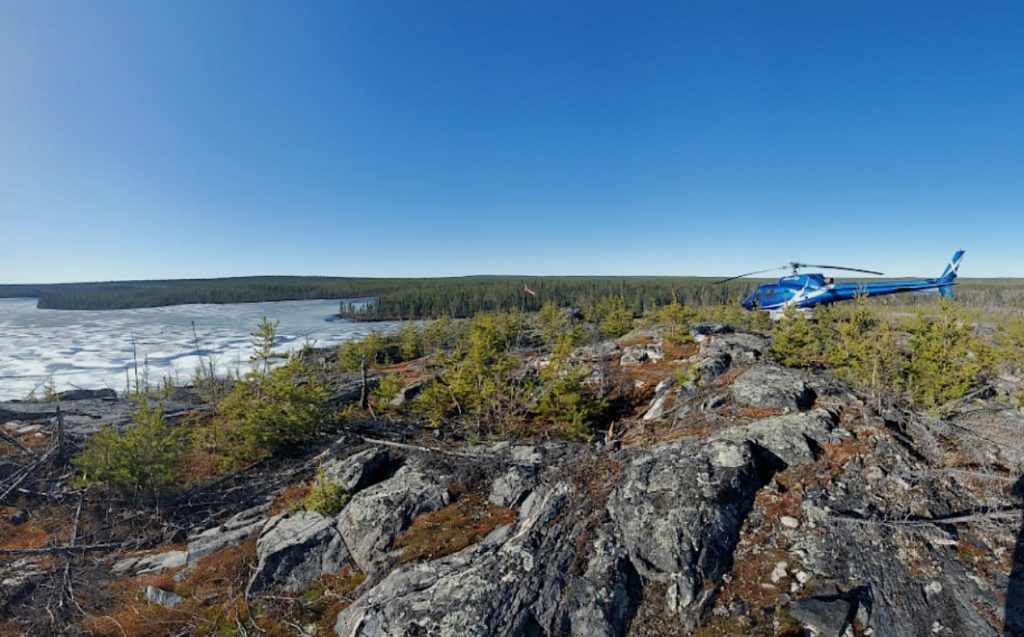
Aventis Energy Inc. [CSE: AVE; FRA: C0O0; OTC: VBAMF] reported that drilling activities have been completed at the company’s Corvo Uranium Project located near Wollaston Lake, northeastern Saskatchewan. The inaugural drill program was designed to begin testing the Manhattan, Brooklyn and Tribeca target areas for basement hosted uranium mineralization.
The project is currently under a three-year earn-in option Under the option agreement the company can earn a 75% interest in the project by funding CAD$6M in exploration expenditures over three years. The winter 2026 drill program was funded by the company and operated by Standard Uranium.
Highlights: A total of 2,457 metres were completed across 10 reconnaissance drill holes at the Manhattan, Brooklyn, and Tribeca target areas.
Multiple intervalsof anomalous radioactivity >300 counts per second (cps) were intersected in seven drill holes, totalling 23 metres of composite radioactivity across all intervals. Multiple structural corridors remain open along strike.
Anomalous radioactivity is hosted within pegmatite, paragneiss, and granitoid orthogneiss units. Structural settings include hydrothermally altered fault zones and quartz-carbonate veining – all consistent with uranium mineralization in the region.
Geochemical assays of drill core samples are pending. Several priority uranium targets remain along >25 km of untested strike length, and additional surface exploration and a second phase drilling program are being planned to follow up on radioactive intervals and continue testing regional drill targets across the project.
“Our first round of drilling at Corvo returned twenty-three metres of cumulative radioactive intervals across ten holes, reinforcing the project’s exploration potential,” said Michael Mulberry, CEO and Director of Aventis. “Backed by Standard, we are in a strong position to build on these early results through expanded exploration efforts and additional drilling.”
The winter drill Program was comprised of 2,457 metres across drill holes, seven of which intersected anomalous radioactivity within multiple intervals. One drill hole was restarted due to difficult ground conditions.
The inaugural program began testing three high-priority target areas defined by data integration and modeling of a project-wide Time-Domain Electromagnetic (TDEM) survey, a 5,185-station ground gravity survey, and surficial geological information.
Targets were selected and prioritized through an iterative approach working in collaboration with Convolutions Geoscience Corp., targeting compelling geophysical signatures and favorable geological/structural settings. Recent prospecting and mapping across the project outlined multiple mineralized outcrops and boulders, including the Manhattan showing which returned results up to 8.10% U3O8 at surface.
The nine completed drill holes encountered highly favorable geological settings for basement-hosted uranium deposits, including 23 metres of anomalous radioactivity (>300 cps) intersected across multiple intervals in seven drill holes, often associated with structurally disturbed and altered rock.
Fault zones were encountered in multiple holes, many featuring prominent brittle reactivation features including breccias, cataclasites, fault gouge, strong fracturing and local shearing all of which are consistent with uranium mineralization in the region.
The company believes the project is highly prospective for the discovery of shallow, high-grade basement-hosted uranium mineralization akin to the Rabbit Lake deposit and the recently discovered GMZ and Ackio zone. Located just outside the current margin of the Athabasca Basin, Corvo boasts more than 29 km of structural corridors with multiple untested drill targets with minimal cover of glacial till.
This first pass drill program marks the first drilling on the project in more than 40 years, and the results confirm critical metal fertility across multiple target areas. The company and Standard will incorporate the results of the 2026 program into the exploration strategy at Corvo for follow-up exploration programs targeting basement hosted uranium mineralization. Geochemical assays are pending.
The Corvo Uranium property has historical drill holes intersected multiple intervals of uranium mineralization, notably along a strike length of 800 metres between historical drill holes TL-79-3 (0.116% U3O8 over 1.05 m) and TL-79-5 (0.065% U3O8 over 0.15 m)2. High-grade* Uranium at Surface with the Manhattan showing (1.19 to 5.98% U3O8) and SMDI showing 2052 (0.137% U3O8 and 2,300 ppm Th).
The Sting Copper Project covers approximately 3,700 hectares and recently had results of 54.8 metres at 0.32% Cu starting at a depth of 27.0 metres, with higher-grade intervals including six samples (≥0.5m length) ranging from 0.96% to 5.43% Cu. High-grade samples of 0.5 metres at 2.85% Cu and 0.5 metres at 1.92% Cu with an additional broader interval of 31.1 metres at 0.27% Cu.
Resource World Magazine Inc. has prepared this editorial for general information purposes only and should not be considered a solicitation to buy or sell securities in the companies discussed herein. The information provided has been derived from sources believed to be reliable but cannot be guaranteed. This editorial does not take into account the readers investment criteria, investment expertise, financial condition, or financial goals of individual recipients and other concerns such as jurisdictional and/or legal restrictions that may exist for certain persons. Recipients should rely on their own due diligence and seek their own professional advice before investing.