
Blue Star Gold mobilizes field crews to Nunavut
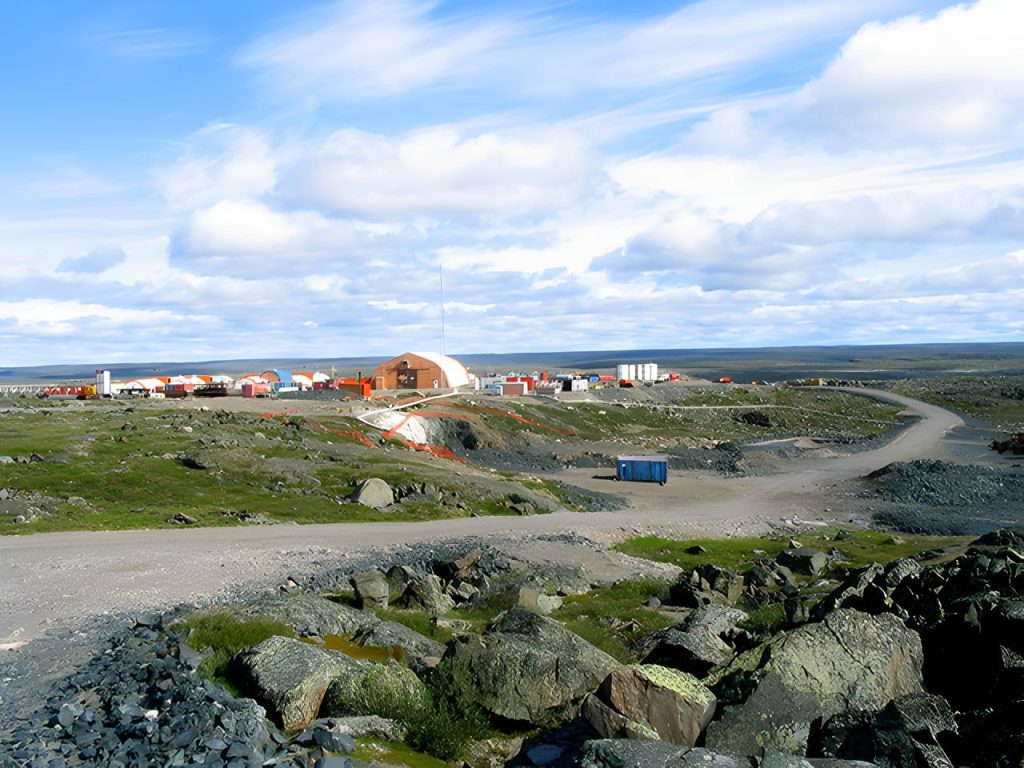
Blue Star Gold Corp. [TSXV: BAU; OTCQB: BAUFF; FSE: 5WP0], a leading explorer in Canada’s North, reported the mobilization of its field crews to initiate the 2025 Phase I Surface Exploration Program at it projects located in the High Lake Belt, West Kitikmeot Region of Nunavut.
Blue Star also announces that it has received the final $125,000 payment of the $250,000 exploration grant from the Government of Nunavut’s Discover, Invest, Grow (DIG) program. This grant was awarded to the Company for its successful exploration programs completed in the 2024/25 fiscal year. The DIG program, administered by the Nunavut Department of Economic Development and Transportation, provides financial assistance to mineral exploration companies contributing to the sustainable growth of Nunavut’s resource sector. The company also received a $250,000 DIG grant for its exploration programs completed in 2022/23. To date, the Company has received a total of $500,000 from the DIG program. This continued support has helped to advance the company’s ongoing exploration work at its flagship Ulu Gold Project.
Ongoing Field Activities: Detailed mapping and sampling of targets within 1,000 metres of the Flood Zone deposit including the Flood Zone near surface, the North Flood Zone, the Central South target, Nutaaq and Nutaaq North targets, South-Twilight target and Axis target; exposure of surface Flood Zone mineralization for detailed structural mapping and sampling; supports potential extension of the current mineral resource to surface
Ground-based electromagnetic surveying was conducted using the Loupe-EM system (East Limb, Gabbro Breccia, West Lake, Contact, Bizen, and North Fold Nose); lithogeochemical surveys to further define detailed stratigraphy and potential structural controls in key target areas.
Visible gold was observed in untested veins at the Nutaaq target.
“The field team has been deployed to build additional confidence on our drill-ready targets as well as to advance additional targets to the drill-ready stage,” said Grant Ewing, CEO of Blue Star. “The initial focus will be on the high-impact gold targets in the vicinity of the Flood Zone deposit, and will then move outwards to high-impact gold and critical mineral targets within Blue Star’s land package and along the proposed Grays Bay Road corridor. Detailed planning for Phase 2 of the exploration program is underway. We are looking forward to continuing to advance our highly prospective properties to evaluate their full potential.”
Phase I of Blue Star’s 2025 field program is designed as a low-expenditure initiative focused on advancing priority targets within 1,000 metres of the high-grade Flood Zone gold deposit. A key highlight of the program is detailed mapping and channel sampling of a newly exposed section of the Flood Zone mineralization at surface using power washing. This work is expected to provide structural insights and support the potential extension of the current mineral resource to the surface.
Building on the 2024 geophysical program, a continuation of the Loupe time-domain electromagnetic (EM) survey will be conducted to infill and complete coverage of the prospective stratigraphy along the ULU anticline. Anomalous responses identified in both the 2024 and 2025 Loupe data will be systematically investigated through targeted ground follow-up to assess potential sources.
Additional 2025 Phase I activities will include field evaluation of targets refined during the winter season integrating historical and recent datasets. These include Loupe EM anomalies at Nutaaq and North Nutaaq; geological mapping and modern prospecting at the Twilight and South Zones; follow-up work on magnetic, airborne EM, and mapping data at the Central South target; and geological confirmation and prospecting of an IP anomaly at the Axis Zone.
The company will continue its lithogeochemical study of the mafic volcanic sequences, aimed at refining the stratigraphic framework and identifying key structures associated with mineralization proximal to the Flood Zone deposit.
Initial field orientation traverses by the exploration team identified Nutaaq vein material in felsenmeer east of any veins previously tested in the Nutaaq target. Very fine visible gold was observed in a 10-metre section of 30-50 metres of frost-heaved vein material and host rock. A grab sample from the area in 2024 described as frothy white quartz returned 23 g/t gold. Historical samples (1992) in the area returned 29, 35 and 78 g/t gold (Ulu South Map 15, sample location and geochemistry, BHP 1992).
Blue Star is a mineral exploration and development company focused in Nunavut, Canada. Blue Star’s landholdings total 300 km2 of highly prospective and underexplored mineral properties in the High Lake Greenstone Belt.
The company owns the Ulu Gold Project, comprised of the Ulu Mining Lease and Hood River Property, and the Roma Project. A significant high-grade gold resource exists at the Flood Zone deposit (Ulu Mining Lease), and numerous high-potential exploration targets (gold and critical minerals) occur throughout the company’s extensive landholdings, providing Blue Star with excellent resource growth potential. The site of the future deep-water port at Grays Bay is 40-100 km north of the properties, and the proposed route corridor for the all-weather Grays Bay Road passes close by the Roma and Ulu Gold Projects.