
Cabral Gold extends Machichie Main Down-dip and drills new mineralized zone, Cuiú Cuiú Gold District, Brazil
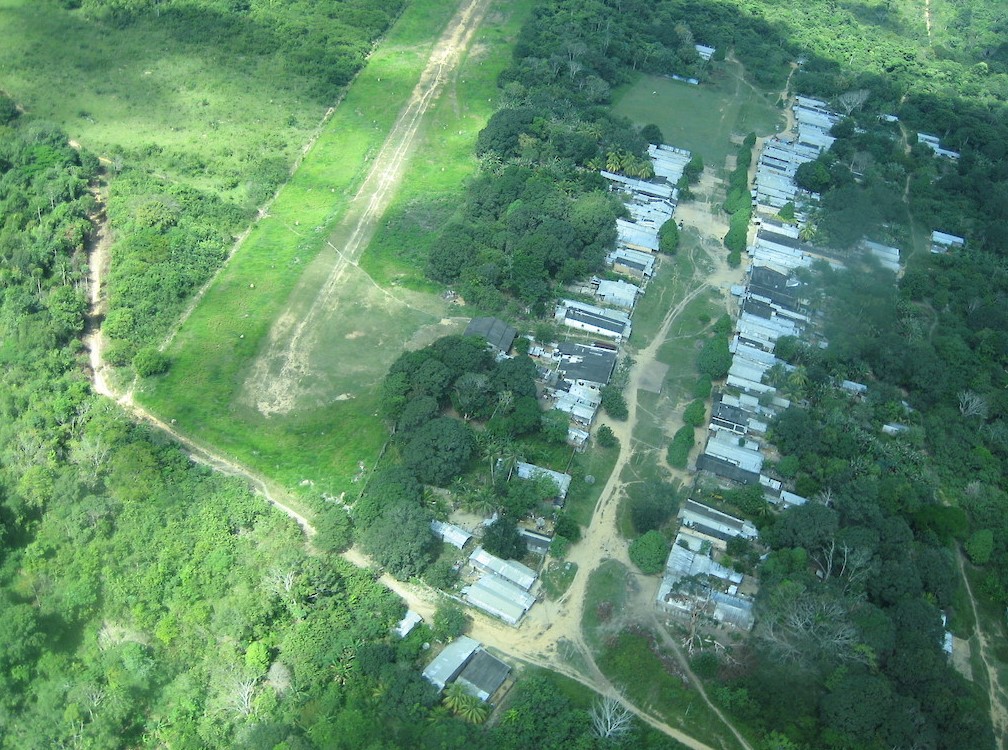
Cabral Gold Inc. [TSXV: CBR; OTCQB: CBGZF] reported results from seven additional diamond drill holes (DDH) and two reverse circulation (RC) drill holes at the Machichie Main gold deposit within the Cuiú Cuiú Gold District, Brazil.
Highlights: Drilling at the Machichie Main zone located 500m north of the MG gold deposit, continues to both infill and extend the mineralized zone at depth. RC587 returned 5 metres at 4.70 g/t gold from 35 metres depth, including 2 metres at 10.76 g/t gold. In addition, DDH353 returned 6 metres at 1.78 g/t gold from 285.5 metres depth including 1 metre at 8.36 g/t gold 60 metres down dip of the deepest intercept on section 552900E.
Drilling has also intersected a new and previously unrecognized zone of mineralization located approximately 100 metres south of the Machichie Main zone with results of 5.4 metres at 1.41 g/t gold including 0.5 metres at 12.18 g/t gold. The zone remains open to the east, west and at depth
Drilling has recsumed at Cuiú Cuiú following the end-of-year break with results pending on several holes at J Cima and Moreira Gomes. In parallel with the ongoing construction of the Phase 1 gold-in-oxide starter project, the Company is expanding the current exploration drill program and expects to add a fourth drill rig during February
Alan Carter, Cabral’s President and CEO, commented, “The recent drill results from the Machichie Main zone are encouraging and extend the mineralized zone at depth. This should have positive implications for the definition of an initial resource in the hard-rock mineralization at Machichie Main in the coming months. In addition, the identification of a previously unrecognised zone of mineralization 100 metres south of and parallel to the Machichie Main mineralized zone is a positive development which will require further drilling.
This discovery is further evidence that exploration of the Cuiú Cuiú gold district is still in the formative stages and that additional discoveries are likely. The ramping up of the exploration drill program and the addition of a fourth rig, in parallel with the ongoing drone magnetic survey is expected to result in continued growth of the resource base within the district.
Following the end of year break, construction activities on site with respect to the Phase 1 gold-in-oxide heap-leach project have resumed. Favourable weather conditions in early January have resulted in above plan productivity in both the earthworks and civil works. Procurement of key capex items is almost complete, and the project remains on schedule.”
The Machichie Main zone is an E-W trending zone of gold mineralization located 500 metres north of the MG gold deposit. As with the MG and Central gold deposits, the zone of primary mineralization within intrusive rocks is overlain by an extensive weathered layer consisting of near-surface sediments and underlying saprolite (weathered intrusive rock). Both types of material are considered gold-in-oxide material. A preliminary Inferred resource estimate of 3.73 million tonnes (Mt) at 0.5 g/t gold was calculated for the gold-in oxide material only at Machichie Main and was released in October 2024.
Thus far, no resource has been estimated for the primary gold deposit at Machichie Main but drilling and trenching to date have outlined the mineralized zone over 900m strike extent. The mineralized zone is open down-dip on every section.
The current drill program is aimed at defining an initial resource in the hard rock material at Machichie Main.
Results have been obtained on seven additional diamond drill holes (DDH343, 345, 348, 350, 352, 353, and 354) and two reverse circulation drill holes (RC587 and RC588) at the Machichie Main zone.
Drilling has recommenced at Cuiú Cuiú following the end-of-year break, with results pending on several RC holes at Moreira Gomes (MG) and a number of diamond drill holes at Jerimum Cima and MG. RC drilling at MG is focused on the south side where gold-in-oxide and primary mineralization are open beyond the current resource shells.
The principal objective of the diamond drilling at MG is to extend the known deposit down-dip where the modeled gold zones are open at depths below 200m depth. This campaign will also check for the presence of parallel mineralized structures in areas of widely spaced drilling.
At Jerimum Cima, where first pass drilling has defined at least three parallel east-west zones of gold mineralization covering a strike length of more than 700m, the objective of the drilling is to determine the extent of both the gold-in-oxide blanket mineralization and the underlying primary zone of mineralization. Previous drilling at Jerimum Cima has returned results that include 49m at 2.0 g/t gold. The company is currently awaiting final drilling results from 2025 and will lay out a follow-up drilling program to be executed early this year.
The priorities for the exploration drilling program over the next six months include the expansion of the MG and CentraI gold deposits, the definition of the mineralized bodies at Jerimum Cima, Machichie West, and Machichie NE, as well as follow-up reconnaissance drilling at the Mutum target.
Several early-stage first pass drilling programs are planned to test early-stage exploration targets such as Morro da Lua, Jerimum Meio, Guarim, and others. The ongoing drone magnetic survey announced on December 4, 2025, is expected to provide significant insights on the structural controls to mineralization in the +50 targets so far identified at Cuiu Cuiu and consequently exploration drilling priorities are likely to change as additional data becomes available.
In parallel with the ongoing construction of the Phase 1 gold-in-oxide starter project, the company is expanding the current exploration drill program and expects to add a fourth drill rig during February.
The company has a 100% interest in the Cuiú Cuiú gold district located in the Tapajós Region, within the state of Pará, northern Brazil. Three main gold deposits have so far been defined at the Cuiú Cuiú project which contain NI 43-101 compliant Indicated resources of 12.29Mt at 1.14 g/t gold (450,200oz) in fresh basement material and 13.56Mt at 0.50 g/t gold (216,182oz) in oxide material.
The project also contains Inferred resources of 13.63Mt @ 1.04 g/t gold (455,100oz) in fresh basement material and 6.4Mt at 0.34 g/t gold (70,569oz) in oxide material. The resource estimate for the primary material is based on the NI 43-101 technical report dated October 12, 2022.
The Tapajós Gold Province is the site of the largest gold rush in Brazil’s history which according to the ANM (Agência Nacional de Mineração or National Mining Agency of Brazil) produced an estimated 30 to 50 million ounces of placer gold between 1978 and 1995. Cuiú Cuiú was the largest area of placer workings in the Tapajós and produced an estimated 2Moz of placer gold historically.