
Critical Elements Lithium starts 10,000-metre summer drill program at Rose West Project, Québec
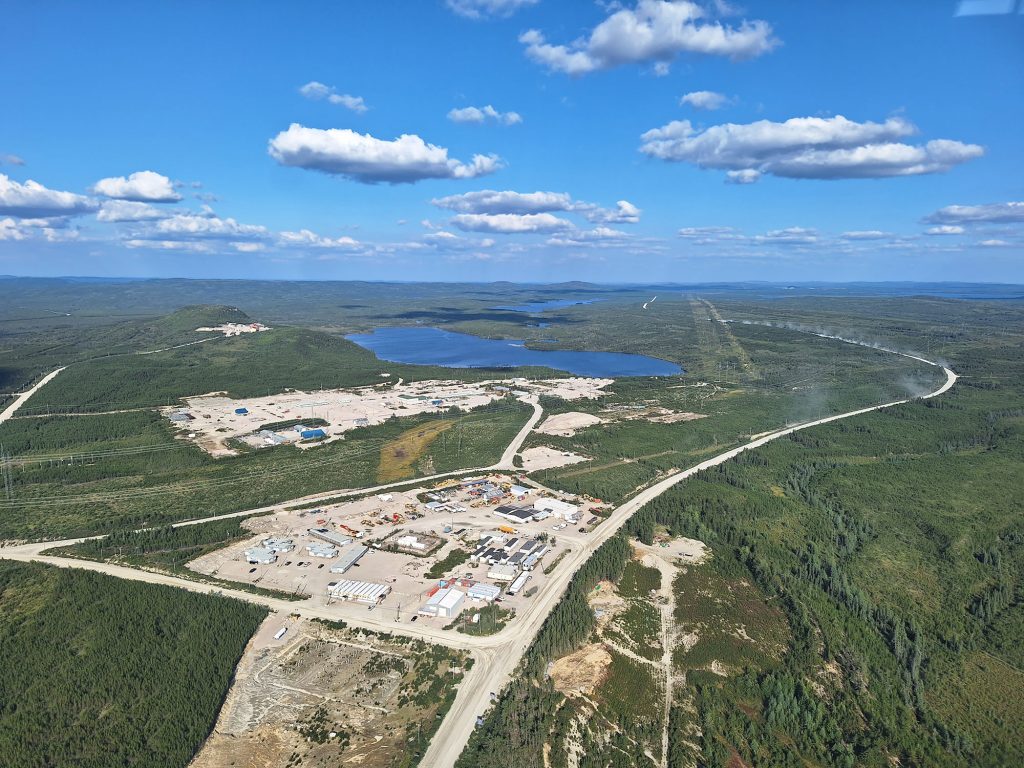
Critical Elements Lithium Corp. [TSX-V: CRE; OTCQX: CRECF; FSE: F12] reported the details of its upcoming Summer 2026 drill program, including 10,000 metres of systematic drilling planned around the 100%-owned Rose West Discovery, located in Eeyou Istchee, Québec.
The Winter 2026 drilling program has been very successful in expanding the lateral footprint of the known mineralized pegmatites, as well as identifying new lithium-tantalum bearing pegmatites in both the hanging wall and footwall of the main Pegmatite 3 zone. Several of the Winter 2024 and 2026 drillhole results that were previously disclosed, returned wide high-grade lithium assays, including 1.66% Li2O and 180 ppm Ta2O5 over 12.20 metres, through Pegmatite 4, in hole RD-24-07, 1.43% Li2O and 178 ppm Ta2O5 over 24.95 m, through Pegmatite 3, in hole RD-24-16A, 1.31% Li2O and 235 ppm Ta2O5 over 40.40 m, through Pegmatite 3, in hole RD-24-20, 1.30% Li2O and 142 ppm Ta2O5 over 31.60 m, through Pegmatite 3, in hole RD-24-22, 2.22% Li2O and 95 ppm Ta2O5 over 20.30 m, through Pegmatite 3, in hole RD-24-23A, 1.39% Li2O and 157 ppm Ta2O5 over 35.30 m, through Pegmatite 3, in hole RD-24-25A, 1.89% Li2O and 207 ppm Ta2O5 over 13.50 m, through Pegmatite 3, in hole RW-26-32, 1.71% Li2O and 210 ppm Ta2O5 over 14.75 m, through Pegmatite 3, in hole RW-26-39, 1.73% Li2O and 94 ppm Ta2O5 over 15.60 m, through Pegmatite 3, in hole RW-26-40, 2.18% Li2O and 68 ppm Ta2O5 over 12.60 m, through Pegmatite 3, in hole RW-26-46, 1.91% Li2O and 74 ppm Ta2O5 over 11.75 m, through Pegmatite 3, in hole RW-26-47, 1.82% Li2O and 176 ppm Ta2O5 over 14.60 m, through Pegmatite 2, in hole RW-26-46, 1.51% Li2O and 93 ppm Ta2O5 over 18.50 m, through Pegmatite 5 (new), in hole RW-26-41 and 1.72% Li2O and 117 ppm Ta2O5 over 10.30 m, through Pegmatite 5 (new), in hole RW-26-47. True thickness is between 80 to 95% of the core length.
Rose West is a near surface lithium-rich pegmatite bearing zone, initially intercepted by drilling over a 450 m x 370 m footprint area in the winter of 2024, now covering an overall footprint of 1,250 m x 800 m. The lithium-rich pegmatites typically range from 10 to 40 metres in thickness and together display a sub-horizontal stacked geometry. Recent drilling has identified three new spodumene-bearing pegmatitic bodies within the target area. The Phase 2 Summer 2026 drill program intends to expand further this mineralized footprint, and to better define the geometry and extent of the three new mineralized pegmatites intersected during the Winter 2026 Campaign.
Rose West is located approximately 10 km to the west of the Rose Lithium-Tantalum Project. Rose is one of the most advanced hardrock lithium projects in North America and features a robust Feasibility Study completed in August 2023, key permits and authorizations, a formalized agreement with our Cree neighbours, and excellent infrastructure including road access and proximity to one of the cleanest electrical grids globally. Rose has received a US$115M/C$150M conditional support letter from a leading Canadian financial institution and conditional approval for C$20M from the Critical Minerals Infrastructure Fund.
The Winter 2026 drill program at Rose West has covered most of the Line A, Line E and Line K planned holes with 19 holes drilled for a total of 4,037.75 metres. The Phase 1 Winter 2026 drill program has delivered positive results demonstrating the successful expansion of the Rose West mineralized footprint from 450 m x 370 m to 1,250 m x 800 m, thicknesses that typically range from 10 to 40 m, and excellent lateral grade continuity. As a substantial part of the stacked and generally flat lying system, the newly discovered Pegmatite 5 shows lateral continuity towards the southern portion of the Main Target Area.
The Summer 2026 drill program is designed to reach three specific goals: expand laterally all around the existing mineralized footprint; infill drilling along Line C, to confirm grade and thickness continuity of the intersected pegmatites; follow up on both newly discovered mineralized pegmatites (6 and 7) below the current extent of mineralization.
Two drill rigs are being deployed to optimize the duration of the program. The drilling strategy is straightforward: based on our current geological model and interpretation, apply a 100-metre grid approach to grow the known mineralized volume from its current boundary outward. The program targets the expansion of the mineralized footprint to a potential of approximately 1,250 x 2,000 mettres and could confirm the addition of at least two more mineralized pegmatite bodies within the system.
Drilling depth will depend on the location of the hole but is expected to average 150-200 metres.
The stacked nature of the mineralized system allows for intersecting multiple pegmatite bodies along a given drillhole. While keeping the same “grid-based” systematic approach, not every drillhole is anticipated to intersect each pegmatite.
From these detailed plan view projections, a simple visual analysis reveals that Pegmatite 5 could see its footprint size double. While the zone appears to be closed by holes RW-26-43 and -48 to the east, there seems to be a significant potential to increase its size in the central area, where infill drilling has been planned, and to the north, up until Pegmatite 5 is expected to outcrop.
The main Pegmatite 3 appears to be open in all directions except, again, to the east where it is closed off by holes RW-26-38 and RW-26-49. Infill drilling along Line C should confirm the existence of mineralization between the high-grade core zone, which includes high grade intersections in holes RW-26-45 to -47, and the high-grade intersections in both holes RW-26-39 and RW-26-40 approximately 550 m to the south.
Sitting in the footwall of Pegmatite 3, Pegmatite 2 presents a different geometry and is interpreted to be merging with the latter. The two pegmatites intersect each other along a NW-SE trend, effectively closing off at almost its currently defined southern boundary. The Pegmatite 2 zone remains open to the north, while progressively getting deeper and diverging away from Pegmatite 3.
Pegmatites 6 and 7 are both interpreted from single intersections at depth, along two of the deeper holes that were planned to test the geological model at depth. Located at the west margin of the mineralized area, hole RW-26-29 intersected Pegmatite 4 near surface but also intersected the new Pegmatite 6 at a depth of 177 metres.
Hole RW-26-50, at the eastern margin, did not intersect any pegmatite other than the new Pegmatite 7 at a depth of 328 metres. Follow up on Pegmatite 6 will be tackled by extending holes in the “Infill” block to the required depth. Pegmatite 7 sits at a much deeper location and the strategy will be to extent hole RW-26-49 to reach target; such knowledge is required before a decision to drill the deeper holes planned in the East Target Zone.
“The Summer 2026 drilling program is designed to complement the existing drilling coverage and will prepare the project for an upcoming Mineral Resource Estimate (MRE) planned for this coming Fall 2026. This drilling campaign is expected to provide the data needed to optimize the growth potential of the various mineralized zones and increase the level of confidence in our 3D geological model. Last winter, we aimed to extend the zones beyond the central 2024 zone; given the success of the latter program, we will therefore further test the extent of the zones in all directions and along Line C. We are confident that the summer program will help demonstrate the continuity of not just one, but several lithium- and tantalum-rich pegmatites, over a much larger area,” commented Kenneth Williamson, Director of Exploration of the corporation.
The corporation also announces that, effective today, it has granted deferred share units (DSUs) and restricted share units (RSUs) pursuant to its Omnibus Equity Incentive Plan (the Omnibus Plan).
These grants comprise awards made to fulfill compensation commitments undertaken with respect to certain directors and officers during fiscal years 2024 and 2025. Details of these commitments are set out in the Corporation’s audited annual financial statements as well as in the management’s discussion and analysis for the fiscal year 2025.
The DSUs and RSUs for the fiscal years 2024 and 2025 were granted at fair value per unit based on the share price on the date the Compensation Committee made its recommendation to the Board of Directors.
Each DSU entitles the recipient to receive one common share of the corporation upon settlement of the DSU. The DSUs awarded will fully vest on the first anniversary of the date of grant and will settle on the termination of service.
Each RSU entitles the recipient to receive one common share of the Corporation, or a cash payment equal to the equivalent for one common share of the corporation, following the vesting period of the RSUs. The RSUs awarded will fully vest on the first anniversary of the date of grant.
All the forgoing RSUs and DSUs are subject to the terms of the plan, the applicable grant agreement, and the requirements of the TSX Venture Exchange.
Critical Elements aspires to become a large, responsible supplier of lithium to the flourishing electric vehicle and energy storage system industries. To this end, Critical Elements is advancing the wholly-owned, high-purity Rose Lithium-Tantalum project, the corporation’s first lithium project to be advanced within a land portfolio of over 1,016 km2.
On August 29, 2023, the company reported results of a new Feasibility Study on Rose for the production of spodumene concentrate. The after-tax internal rate of return for the Project is estimated at 65.7%, with an estimated after-tax net present value of US$2.2B at an 8% discount rate. In the corporation’s view, Québec is strategically well-positioned for US and EU markets and boasts good infrastructure including a low-cost, low-carbon power grid featuring 94% hydroelectricity.
The project has received approval from the Federal Minister of Environment and Climate Change on the recommendation of the Joint Assessment Committee, comprised of representatives from the Impact Assessment Agency of Canada and the Cree Nation Government, received the Certificate of Authorization under the Environment Quality Act from the Québec Minister of the Environment, the Fight against Climate Change, Wildlife and Parks, and the project mining lease from the Québec Minister of Natural Resources and Forests under the Québec Mining Act.