
Denison set to begin $600 million uranium mine construction
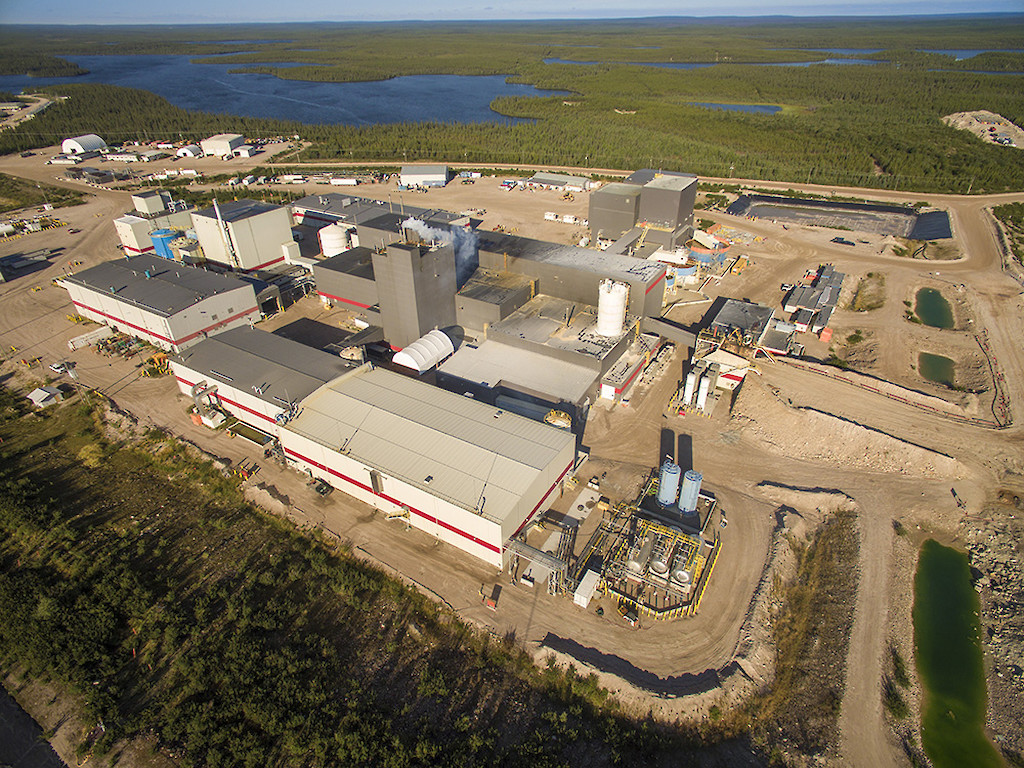
Denison Mines Corp. [DML-TSX] said Friday it is ready to begin constructing its uranium mine in Saskatchewan as soon as it receives final government approvals. The company said it is ready to make a final investment decision and start construction of the Pheonix In-Situ Recovery uranium mine. If it receives all regulatory approvals as expected in the first quarter of 2026, it should be poised to being producing uranium at the site by mid-2028.
Denison shares advanced on the news, rising 10.02% or $0.365 to $$4.00 on Friday. The shares trade in a 52-week range of $4.79 and $1.58.
Since the project’s first feasibility study in 2023, construction costs have risen, the company noted, citing inflation, project refinement and increase in expenses. Total costs for the project are now estimated at 20% higher, at $600 million, the company said.
Dension CEO David Cates said the project has been years in development and is now set to become Canada’s first major new uranium mine since Cigar Lake, a rich uranium deposit in the province, with first production expected by mid-2028.
Denison has already been given the green light by the Province of Saskatchewan to prepare, construct and operate the facilities required to carry out the in-situ recovery (ISR) feasibility field test planned for its Wheel River uranium project.
The two-part Canadian Nuclear Safety Commission (CNSC) public hearing, considering Denison’s application for the approval of the Environmental Assessment and the Licence to Prepare the Site for & Construct Mine and Mill, concluded on December 11, 2025. Denison is now awaiting a decision from the CNSC.
In January, 2024, Denison awarded a contract for approximately $16 million to Wood Canada Ltd. for the completion of design engineering for the ISR mining project planned for the Pheonix uranium deposit.
In 2023, Wood completed a feasibility study to evaluate the use of the ISR mining method and demonstrated robust economics. The project continues to move towards a final investment decision.
Since the 2023 feasibility study, the company said long-term uranium prices, have risen by over 50% to US$86.00 per pound of U308 from US$56 a pound.
In-situ recovery involves processing the uranium while it is still in the ground through the injection of catalyzing agents into the ore.
In-situ-recovery is only possible in porous geological formations (like sandstone) which are amenable to such a technique. On average, the capital spend needed to put an ISR uranium project into production is less than 15% of the cost to build a conventional hard-rock uranium mine.
Aside from the production cost, ISR leaves a much smaller environmental footprint because it does not require the construction of a tailings impoundment facility. Denison is aiming to be the first company to deploy the ISR method at a uranium project in Canada.