
Inomin Mines enlarges critical minerals discovery at Beaver-Lynx Project, British Columbia
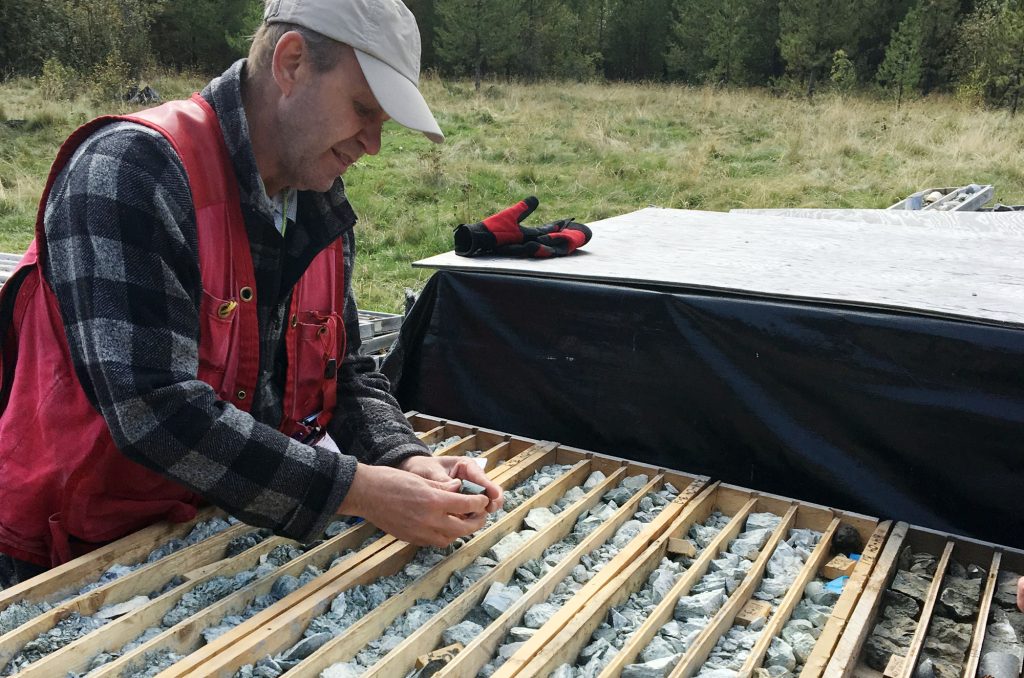
Inomin Mines Inc. [TSXV: MINE] reported results from diamond drilling at the South zone of the 28,000-hectare Beaver-Lynx Project in south-central, British Columbia, being explored in collaboration with Sumitomo Metal Mining Canada Ltd.
The latest drilling results continue to encounter long intervals of polymetallic mineralization over a considerable area. Drill hole B25-08 intersected 204 metres grading 0.16% nickel, 0.009% cobalt, 0.28% chromium and 19.57% magnesium including a higher grading zone of 116.15m grading 0.18% nickel and 23.46% magnesium.
Drill hole B25-07 intersected 115 metres grading 0.20% nickel, 0.012% cobalt, 0.40% chromium and 23.81% magnesium. Drill hole B25-09 intersected 102 metres grading 0.17% nickel, 0.011% cobalt, 0.36% chromium and 22.13% magnesium, and drill hole B25-10 intersected 129 metres grading 0.18% nickel, 0.011% cobalt, 0.39% chromium and 23.12% magnesium. All holes drilled in the South zone are situated at approximately 200m spacing and confirms continued continuity of mineralization over substantial thickness and area.
John Gomez, President of Inomin, stated, “Step-out drill holes seven and ten are approximately 700 meters apart demonstrating the South zone hosts a substantial continuous mineral system. We look forward to receiving drilling results from the remaining holes in the South zone located about 1,000 meters apart – as they test the western and eastern-most areas in the current drilling program.”
The 2025 exploration program at Beaver-Lynx includes 13 drill holes totaling 3,361.8 metres of drilling. Drilling was completed using HQ-sized drill rods due to the difficult nature of the cored material, NQ downsizing often necessary at depths that make continuation of drilling problematic. Twelve holes, spaced approximately 200 metres apart, were drilled in the South zone of the project. The objective of South zone drilling is to test continuity of known mineralization delineated by previous drilling. One hole was also drilled in the North zone to test a new priority target to expand the North zone’s discovery footprint. Drilling at the North zone has discovered significant mineralization on high magnetic features that extend over 7 km in strike length.
The South and North zones are two of several large, mineralized zones identified by drilling and magnetic surveys at the Beaver block of the Project. The adjoining Lynx block, 10 km south of the Beaver block, hosts multiple targets comparable and potentially larger in size than found on the Beaver block, illustrating the project’s district-scale potential.
The 2025 Beaver-Lynx exploration program is being undertaken in collaboration with Sumitomo Metal Mining Canada Ltd. that is funding the exploration. Sumitomo can earn an interest in the project through an earn-in and joint venture agreement with the Company. Inomin is the operator of the Beaver-Lynx project.
The Beaver-Lynx property comprises approximately 28,000 hectares and is ideally located in south-central British Columbia, 50 km from the city of Williams Lake and adjacent to the Gibraltar mine property, the second largest open-pit copper mine in Canada. Beaver-Lynx is easily accessible by good all-season roads, and is close to hydro-electric power, as well as active railway lines.
Exploration, including drilling, has demonstrated the project may host large volumes of nickel and magnesium. Drilling has also intersected cobalt, chromium, copper, silver, and gold. Given positive initial drilling results as well as multiple, large-scale, mineral zones. The Beaver-Lynx project has the potential to be a major source of critical minerals.