
Intrepid Metals updates Corral Copper Project ahead of geophysical survey and drilling, Arizona
Intrepid Metals Corp. [TSXV: INTR; OTCQB: IMTCF] provided an update on the advancement of its integrated exploration program focused on defining high-priority porphyry copper-gold targets at its Corral Copper Project in Cochise County, Arizona.
Building on the company’s successful identification of extensive carbonate replacement (CRD) mineralization, Intrepid has continued to refine its understanding of the broader mineralizing system through an integrated exploration program undertaken with input from Teck Resources Limited.
The next phase of work includes an approximately 65 line-km induced polarization (IP) survey, scheduled to commence in early August, ahead of the company’s planned September drill program, where approximately 5,000 metres of the planned 10,000-metre campaign are expected to be dedicated to testing priority porphyry targets.
“Our understanding of Corral continues to evolve with every phase of exploration,” said Matt Lennox-King, Chairman and Interim CEO of Intrepid Metals. “While our previous drilling successfully demonstrated the scale and continuity of the CRD system, our 2026 work, undertaken in collaboration with Teck, has been focused on identifying the potential porphyry source that we believe drives that mineralization. While CRD mineralization can be economically significant on its own, a related porphyry system has the potential to represent a much larger mineralized system. By integrating the results of our geological, geochemical and geophysical programs, we are building the most comprehensive geological model assembled on the Project to date. This work will directly guide our first dedicated porphyry drill tests later this year.”
Initial drilling at Corral successfully demonstrated the presence of extensive CRD copper-gold-silver mineralization across multiple zones. CRD deposits commonly form when metal-rich fluids originating from a nearby porphyry intrusion migrate into favourable limestone host rocks, where they precipitate high-grade mineralization.
The company’s exploration model is based on geological similarities between Corral and Arizona’s historic Bisbee Mining District, where extensive CRD mineralization is spatially associated with a significant porphyry copper system. Intrepid’s 2026 exploration program has been designed to systematically evaluate whether a similar relationship exists at Corral through an integrated program of geological mapping, surface geochemistry, structural interpretation, drill core relogging and geophysical surveys.
The Corral Copper Project was acquired by Intrepid in 2023 based on its potential to host both near-surface, high-grade CRD copper-gold-silver mineralization and a related porphyry copper-gold system. This exploration model is supported by geological similarities to Arizona’s historic Bisbee Mining District, located approximately 100 km southeast of Corral, where high-grade CRD mineralization at the Copper Queen Mine (approximately 53 Mt grading 6% copper) occurs in association with the Lavender Pit porphyry deposit (223 Mt grading 0.63% copper).
Like Bisbee, Corral hosts widespread CRD mineralization spatially associated with Jurassic felsic intrusions emplaced into favourable Paleozoic carbonate rocks. While there is no assurance that Corral hosts mineralization similar in size or grade, these geological similarities support the Company’s belief that the Project has the potential to host both styles of mineralization.
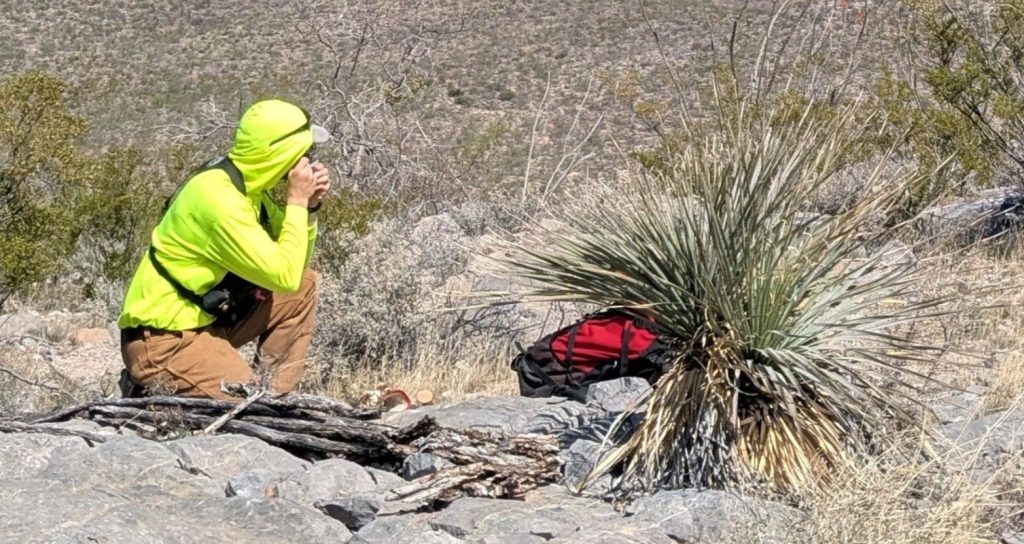
As part of the company’s integrated exploration program, Intrepid completed a comprehensive review and relogging of drill core, together with targeted field investigations aimed at refining its understanding of the Project’s porphyry potential. This work included characterization of alteration styles, veining, intrusive lithologies and mineralization, supported by portable X-Ray Fluorescence (pXRF) analyses and evaluation of porphyry vectoring indicators across the project.
The review has strengthened the company’s geological model through the identification of multiple porphyry-style features, including intrusive-related alteration, quartz-sericite-pyrite (QSP) alteration, stockwork veining, molybdenum-bearing mineralization and porphyry-style vein textures. These observations, combined with geological mapping, surface sampling and structural interpretation, have helped refine priority target areas that will be further evaluated through the upcoming IP survey and planned porphyry drill program.
The next phase of the exploration program will include an approximately 65 line-km IP survey, scheduled to commence in early August. The survey is designed to identify chargeability and resistivity anomalies that may represent sulphide-rich intrusive centres at depth and will provide an important dataset for refining the location and orientation of planned drill holes.
Following completion and interpretation of the IP survey, Intrepid expects to start its September drill program, with approximately half of the planned 10,000-metre drill campaign dedicated to testing porphyry targets. The remaining drilling will continue to evaluate and expand the extensive CRD mineralization previously identified across the project.
Intrepid Metals. is focused on exploring for high-grade essential metals, including copper, silver, and zinc, in established mining jurisdictions in southeastern Arizona, USA. The company’s portfolio is anchored by the Corral Copper property, an advanced exploration-stage, district-scale system with extensive drilling and significant shallow results, complemented by the Tombstone South and Mesa Well properties.