
IsoEnergy and Purepoint confirm uranium discovery in initial drilling at Dorado Joint Venture Project, Saskatchewan
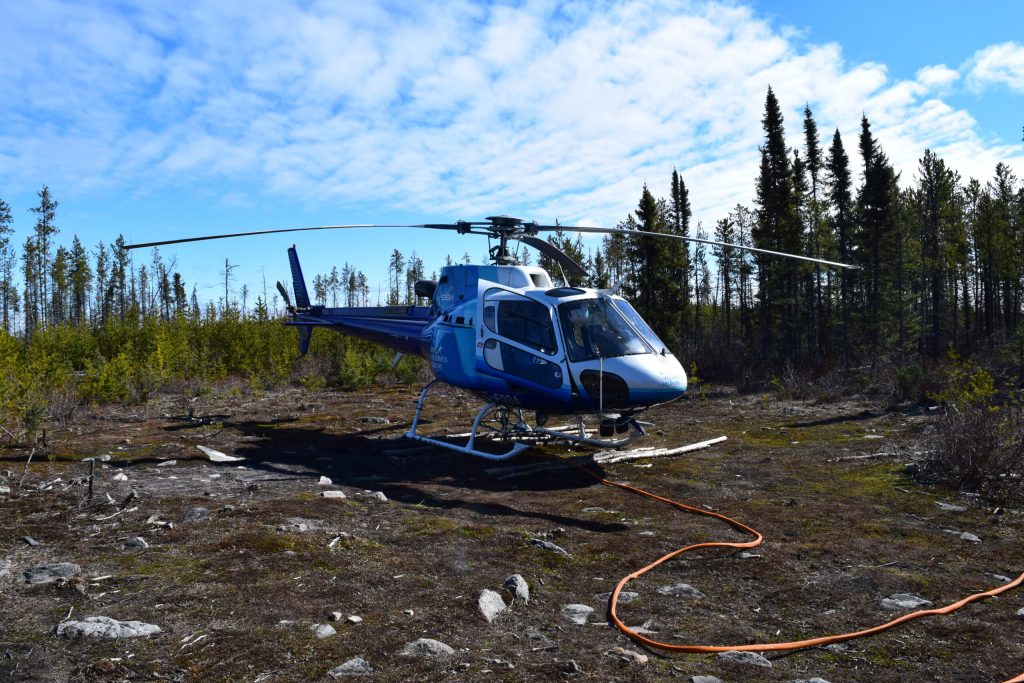
IsoEnergy Ltd. [NYSE American: ISOU; TSX: ISO] and Purepoint Uranium Group Inc. [TSXV: PTU; OTC: PTUUF] reported a highly encouraging start to the inaugural drill program at their 50/50 Dorado Project, located in Saskatchewan’s Athabasca Basin. Initial drilling at the Q48 target on the project, completed by Purepoint as the operator of the program, intersected uranium mineralization in two holes, with downhole gamma probe readings up to 79,800 counts per second (CPS). The intercepts occur within strongly altered basement rocks -suggesting an active uranium-bearing hydrothermal system.
Highlights: Initial drillholes at the Q48 target, located in the southern portion of the project, have intersected uranium mineralization, confirming the zone as a significant uranium-bearing structure.
Drillholes PG25-04 and PG25-05 intersected a steeply dipping, north-south trending mineralized structure at vertical depths of 60 and 20 metres below the unconformity, respectively.
Radioactivity readings from downhole probe measurements averaged 11,050 cps over 3.7 metres with a maximum of 74,800 in PG25-04, and 27,750 over 2.3 metres with a maximum of 79,800 in PG25-05.
Mineralization is hosted within strongly clay-altered basement rocks-considered key indicators of a uranium-bearing hydrothermal system consistent with known Athabasca-style deposits.
Q48 was originally highlighted as a high-priority target based on historic drilling that encountered structurally disrupted, altered basement rocks with weak radioactivity, and further confirmed in 2022 by IsoEnergy’s identification of brittle faults, shearing, and alteration along the conductive trend.
A third follow-up hole is underway to further track the mineralized structure along the Q48 conductive corridor to the northeast. Approximately 5,400 metres in 18 drill holes are planned for the Project in 2025.
“This is exactly the kind of start we were aiming for. These early results suggest we’re on the trail of something meaningful.” said Chris Frostad, President and CEO at Purepoint. “These initial hits speak to the quality of the target and the systematic approach our team is taking to uncover its potential. We’re moving quickly to follow up on these encouraging results as drilling continues.”
Philip Williams, CEO and Director of IsoEnergy commented, “Our JV projects was created to focus exploration where we see real discovery potential. This exploration success reinforces the strength of our partnership with Purepoint. By combining deep Basin experience with a focused, well-funded program, we believe we’ve positioned Dorado for continued success through a disciplined exploration effort. It’s exciting to see that approach already delivering promising results.”
The Q48 zone lies within the southern portion of the project and is characterized by a steeply dipping, north-south trending conductive package identified through geophysical surveys. Historic drilling in the area intersected strongly altered and structurally disrupted rocks at the unconformity and in the basement, including garnetiferous pelitic gneiss, graphitic pelitic gneiss, and semipelite, with local weak radioactivity and zones of intense clay alteration. These results, combined with the geophysical response, highlighted Q48 as a highly prospective but underexplored target.
Drilling by IsoEnergy in 2022 confirmed that the conductive trend at Q48 hosts structure, shearing, and alteration, characteristics of uranium-bearing hydrothermal systems in the Athabasca Basin. The current program is designed to systematically follow-up and fully test the Q48 conductive corridor.
Dorado is the flagship project of the IsoEnergy-Purepoint 50/50 joint venture, a partnership encompassing more than 98,000 hectares of prime uranium exploration ground. The Project includes the former Turnor Lake, Geiger, Edge, and Full Moon properties, all underlain by graphite-bearing lithologies and fault structures favorable for uranium deposition.
Recent drilling by IsoEnergy east of the Hurricane Deposit has intersected strongly elevated radioactivity in multiple holes. The anomalous radioactivity confirms the continuity of fertile graphitic rock package and further highlights the opportunity for additional high-grade discoveries across the region.
The shallow unconformity depths across the Dorado property-typically between 30 and 300 metres-allow for highly efficient drilling and rapid follow-up on results.
A Mount Sopris 2PGA-1000 downhole total gamma probe was utilized for radiometric surveying. All drill intercepts are core width and true thickness is yet to be determined.
IsoEnergy is a leading, globally diversified uranium company with substantial current and historical mineral resources in top uranium mining jurisdictions of Canada, the U.S. and Australia at varying stages of development, providing near-, medium- and long-term leverage to rising uranium prices.
IsoEnergy is currently advancing its Larocque East project in Canada’s Athabasca basin, which is home to the Hurricane deposit.
IsoEnergy also holds a portfolio of permitted past-producing, conventional uranium and vanadium mines in Utah with a toll milling arrangement in place with Energy Fuels. These mines are currently on standby, ready for rapid restart as market conditions permit, positioning IsoEnergy as a near-term uranium producer.
Purepoint Uranium Group Inc. has a portfolio of advanced projects within the Athabasca Basin. Highly prospective uranium projects are actively operated on behalf of partnerships with industry leaders including Cameco Corporation, Orano Canada Inc. and IsoEnergy Ltd.
Additionally, the company holds a promising VMS project currently optioned to and strategically positioned adjacent to and on trend with Foran Mining Corporation’s McIlvenna Bay project.