
Japan Gold posts more gold intercepts at Mizobe Project, Japan
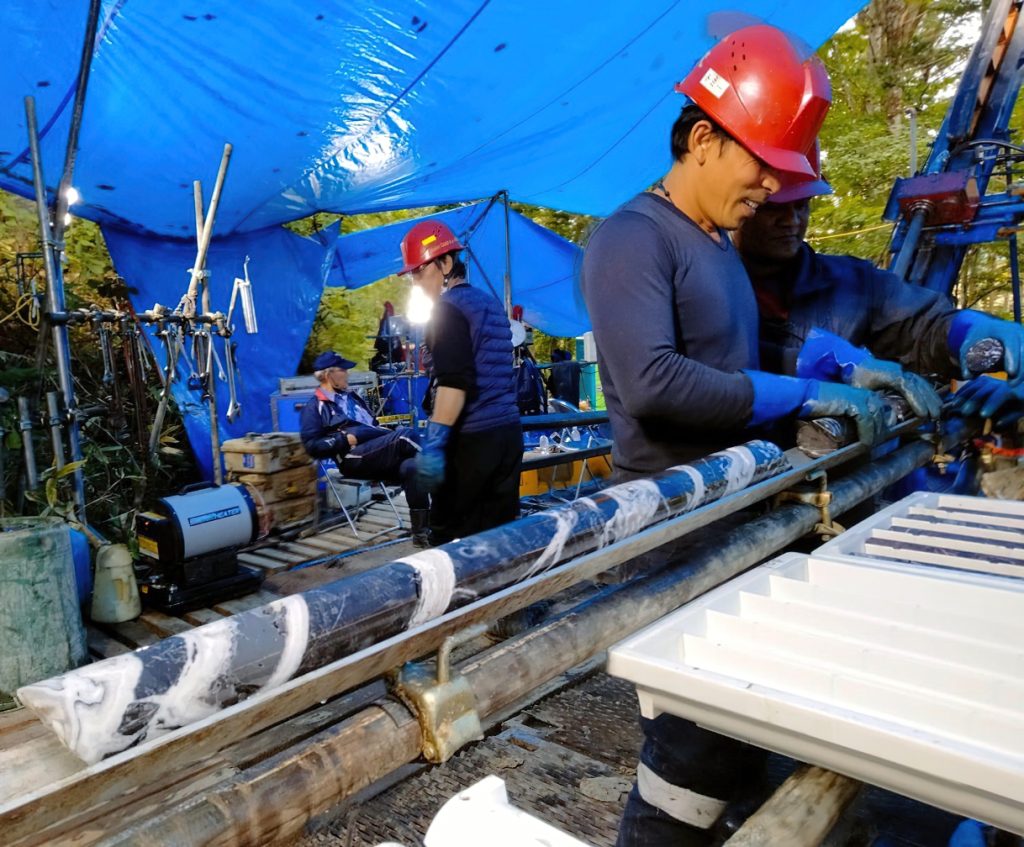
Japan Gold Corp. [TSXV: JG; OTCQB: JGLDF] reported results from two diamond drill holes totaling 1,156 metres completed at the Mizobe Project, intersecting gold mineralization in both drill holes and recording the first intercept of a banded chalcedony vein. The Mizobe Project is located in the Hokusatsu district of southern Kyushu, Japan, approximately 23 km south of the Hishikari Mine, operated by Sumitomo Metal Mining Co., Ltd.
Highlights: 1.82g/t Au over 1.50 metres (Drill hole: MZD25-008), from 292.50 metres, including 3.53 g/t Au over 0.50 metres from 293.0 metres. Gold mineralization is associated with sulphide mineralization, silicification, and hydrothermal brecciation, accompanied by anomalous arsenic and antimony.
Also, 1.07 g/t Au over 2.0m (Drill hole: MZD25-009), from 116.30m and 1.11 g/t Au over 1.35m (Drill hole: MZD25-009), from 189.95m
Drill hole MZD25-009 intersected similar mineralization at approximately 116.30 metres downhole and encountered a banded chalcedony vein at approximately 190.75 metres. This vein is discontinuous over an interval of approximately 2.40 metres and represents the first documented drill intersection of this vein style at the Mizobe Project. Intervals are downhole lengths; true widths are unknown.
This vein style is common of low-sulphidation epithermal environments and may be indicative of the upper levels of a hydrothermal system.
The company is encouraged by the presence of hydrothermal alteration, along with associated anomalous metals and pathfinder elements identified to date. Future exploration will focus on further delineating the extent of the alteration system, improving the understanding of the source and controls of the alteration and associated geochemical anomalies, and evaluating areas with potential for more strongly developed mineralization.
Historical drilling completed in 2023 at the Mizobe Project under the Barrick Alliance intersected gold mineralization beneath post-mineral cover. Notable historic intercepts include 10.0m at 4.27g/t Au from 122.75m (MZDD23-003) and 4.0m at 1.60g/t Au from 36.5m (MZDD23-004).
The 2025 drill program was designed to test for the presence and potential continuity of mineralization beneath mineralization intersected in historical drill holes MZDD23-003 and MZDD23-004.
Drilling has intersected zones of hydrothermal alteration associated with anomalous gold, arsenic, and antimony beneath post-mineral cover. Based on current drilling, the alteration has been observed in multiple drill holes.
The alteration and associated geochemical anomalies appear to be controlled by the rock type and are best developed in the upper portions of the drill holes.
All reported intervals are downhole core lengths; true widths have not yet been determined. Complete assay results are presented in Table 1.
Japan Gold is focused on the exploration and discovery of high-grade epithermal gold deposits across the main islands of Japan. The company holds a significant portfolio of tenements covering areas with known gold occurrences, history of mining and prospective for high-grade epithermal gold mineralization in one of the most stable and under explored countries in the world.
Japan Gold leadership and operational team of geologists, drillers and technical advisors have extensive experience exploring and operating in Japan and have a track record of discoveries world-wide. Significant shareholders include Equinox Partners Investment Management LLC and Newmont Corp.