
Lode Gold begins exploration program to evaluate upside potential at Fremont Gold Mine, California
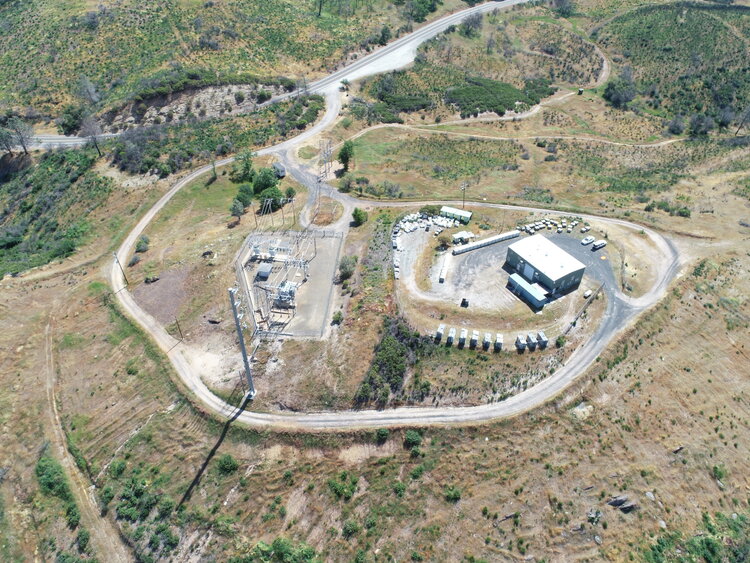
Lode Gold Resources Inc. [TSXV: LOD; OTCQB: LODFF; FSE: X27] reported that it is initiating exploration work to evaluate additional gold potential at its 100%-owned Fremont Gold Mine, located on privately owned patented land in Mariposa County, California.
Fremont is a historically producing gold mine comprising seven deposits and four former mines, supported by significant existing infrastructure, including approximately 23 km of underground workings, 14 adits, two shafts and 43,000 metres of historical drilling. Gold production, which historically averaged 10.7 g/t, was halted in 1942 during World War II, when gold was priced at approximately US$35/oz.
The company’s 2026 NI 43-101 Mineral Resource Estimate (MRE) includes resources from only three of Fremont’s seven identified deposits. To date, Lode Gold’s primary focus has been on evaluating a potential mine plan for the Pine Tree-Josephine deposit.
The Fremont property encompasses approximately 3,351 acres of privately owned patented land along a four-km mineralized trend. Historical exploration has covered less than 20% of the property, with much of the work concentrated along a strike length of just over 800 metres.
With mineralization remaining open along strike and at depth, Lode Gold is expanding its evaluation to include all seven deposits and nine additional exploration targets identified through VRIFY’s geological targeting work. The company is also evaluating the potential of its previously producing mines, beginning with French Mine as the first satellite deposit under review.
In addition to French Mine, the company has identified two other historical mining areas, Ogle Lease and Evans, where exploration work has not yet commenced. The systematic evaluation of these historical mines and additional targets forms part of Lode Gold’s broader strategy to investigate opportunities to expand the known mineral potential of Fremont beyond its currently defined resources.
Fieldwork is currently underway, together with the recovery, compilation and review of historical geological and operational records, including archived mine plans and cross-sections, historical production statistics and previous exploration data. This work will support the development of a three-dimensional geological model to evaluate the geometry and continuity of mineralized structures and their potential contribution to Fremont’s future development.
The French Mine was historically operated during the 1930s, with reported gold grades of 10.7 g/t Au. Located approximately two km by truck from the Pine Tree-Josephine area, the mine represents a potential high-grade satellite opportunity that could benefit from its proximity to the company’s principal development area.
The company is currently conducting fieldwork while compiling and reviewing historical mine plans, geological cross-sections, production statistics and previous exploration data, including drilling results and core samples from the 2016 campaign, surface channel samples collected in 2014, and historical underground samples. This work will support the assessment of the geometry, continuity and grade distribution of the mineralized structures and their potential mining characteristics.
If its geological and mining potential can be established, French Mine could provide a source of higher-grade material to complement production from Pine Tree-Josephine through blending, potentially improving the grade of the planned production feed. This opportunity remains subject to further geological evaluation, technical studies, and mining, metallurgical and economic assessments.
Wendy T. Chan, CEO and Director, Lode Gold, commented: “With production halted when gold was approximately US$35 per ounce, we wonder how much more gold remains to be discovered at Fremont. Fremont was the second gold project in 1849 to contribute to the California Gold Rush, and the Mother Lode Belt has a rich mining history.
“We believe there could be significant upside at the previously producing mines on our property that we have yet to fully explore. Our main deposit, Pine Tree-Josephine, has an unusual triangular shape, and we have yet to drill-test its potential mirror-image extension. Three deep step-out holes, reaching depths of up to 1,300 metres, intersected mineralized structures. We are actively advancing the project and expect to provide further news over the next 30 to 90 days.”
The company is reviewing and organizing the historical database for French Mine, including archived mine production, geological cross-sections and other historical technical records. This work is intended to reconstruct the geometry of the underground workings, the relationship between the mineralized structures and the historical mining development, and the available evidence of mineralization along the vein system.
The company has also recovered and compiled historical production statistics, providing additional information for the assessment of the mine’s previous operating history.
Between 1934 and 1939, The French Mine mined 3,734.0 tonnes grading 12.1 g/t gold for 1,599.8 ounces of gold.\
As part of the reevaluation, Lode Gold has reviewed several existing datasets, including drill core samples and assay results from the 2016 drilling campaign, surface channel samples collected in the French Mine area in 2014, and historical underground samples collected during earlier mining operations that is currently under digitization. Integrating these datasets will help the company assess the distribution of gold mineralization and investigate the potential continuity of the mineralized structures. Refer to original press release for detailed channel sampling and drilling results.
French Mine comprises a series of narrow, gold-bearing vein structures hosted by greenstone rocks near their contact with phyllites and slates. The mineralization is associated with a low-angle tensional shear zone dipping approximately 30° within the host rocks. This structural orientation is distinct from the lithological contact, which has a different geometry. At least three mineralized structures have been identified: the French Vein, North Vein and South Vein.
Understanding the relationship between the shear zone, the lithological contact and the individual veins is an important component of the ongoing reevaluation. The Company is integrating these structural relationships with historical underground workings and existing exploration data to assess vein geometry, continuity and potential implications for future mine planning.
The next stage of work will focus on integrating the historical mine workings, geological interpretations, sampling results and drilling data into a three-dimensional geological model. The model is intended to improve the Company’s understanding of the geometry and continuity of the French Mine vein system, provide a framework for comparing historical mining with modern exploration data, and help identify areas that may warrant further investigation.
Jon Hill, Director and Chair of the Technical Committee at Lode Gold, commented: “The high grades historically recorded at French Mine provide an encouraging starting point for our technical evaluation. Our focus now is on assessing the continuity of mineralization, mineable widths and the geometry of the vein structure, together with important considerations such as dilution and underground access. This work will help us determine the potential for French Mine to contribute to a future mining operation at Fremont.”
The company believes that the combination of historical production records, underground development information and existing sampling data provides a useful foundation for reassessing French Mine within the broader Fremont project. The resulting geological model will help determine the extent to which this narrow, potentially high-grade structure could complement the development strategy for Pine Tree and contribute to future technical evaluations of the project.
The reevaluation remains ongoing, and the company will assess the results of the integrated geological interpretation before determining the next appropriate The Fremont Gold Mine (Fremont Gold Mining LLC) is a brownfield project in Mariposa, California with 43,000 metres drilled, 10,000 underground channel samples, 14 adits and two shafts.
Mining was halted in 1942 due to the gold mining prohibition during WW II. It was mined at 10.7 g/t when price was gold was $35/oz. APEA was completed in 2023. The PEA was based on 1.16 Moz at 1.90 g/t Au within 19.0 Mt Indicated, and 2.02 MOz at 2.22 g/t Au within 28 Mt Inferred with a composite cut-off of 0.25 g/t for oxide, 0.45 g/t for open pit mineralization.
A MRE was updated in 2026; 89% of the ounces were left unmined if we compare historical production with our current Indicated Resource. Average true widths at 1 g/t cut off is 53m. Project sits on >3,000 acres of 100%-owned private and patented land which is designated as OZ, Trump Administration Opportunity Zone (Special Tax Incentives).
The Dingman property is an orogenic deposit in Ontario, Canada with over 22,000 metres drilled, with a 2013 PEA, MRE: 376,000 oz at 0.94 g/t within 12.5 Mt measured and indicated and 47,000 oz at 0.71 g/t within 2.1 Mt Inferred.