
Lode Gold sees upside potential at Fremont Mine, California
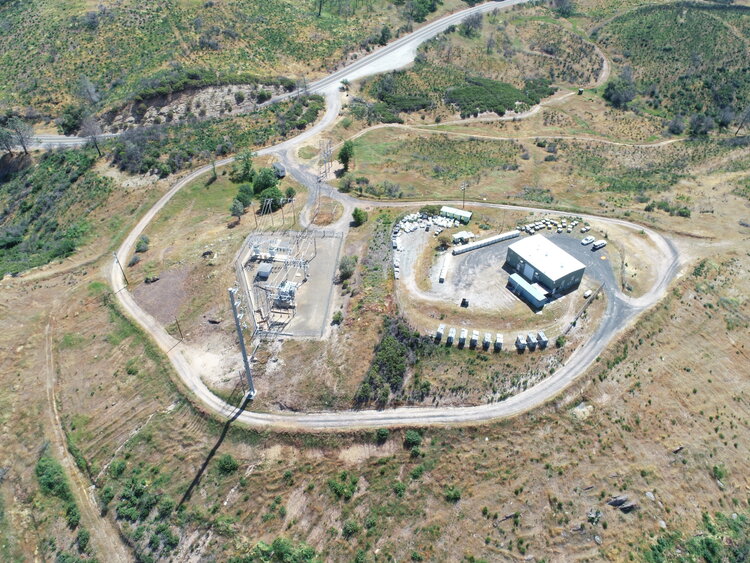
Lode Gold Resources Inc. [TSXV: LOD] has identified additional upside potential at the Fremont Mine, Mariposa, in the Mother Lode Belt, California. Based on VRIFY’s findings, in addition to the seven previously identified deposits, only two of which have been mined, an additional nine potentially mineralized targets have been identified outside the Central Trend. Nine additional exploration targets have been identified.
VRIFY’s DORA is an AI tool that analyzes hundreds of layers of information at once and integrates geology, geophysics, geochemistry, structural interpretations, and drill data into one predictive framework. This allows the platform to recognize complex correlations and generate new high-probability exploration targets while validating known zones.
Leveraging VRIFY’s DORA, Lode Gold analyzed and validated prospectivity results by compiling geoscientific and geospatial data. The company has comprehensive data that includes geochemistry, geophysics, metallurgy, rock mechanics, hydrology, 43,000 metres of drill core and 8,000 channel samples. Using the company’s existing data DORA identified potential extensions of known mineralization at the project, alongside entirely new zones where no drilling has been completed.
To maximize the value of this dataset, additionally, VRIFY applied proprietary data augmentation resulting in 28 enhanced layers from cleaned, smoothed, and filtered geophysics; 231 engineered rasters, including 44 element prediction maps (rock and soil geochemistry), 26 geology “distance factor” and structural maps, 100 geophysics-derived filters (using ResNet50 and Haralick algorithms) and 22 lineament and structural complexity maps from 11 unique interpretations.
“We are very excited to partner with Lode Gold on Fremont, a data-rich brownfield project with over 40,000 meters of drilling. Deploying DORA, we combined AI with geological expertise to transform more than 40 input layers into hundreds of engineered datasets, ultimately defining nine high-priority targets,” said Steve de Jong, CEO of VRIFY.
Lode Gold intends to advance several of the new targets toward drilling in the near future as it progresses on technical and engineering work to re-activate the Fremont Mine. Near term, drilling and channel sampling are in the plans as we move towards Pre-Feasibility.
Lode Gold’s PEA 2023 is based on a mineral resource estimate of 1 million oz in the Measured and Indicated (M&I) category and 2 M oz in Inferred category; most of the gold mineralization is concentrated on 800 metres of strike and is relatively shallow – in the first 500 metres in two of the seven known mineralized zones.
Currently 23 km) of underground workings extend from surface to 500 metres, and the deposit is open on strike and at depth. Three step-out diamond drill holes at 1,300 m hit structure and were mineralized. Nearby mines, Kennedy and Argonaut were mined at 13 g/t gold, at depths of up to 1,800 metres. Consistent with other orogenic deposits, the Fremont Mine has structural controls.
At the Fremont Mine, mining primarily occurred in the first 250 metres from surface on the Pinetree vein, and minimally on the second vein, Josephine.
Of note, 100% of the mineralization outside the veins, in the disseminated ore body, was left untouched, with grade consistency similar to that in the veins. Selective vein extraction by previous owners has left much of the deposit unmined. Only 8% of the resource identified in the 2025 MRE has been extracted. The deposit has great continuity and impressive widths.
At 1 g/t gold cut-off grade, the average true width is 50 metres, at 3 g/t gold cut-off grade the average truth width is 17 metres. The average grade thickness at 1 g/t gold cut-off is 143 gram-metres; and, at 3 g/t gold cut-off it is 74 gram metres.
The Fremont Mine is a brownfield project that was previously mined at 10.7 g/t at a time when price of gold was US $35/oz. Mining activity at the Fremont Mine was halted in 1942 due to a gold mining prohibition during World War II and the mine has not operated since.
Lode Gold is currently working with engineering and mining companies to evaluate the potential for underground bulk mining. The company recently completed the transfer of the Mine Safety and Health Administration (MSHA) property MSHA Individual Identification Number, or MIIN, for its wholly owned Fremont Mine. This is a critical regulatory milestone in the potential re-activation of the historical mine.
Discussions are in progress with potential joint venture partners to initiate near-term work starting with drilling and underground channel sampling.
The plan is to upgrade the resources to M&I and initiate Pre-Feasibility Study (PFS) early 2026. With 8,000 channel samples, 43,000 metres drilled, and the drill cores preserved much of the work can be expedited. Completion of PFS is estimated to be December 2026.
The goal is to advance to test mining and pour gold by early in 2028. Test mining employing a portable mill with a processing capacity of 300-500 tonnes per day (tpd) will allow the company to generate critical data while staying within the original site footprint and minimize surface disturbance. The company does not intend to use cyanide and a two-step gravimetry recovery is being explored.
Planned surface drilling will be done mostly at the original drill pads. Step out holes to expand resources are being evaluated. Pending rock mechanics and engineering analysis, the eventual mine plan being contemplated will range from 4,000-6,000 tpd, generating 130,000-200,000 ounces of gold per annum.
Lode Gold is investigating the potential to optimize and update the 2023 Preliminary Economic Assessment based on an underground mining operation with 3 active stopes of approximately 30 m by 30 m by 30 m in size and a mine life of 9 years.
Using DORA, Lode Gold developed a VRIFY Prospectivity Map via an iterative workflow that began with data ingestion and compilation, followed by leveling and gap-filling, specifically with geophysics. From there, the dataset was enhanced and augmented using DORA’s proprietary AI algorithms to generate new layers of information. Using this process, eight compelling new targets have been identified and validated for further investigation in collaboration with Lode Gold’s geoscience team.
The VRIFY Prospectivity Map for the Fremont Mine was built on a comprehensive stack of more than 259 data layers derived from 32 initial inputs. The process brought together data provided by Lode Gold, public datasets sourced by VRIFY, and entirely new data layers generated within DORA.
Lode Gold will plan future exploration efforts to advance these targets as part of a project exploration strategy. Additional data gathered through further exploration can be ingested by DORA to iterate on experiments and further refine predictions and resulting targets.
In the United States, the company is focused on its advanced exploration and development asset, the Fremont Mine in Mariposa, California. It has a recent 2025 NI 43-101 report and compliant Mineral Resource Estimate (MRE).
The Fremont Mine was previously mined until operations ceased due to mining prohibitions during WWII when its mining license was suspended. Only 8% of the resource identified in the 2025 MRE has been extracted. The Freemont Mine has exploration upside and mineralization is open at depth (three step-out holes at 1,300 metres hit structure and were mineralized) and on strike. This is a brownfield project with over 43,000 metres drilled, 23 kilometers of underground workings and 14 adits. The project has excellent infrastructure and is close to electricity, water, roads, railhead and port.
Recently, the company completed an internal scoping study, with a strategic pivot to 100% underground mining. Previously, in March 2023, the company completed an NI 43-101 Preliminary Economic Assessment (PEA) with an open pit and underground combination mine.