
Osisko Development updates infill drilling at Cariboo Gold Project, British Columbia
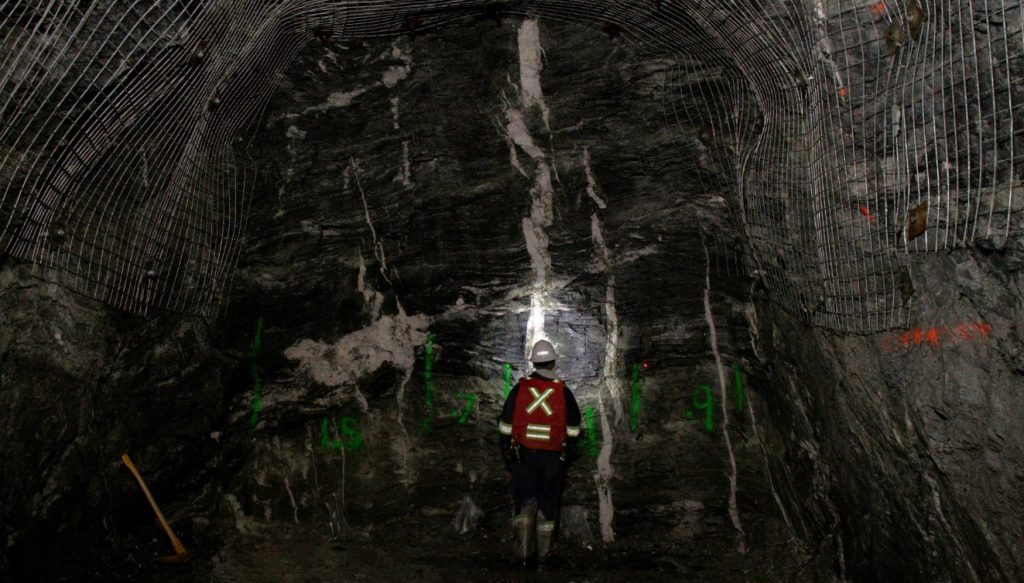
Osisko Development Corp. [NYSE: ODV; TSXV: ODV] reported new infill drilling results from its ongoing 13,000-metre program on 10-metre drill spacing that commenced in August 2025 in the Lowhee Zone of the company’s permitted, 100%-owned Cariboo Gold Project located in central British Columbia, Canada. The first three fans of this program consisted of approximately 2,279 metres of underground infill drilling.
Chris Lodder, President, stated, “We have observed good continuity consistent with modelled vein zones and planned stope shapes with these initial results. The presence of high-grade composites within and adjacent to modelled reserve stopes is encouraging and highlights the value of systematic underground infill drilling. The success we are seeing underscores the potential and prospectivity of delineating new zones and expanding existing ones near planned infrastructure, which could be drilled off and incorporated into a future mine plan. The comprehensive 13,000-metre drill program is designed to deliver important data for resource modelling, mine planning, and optimization of production stope design. We look forward to providing further updates as drilling progresses.”
This news release includes assays from 24 underground infill and exploration HQ diamond drill holes (63.5-millimeter diameter) totaling approximately 2,279 metres completed from August 2025 through early September 2025 and for which assays were received by October 1, 2025, with depths ranging from 54 to 114 metres drilled on 3 fans at 40-metre spaced fans.
Select assay photon assay highlights include: 45.24 g/t gold over 3.0 metres in hole BMU-25-075, including 233.92 g/t over 0.5 metres, and 35.19 g/t over 0.5 metres; 41.17 g/t over 2.1 metres in BMU-25-065, including 142.56 g/t over 0.5 metres, and 19.20 g/t over 0.6 metres, and 5.88 g/t over 0.5 metres; 16.36 g/t over 4.6 m in BMU-25-079, including 111.75 g/t over 0.5 m, and 25.03 g/t over 0.6 m, and 5.17 g/t over 0.5 m; 38.92 g/t over 1.5 m BMU-25-073, including 113.06 g/t over 0.5 m, and 3.17 g/t over 0.5 m; 9.87 g/t over 3.95 m in BMU-25-085, including 22.84 g/t over 0.6 m, and 13.78 g/t over 0.85 m, and 16.04 g/t over 0.5 m, and 5.22 g/t over 0.5 m, and 4.00 g/t over 0.5 metres.
Complete assay highlights, including true width estimates, are presented in the original press release. Intervals not recovered by drilling were assigned zero grade. Top cuts have not been applied to high grade assays.
Geological mapping and geochemical sampling were carried out on Barkerville Mountain from 2017-2018, with the Lowhee Zone identified as a high-priority drill target.
In 2019, two southeast-oriented stratigraphic and 22 northwest-southeast oriented drillholes (8,337.0 m) were drilled at the Lowhee Zone. The drilling successfully identified auriferous quartz-carbonate veins at similar orientations to those observed elsewhere on the Cariboo Gold project. Initial 3D geological modelling and resource estimation commenced, and further drilling was recommended.
In 2020, 24 northwest-oriented diamond drillholes (10,144.5 m) were drilled. The focus of the exploration program was to test the extent of mineralization along the down-dip and northeast strike-extent of veining. An internal resource estimation of the Lowhee deposit was completed at that time, with further drilling recommended to improve confidence.
In 2021, a total of 94 diamond drillholes (29,449.1 m) were drilled. The focus of drilling was to delineate, and infill modelled veins with 25-metre spacing. At the time, Barkerville Gold Mines Ltd. completed a mineral resource estimate, and the collection of a bulk sample was recommended.
In 2022, a total of 27 diamond drillholes (6,563.90 m) were drilled. There were two main goals with this drill program. The first goal was to infill a potential bulk sample location achieving category conversion from indicated (25 m spacing) to measured (12.5 m spacing). The second goal was to continue to delineate and infill modelled veins with 25-metre spacing.
Lowhee zone access is through Cow portal on the northwestern flank of Barkerville Mountain. Cow portal construction was completed in Q4 2024 and development of the underground ramp into the Lowhee zone commenced in Q1 2025. Approximately 350 metres of development has been advanced within the Lowhee zone deposit at the 1,290 and 1,260-elevation levels since completion of the main access ramp. The probable mineral reserves estimate for the Lowhee Zone includes 104,491 ounces of contained Au (923,162 tonnes grading 3.52 g/t Au) and represents approximately 5% of the total contained gold in the estimated probable mineral reserves for the Cariboo Gold Project.
The Cariboo Gold Project is a permitted, 100%-owned feasibility-stage project located in the historic Wells-Barkerville mining camp of central British Columbia, Canada. Spanning approximately 186,740 hectares, the company’s land package includes 443 mineral titles and covers a ~77-km strike of highly prospective exploration targets extending northwest to southeast. In late 2024, the Project was granted the Mines Act and Environmental Management Act (British Columbia) permits, marking the successful completion of the permitting process for key approvals, solidifying the Project’s shovel-ready status.
The Cariboo Gold Project hosts probable mineral reserves of 2.07 million ounces of contained Au (17,815 kt grading 3.62 g/t Au); measured mineral resources of 8,000 ounces of contained Au (47 kt grading 5.06 g/t Au); indicated mineral resources of 1.60 million oz contained Au (17,332 kt grading 2.88 g/t Au); and inferred mineral resources of 1.86 million oz contained Au (18,774 kt grading 3.09 g/t Au). Mineral resources are reported exclusive of mineral reserves.
The company’s objective is to become an intermediate gold producer by advancing its flagship permitted 100%-owned Cariboo Gold Project. Its project pipeline is complemented by the Tintic Project in the historic East Tintic mining district in Utah, U.S.A., and the San Antonio Gold Project in Sonora, Mexico—brownfield properties with significant exploration potential, extensive historical mining data, access to existing infrastructure and skilled labour.