
Purepoint Uranium Group begins first-pass drilling at District-Scale Tabbernor Project, Saskatchewan
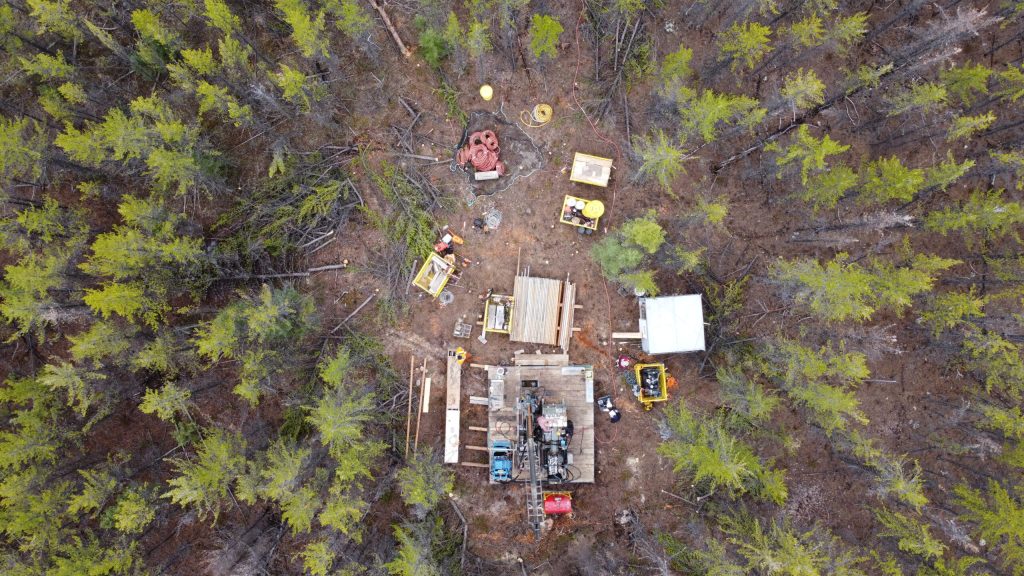
Purepoint Uranium Group Inc. [TSXV: PTU; OTCQB: PTUUF] reported the launch of its inaugural drill program at the 100%-owned Tabbernor Project, located on the southeastern edge of Saskatchewan’s Athabasca Basin. The 1,500-metre program will test five drill targets distributed across two of the three high-priority areas defined within a 60-km-long corridor of graphitic conductors. These targets were identified following extensive geophysical and structural interpretation work.
“Tabbernor hosts a highly underexplored structural corridor in the Basin district with scale, structure, and proximity to known mineralization,” said Chris Frostad, President and CEO of Purepoint. “We’ve spent the past two years systematically preparing to test this largely untouched corridor, and this program marks our first step in defining its potential. Our goal is to prioritize areas for more focused drilling in the years ahead.”
Highlights – District-scale structural/electromagnetic corridor: Approximately 100 km of electromagnetic (EM) conductors, known to be locally graphitic, have been mapped within the project through extensive airborne and ground geophysics.
Five targets to be tested across a 1,500-metre program spanning multiple structural domains. First-pass drilling conducted on the project, now supported by airborne VTEM, MobileMT, gravity, and soil geochemical anomalies. Strong uranium pathfinders identified by Purepoint in soil sampling along the same structural corridors as nearby mineralized intercepts.
The Tabbernor Project spans more than 50,000 hectares and is positioned along the northern extension of the Tabbernor Fault System – an extensive crustal break known to control gold mineralization to the south and uranium occurrences in the Basin. Despite the project’s structural advantages and proximity to uranium-bearing zones, the area has never been properly drill tested for uranium.
Over the past four years, Purepoint has advanced the project through comprehensive exploration programs, including airborne VTEM, MobileMT and gravity surveys, and structural mapping. These efforts identified an extensive stretch of graphitic conductors with coincident gravity and magnetic lows –key markers for alteration halos that can be associated with uranium deposits.
The 100%-owned Tabbernor Project is strategically positioned along three major trends of the Tabbernor Fault System, a deep seated, 1,500-km crustal shear system that runs north through the Athabasca Basin. The system not only hosts over 80 historic mines and gold occurrences but also crosscuts the Basin’s mine trend aligning itself with 8 of the Basin’s largest uranium discoveries.
The Tabbernor project is roughly 40 km south of Cameco’s Eagle Point deposit and is comprised of 23 contiguous mineral claims covering an area of 51,670 hectares. The original three north-south claim groups that covered Tabbernor structures have now been expanded to include a strong east-northeast trending corridor of conductive rocks further enhancing the project’s exploration potential.
Purepoint’s current focus is the 60-km graphitic corridor that cuts through the project, specifically, areas with gravity low responses and showing evidence of structural complexity. Notably, recent drilling on an adjacent property intersected significant mineralization associated with the central Tabbernor graphitic structure.
The Tabbernor Fault System (TFS) is a wide, >1,500 km geophysical, topographic, and geological structural zone that trends approximately northward along Saskatchewan’s eastern boundary. Purepoint’s research has shown that although none of the province’s currently known uranium deposits have been linked to the north-south trending TFS, localized shear zones hosting uranium mineralization may have an associated north-south structural component.
Reactivation of the TFS may have coincided with the age of formation of large uranium deposits in the Athabasca Basin (Davies, 1998). Davies also concluded that structural similarities between the TFS and mineralized areas suggest that the fault system may have had a control on the location of mineralization. More specifically, he considered that several deposits, such as the Sue, Midwest, Dawn Lake and Rabbit Lake all demonstrate a north-south control and strong Tabbernor-like characteristics.
Purepoint Uranium Group has a portfolio of advanced projects within the Athabasca Basin. Highly prospective uranium projects are actively operated on behalf of partnerships with industry leaders including Cameco Corp., Orano Canada Inc. and IsoEnergy Ltd.
Additionally, the company holds a promising VMS project currently optioned to and strategically positioned adjacent to and on trend with Foran Corp.’s McIlvenna Bay project.