
Scorpio Gold posts drill results along Caldera Margin at Goldwedge, Manhattan District, Nevada
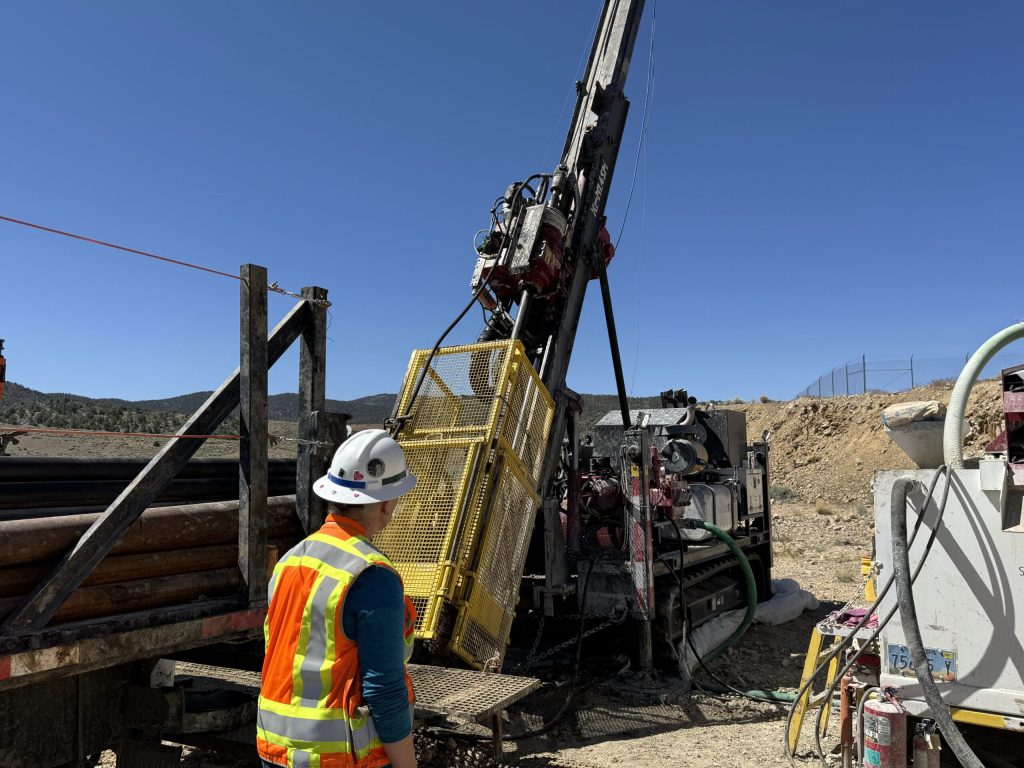
Scorpio Gold Corp. [TSXV: SGN; OTCQB: SRCRF; FSE: RY9] reported results from three step-out holes of the Phase Two drill program at the Manhattan District Project, Nevada, USA, including drill holes 26MN-082, 26MN-084 and 26MN-086.
Scorpio Gold has drilled 92 drill holes to date from its Phase Two diamond drilling program, 25MN-011 through 25MN-045, 26MN-046 through 26MN-101, and 26MN-103, for a grand total of 25,919 metres. With the results reported here, Scorpio Gold has reported assays on 76 of these (25MN-011 through 25MN-045, 26MN-046 through 26MN-080, and 26MN-082 through 26MN-086, and 26MN-088), totalling 22,362 metres, and assays are pending from 16 holes (26MN-081 and 26MN-087, and 26MN-089 through 26MN-101, and 26MN-103), totalling 3,557 metres. Pending results will be reported as they become available.
In addition to the Phase Two drill program, the company has begun reviewing historic core that is available at Manhattan. Any new significant results will be reported as they become available.
“With each hole we drill, our confidence builds that the volcanic units at the north end of Manhattan host the potential for much larger-scale mineralization than the narrow structures historic operators focused on — the very target we have been systematically testing along the Caldera Margin.
Hole 26MN-086 is a good example, returning 45.23 metres of 1.27 g/t gold built around a high-grade feeder of 8.06 g/t over 2.80 metres that appears to bleed outward into the surrounding tuffs, including 2.40 g/t gold over 7.47 metres from 160.26 metres and 8.06 g/t gold over 2.80 metres from 172.31 metres at Goldwedge. This is a broad, volcanic-hosted signature reminiscent of the nearby Round Mountain system, and ours is the first program to drill these rocks specifically expecting to find it.
“What is most encouraging is how repeatable this is becoming — hole after hole along the margin is returning mineralization from these tuffs. That consistency is giving us growing conviction that the volcanic-hosted mineralization need not be confined to the Caldera Margin, but could continue inward into the broader Manhattan Caldera itself. It remains early, but if the volcanics behave as we are seeing, the Manhattan Caldera could open up as a meaningful, larger-scale opportunity well beyond the margin we have tested to date. That potential, alongside our steady progress at Zanzibar, is why we see real room for the resource to grow from here,“ said Harrison Pokrandt, VP Exploration for Scorpio Gold.
Drill hole 26MN-086 is a 50-metre step-out, at Goldwedge, to the north of hole 26MN-048 (0.62 g/t over 32.13 metres) and 24MN-009 (1.69 g/t over 55.70 metres. Drill holes 26MN-084 and 26MN-082 are also 50-metre step-outs, at Goldwedge, to the northeast of hole 26MN-048. Both drill holes tested inside and beyond the Inferred Resource Constraining Pit (IRCP), targeting new mineralization outside of the 2025 MRE block model.
Goldwedge Results: 26MN-082: This drill hole tested mineralization in the Goldwedge area and along the Caldera margin. The drill hole contains three intervals hosted in Ordovician Zanzibar Formation limestone units, including 0.54 g/t gold over 6.1 metres from 9.75 metres, 0.14 g/t gold over 15.24 metres from 21.95 metres and 0.60 g/t gold over 8.6 metres from 40.78 metres. The later interval sits directly above the contact with Oligocene Round Rock Formation volcanic units at 49.38 metres.
26MN-084: This drill hole tested mineralization in the Goldwedge area and along the Caldera margin. The drill hole encountered a void from 49.23 metres to 78.00 metres, where the hole was terminated. This void is not mapped on previous underground workings but is interpreted as a likely stope in the Goldwedge Underground mine. This hole contains no significant intervals, but all mineralization is hosted within Ordovician Zanzibar Formation limestone units.
26MN-086: This drill hole tested mineralization in the Goldwedge area and along the Caldera margin. The drill hole contains one interval hosted in Ordovician Zanzibar Formation limestone units of 0.16 g/t gold over 6.1 metres from 12.95 m. The drill hole contains two intervals hosted in Cambrian Gold Hill Formation fine grained clastic meta-sediments and carbonate units.
The first interval sits directly below the contact with Ordovician Zanzibar Formation, and is noted as 0.31 g/t gold over 5.58 metres from 104.85 metes. The second interval is 0.68 g/t gold over 7.16 metres from 115.83 metres.
The final interval is hosted within Cambrian Gold Hill Formation meta-sediments and Oligocene Round Rock Formation volcanic units and is 1.27 g/t gold over 45.23 metres from 137.95 metres. The Cambrian to Oligocene contact sits at 177.70 m. This interval includes intervals of 2.40 g/t gold over 7.47 metres from 160.26 metres and 8.06 g/t gold over 2.8 metres from 172.31 metres, both hosted in the Cambrian Gold Hill Formation.
These Goldwedge intervals represent new mineralization inside and outside the current IRCP.
Manhattan, located in the Walker Lane Trend of Nevada, USA, is road accessible and lies approximately 20 km south of the operating Round Mountain Gold Mine which has produced more than 15 million ounces of gold. For the first time, the company has consolidated Manhattan’s past-producing mines under a single entity that holds valuable permitting and water rights.
Historically, Manhattan has produced approximately 700,000 ounces of gold from high-grade placer and lode operations dating from the late 1890s through to the mid-2000s. The maiden mineral resource estimate (Maiden MRE) covering the Goldwedge and Manhattan Pit areas of Manhattan is comprised of 18,343,000 tonnes grading 1.26 g/t gold for a total of 740,000 oz contained gold in the inferred category.
A historical mineral resource estimate covers the Black Mammoth, April Fool, Hooligan, Keystone, and Jumbo areas of Manhattan and comprises 1,652,325 tonnes grading 5.89 g/t gold for a total of 303,949 oz contained gold.
The deposit is interpreted as a low-sulfidation, epithermal, gold-rich system situated adjacent to the Tertiary-aged Manhattan caldera in the Southern Toquima Range of Nevada.
Scorpio Gold holds a 100% interest in the Manhattan District located in the Walker Lane Trend of Nevada, USA. Scorpio Gold’s Manhattan District is ~4,780-hectares and comprises the advanced exploration-stage Goldwedge Mine, with a 400 ton-per-day maximum capacity gravity mill, and four past-producing pits that were acquired from Kinross in 2021. The consolidated Manhattan District presents an exciting late-stage exploration opportunity, with over 140,000 metres of historical drilling, significant resource potential, and valuable permitting and water rights.