
Standard Uranium confirms radioactivity at Rocas Uranium Project, Saskatchewan
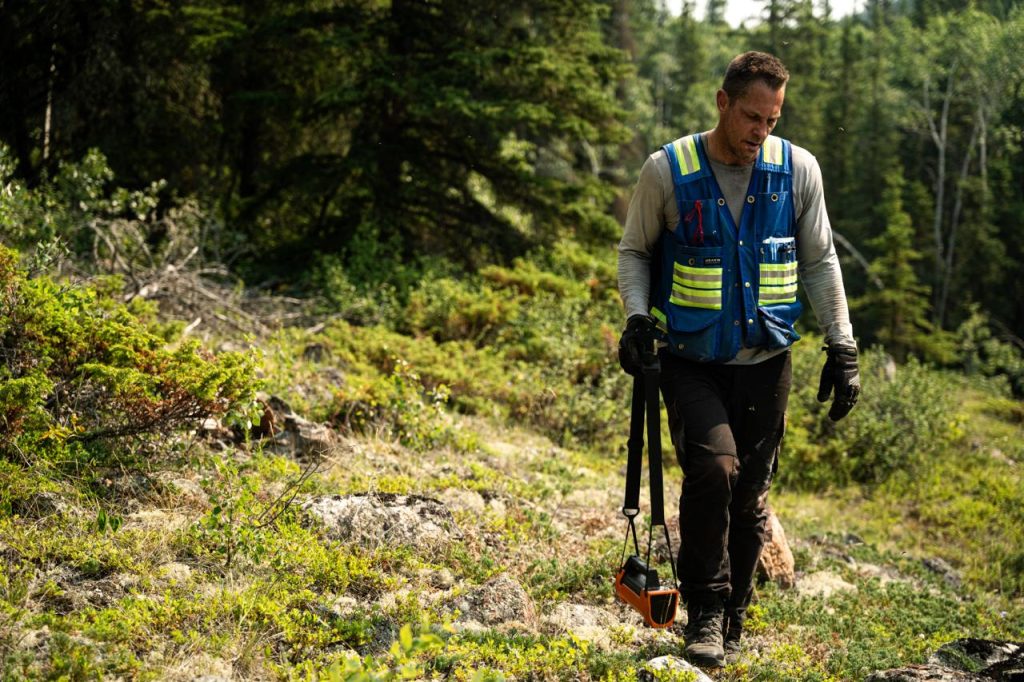
Standard Uranium Ltd. [TSXV: STND; OTCQB: STTDF; FSE: FWB: 9SU0] reported preliminary results from its 2025 exploration program at the Rocas Uranium Project, Saskatchewan, currently under a three-year earn-in option agreement with Collective Metals Inc. [CSE: COMT]. From September 30 to October 8, 2025, the company completed a detailed mapping and sampling program across historical uranium showings and zones of interest on the Project, identifying multiple zones of strong radioactivity.
Highlights: Strong Radioactivity at Surface – Verification of strong radioactivity at multiple historical uranium showings, with several handheld scintillometer measurements exceeding 10,000 counts per second (cps) at surface.
Discovery of New Radioactive Showings – Scintillometer prospecting identified previously undocumented radioactive anomalies across the Project area within lithologies favorable for uranium and Rare Earth Element (REE) mineralization.
Prime Location – Geological mapping along structural and electromagnetic (EM) trends across the Project confirmed the presence of deformed and hydrothermally altered basement lithologies along more than 7.5 km of exploration strike length south of Key Lake.
New Uranium Targets – Results from a high-resolution ground gravity survey completed in 2024 highlight potential alteration halos and high-priority exploration targets along well-defined structural corridors. A diamond drill program is planned for 2026 to test targets identified and prioritized through detailed exploration activities carried out this year.
“The confirmation of strong radioactivity at the Rocas Project is an exciting step forward, directly validating historical uranium showings and highlighting the Project’s discovery potential,” said Sean Hillacre, President & VP Exploration of Standard Uranium. “Surface grab samples and technical information collected during this program not only strengthen our geological model but also add real value ahead of a maiden drill program planned for next year.”
2025 Prospecting Program – Preliminary Results: The Rocas project comprises 4,002 hectares, located 75 km southwest of the Key Lake Mine and Mill facilities along Highway 914, and approximately 72 km south of the present-day margin of the Athabasca Basin. Beginning September 30 and concluding October 8, 2025, the Standard Uranium technical team completed a detailed mapping, prospecting, and sampling program to ground-truth historical uranium showings at surface on the project.
A total of 16 outcrop and boulder grab samples have been submitted to Saskatchewan Research Council Geoanalytical Laboratories in Saskatoon, SK for whole-rock, uranium, and REE geochemical analysis.
Prospecting confirmed several uraniferous outcrops and boulders across the Project, including SMDI showing 5781 (1,100 ppm U). Anomalous radioactivity with a peak of >33,000 cps was measured at SMDI showing 5781 with several other instances of elevated radiometry were noted, locally up to 26,000 cps.
A total of 73 handheld scintillometer readings of anomalous radioactivity >300 cps were recorded, including 10 measurements >10,000 cps at surface. Prospecting for radioactive boulders and outcrop was completed using handheld RS-120 Super-Scintillometers and RS-125 Super-Spectrometers manufactured by Radiation Solutions Inc. (RSI).
More than 150 detailed geological observations, structural measurements, and scintillometer readings were taken from several outcrops across the project within the target areas, identifying deformed and hydrothermally altered basement lithologies associated with radioactivity.
Rocas Project Exploration: The company plans to complete the first ever drill program on the Project in 2026 to begin testing high-priority zones along the main 7.5-km magnetic low/EM conductive corridor, which is host to several uranium showings and has remained un-drill tested to date.
Earlier this year, the company contracted MWH Geo-Surveys (Canada) Ltd. to carry out a high-resolution ground gravity survey over the Rocas Project, while Convolutions Geoscience has completed subsequent processing, interpretation, and modelling of the gravity data. The ground gravity survey outlines several gravity low anomalies coincident with historical surface mineralization, lakebed geochemical anomalies, and cross-cutting fault zones along the known conductive exploration trends on the project.
Historical airborne EM work in 2017 defined conductive trends on the project west of and sub-parallel to the Key Lake Road shear zone, corresponding with favourable metasedimentary basement lithologies. Multiple parallel conductors, offsets, and termination points indicate the trend widening and potential cross-cutting structures. Additionally, a 2007 field sampling program identified anomalous lakebed geochemical anomalies that statistically rank as greater than 95th percentile U, Co, V, and Zn along the conductor corridor, including high U/Th ratios.
The company believes the project is highly prospective for the discovery of shallow, high-grade basement-hosted uranium mineralization. Positioned proximal to the margin of the Athabasca Basin, Rocas boasts shallow drill targets with bedrock under minimal glacial till cover. Historical mineralized outcrop grab samples along approximately 900 metres of strike length, returned values ranging from 587 ppm U (SN85073) up to 0.498 wt.% U3O8 (SN23901) and have never been drill tested.
Standard Uranium is a uranium exploration company and emerging project generator poised for discovery in the world’s richest uranium district. The company holds interest in over 235,435 acres (95,277 hectares) in the Athabasca Basin of Saskatchewan. Since its establishment, Standard Uranium has focused on the identification, acquisition, and exploration of Athabasca-style uranium targets with a view to discovery and future development.
Resource World Magazine Inc. has prepared this editorial for general information purposes only and should not be considered a solicitation to buy or sell securities in the companies discussed herein. The information provided has been derived from sources believed to be reliable but cannot be guaranteed. This editorial does not take into account the readers investment criteria, investment expertise, financial condition, or financial goals of individual recipients and other concerns such as jurisdictional and/or legal restrictions that may exist for certain persons. Recipients should rely on their own due diligence and seek their own professional advice before investing.