
Standard Uranium obtains drill permits and starts gravity survey at Corvo Uranium Project, Saskatchewan
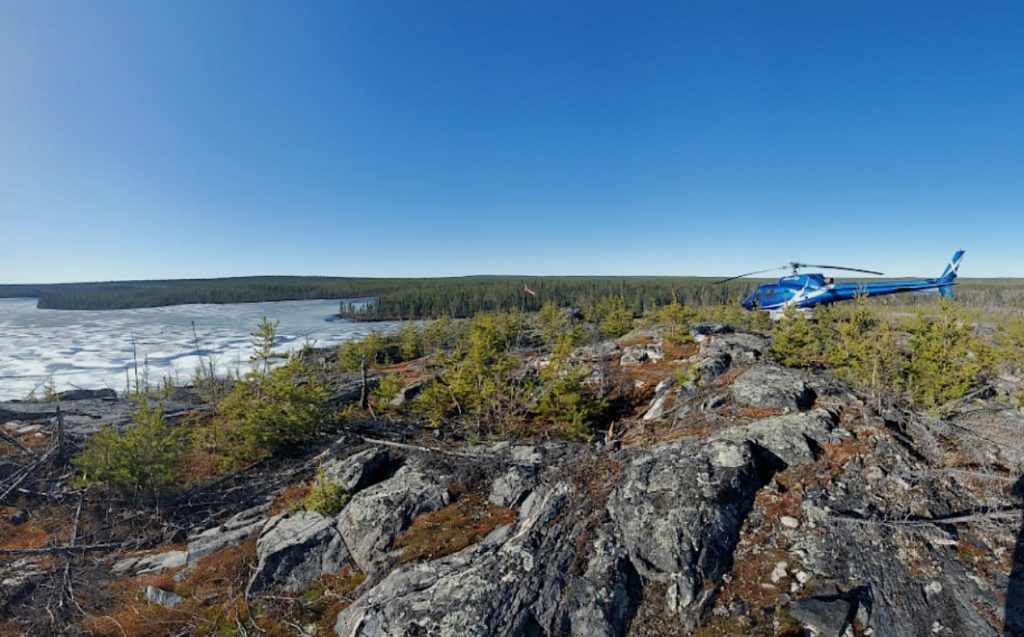
Standard Uranium Ltd. [TSXV: STND; OTCQB: STTDF; FSE: 9SU0] reported exploration permits have been received for the Corvo Uranium Project, Athabasca Basin, Saskatchewan, currently under a three-year earn-in option agreement with Aventis Energy Inc. [CSE: AVE]. Work programs under the 18-month permit will include high-resolution geophysical surveys and the company’s first drill program on the Project beginning in January 2026.
The company contracted MWH Geo-Surveys (Canada) Ltd. (MWH) to complete an extensive 50 m x 200 m ground gravity survey covering more than 29 km of conductive strike length, which will aid in identifying density anomalies that may represent hydrothermal alteration systems coinciding with uranium fertile electromagnetic (EM) conductor trends. MWH mobilized to the project on November 24, 2025, and the survey will comprise more than 5,000 individual gravity measurement stations.
Following completion of the gravity survey, a skid-assisted diamond drill program totalling approximately 3,000 metres is planned for winter 2026, which will mark the first drill program on the project in more than 40 years. Drilling will target high-priority areas including the never-before-drilled Manhattan Showing and other newly identified radioactive occurrences across the property. Outcrop grab samples collected earlier this year returned uranium assays reaching a maximum of 8.10% U3O8 at the Manhattan Showing.
“The gravity survey now underway will further refine our target areas for drilling in Q1 2026,” said Sean Hillacre, President & VP Exploration of Standard Uranium. “Layering the new density results with the EM data from the Xcite TDEM survey we completed earlier this year, in addition to the surficial geological information gathered during our prospecting program will provide multiple high-priority drill targets for our maiden drill campaign this winter.”
Earlier this year, the company contracted Axiom Exploration Group Ltd. in partnership with New Resolution Geophysics to carry out a helicopter-borne Xcite time domain electromagnetic and total field magnetic survey over the Corvo Project. The survey totalled approximately 1,380 line-km with a traverse line spacing of 100 metres and tie-line spacing of 1,000 metres. The airborne TDEM survey outlines several kilometers of conductive anomalies and magnetic features in bedrock, effectively enhancing the resolution of more than 29 km of conductive trends on the project.
Ongoing geophysical interpretation and modeling is being completed to integrate historical surveys with newly collected datasets, which will provide high-priority drill targets and significantly derisk the project prior to modern drilling in 2026.
In July of 2025, Standard Uranium completed the company’s first prospecting and mapping program on the project with the objective of ground-truth sampling historical uranium showings including the Manhattan Showing, which returned results up to 59,800 ppm uranium (total digestion). The company identified zones of off-scale radioactivity (>65,535 cps on a handheld RS-125 Super-Spec) and collected hand samples which returned results ranging from 0.72% to 8.10% U₃O₈, the highest grades ever reported on the project. New drill targets were developed based on previously undocumented radioactive showings, and an NI 43-101 technical report was filed on the project, highlighting high-grade surface mineralization at the Manhattan Showing.
The company believes the Project is highly prospective for the discovery of shallow, high-grade basement-hosted uranium mineralization akin to the Rabbit Lake deposit and the recently discovered Gemini Mineralized Zone. Located just outside the current margin of the Athabasca Basin, Corvo boasts shallow drill targets with bedrock under minimal cover of glacial till.
Standard Uranium is a uranium exploration company and emerging project generator poised for discovery in the world’s richest uranium district. The Company holds interest in over 235,435 acres (95,277 hectares) in the world-class Athabasca Basin in Saskatchewan. Since its establishment, Standard Uranium has focused on the identification, acquisition, and exploration of Athabasca-style uranium targets with a view to discovery and future development.
Standard Uranium’s eastern Athabasca projects comprise over 43,185 hectares of prospective land holdings. The eastern basin projects are highly prospective for unconformity related and/or basement hosted uranium deposits based on historical uranium occurrences, recently identified geophysical anomalies, and location along trend from several high-grade uranium discoveries.