
Standard Uranium verifies uranium enrichment at Corvo Project, Saskatchewan
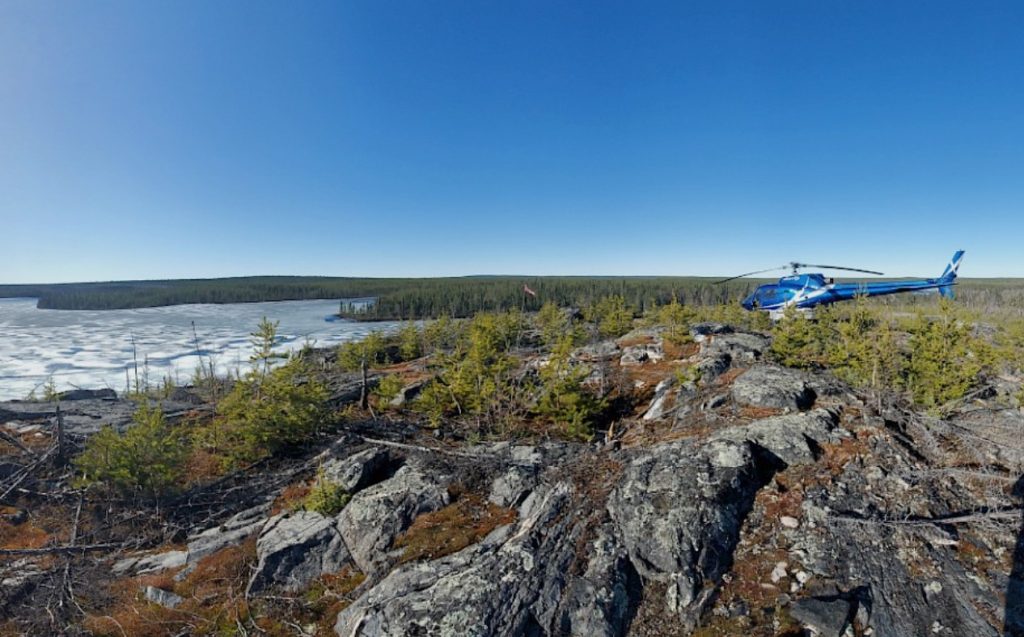
Standard Uranium Ltd. [TSXV: STND; OTCQB: STTDF; FSE: 9SU0] provided a summary of geochemical assay results from its winter 2026 drill program at the Corvo Uranium Project located near Wollaston Lake in northeastern Saskatchewan.
The results of the winter drill program highlight anomalous uranium, boron, and other pathfinder elements indicative of a basement-hosted uranium system across multiple target areas on Corvo. In addition, local intervals of elevated Rare Earth Elements (REE) were identified in drill hole CRV-26-009, with enriched concentrations of Total Rare Earth Element Oxides plus Yttrium (TREO) greater than 0.1%.
The project is currently under a three-year earn-in option agreement with Aventis Energy Inc. [CSE: AVE]. A total of 2,457 metres were completed across ten reconnaissance drill holes at the Manhattan, Brooklyn, and Tribeca target areas. One drill hole was abandoned due to ground conditions. The winter 2026 drill program was funded by Aventis and operated by Standard Uranium.
Highlights – Uranium Confirmed: Analytical results from the winter 2026 drill campaign confirm anomalous uranium in all nine completed drill holes, including multiple intervals of significant uranium enrichment (>100-350 ppm U) in six drill holes. Calculated Uranium:Thorium (U:Th) ratios >2:1 from the winter results consistently indicate hydrothermal uranium input.
Basement-Hosted System: Uranium mineralization is hosted within deformed and altered paragneiss, pegmatite, and granitoid orthogneiss units. Structural settings include hydrothermally altered fault zones and late quartz-carbonate veining – indicating a hydrothermal uranium-fertile system open along strike and at depth.
Elevated Pathfinder Elements: Several key uranium pathfinder elements are present in anomalous quantities in multiple drill holes within the crystalline basement, providing vectoring information for future programs, including anomalous Boron up to 13,600 ppm at 172.5 metres in hole CRV-26-002. Spectroscopy results confirm the presence of fracture-hosted dravitic-clay in four of nine completed drill holes.
Follow Up Targets & Next Steps: Following the review of drilling and geophysical data sets, additional surface exploration and a second phase drilling program is being planned to follow-up along strike of mineralized drill holes and continue testing of priority regional drill targets across the Project. Several priority uranium targets remain along >25 km of structural strike length.
“We are extremely encouraged by the success of our inaugural drill program at Corvo, which marks the first drilling completed on the project since 1979. Intersecting uranium mineralization in multiple drill holes during the first drilling campaign is a significant achievement and a validation of our exploration model,” said Sean Hillacre, President & VP Exploration of Standard Uranium. “Equally encouraging are the presence of highly anomalous pathfinder elements and the identification of the favourable geological and structural settings associated with basement-hosted uranium systems further strengthens our confidence in the Project’s potential. These results provide a strong foundation as we continue to advance Corvo through systematic exploration.“
The inaugural Corvo drill program began testing three high-priority target areas defined by data integration and modeling of a project-wide Time-Domain Electromagnetic (TDEM) survey, a 5,185-station ground gravity survey, and surficial geological information.
Inaugural drilling intersected key characteristics of a uranium-bearing mineralized system across three target areas, confirming the presence of significant fault systems linked to uranium enrichment and prospective hydrothermal alteration in the basement rock.
Partial-digestion uranium assays may provide a more effective exploration vector than total-digestion assays because they emphasize hydrothermal uranium while reducing the contribution from resistant accessory minerals. During early-stage targeting, interpreting partial digestion assays and U:Th ratios can be used as an exploration vector and improve discrimination between fertile lithologies and genuinely mineralized systems.
Targets were selected and prioritized through an iterative approach working in collaboration with Convolutions Geoscience Corporation, targeting compelling geophysical signatures and favorable geological/structural settings. Recent prospecting and mapping across the Project outlined multiple mineralized outcrops and boulders, including the Manhattan showing which returned results up to 8.10% U3O8 at surface. Refer to original press release for complete assays.
In crystalline basement rocks, the company considers concentrations of uranium >10 ppm U to be weakly anomalous, concentrations >50 ppm U to be moderately anomalous and concentrations >100 ppm U to be highly anomalous. Intervals represent drilled core lengths. True thicknesses of mineralized zones cannot be determined with certainty at this stage of exploration.
Analytical results in this release are being integrated with the detailed logging information and geophysical datasets to prioritize follow-up target areas for future drill testing, in addition to testing of numerous other priority regional targets.
The company believes the project is highly prospective for the discovery of shallow, high-grade basement-hosted uranium mineralization akin to the Rabbit Lake deposit and the recently discovered GMZ and Ackio zone. Located just outside the current margin of the Athabasca Basin, Corvo boasts more than 29 km of structural corridors with multiple untested drill targets with minimal cover of glacial till.
This first pass drill program marks the first drilling on the Project in more than 40 years, and the results confirm uranium fertility across multiple target areas. Standard and Aventis will incorporate the results of the 2026 program into the exploration strategy at Corvo for follow-up exploration programs targeting basement hosted uranium mineralization.
The company also reported that further to its news releases of May 27, 2026, and July 2, 2026, it has received an extension from the TSX Venture Exchange with respect to the final acceptance date of its previously announced non-brokered private placement offering of units.
The outside date for the final closing and filing acceptance of all final documentation required by the TSXV in respect of the Offering has been extended from July 11, 2026, to August 11, 2026.
The terms of the Offering and the Units will stay the same up to and including the Extension Date, and the Offering remains subject to certain conditions including, but not limited to, the receipt of all necessary regulatory and other approvals including the final approval of the TSXV on or before the Extension Date.
The company holds interest in over 223,900 acres (90,609 hectares) in the Athabasca Basin in Saskatchewan, Canada. Since its establishment, Standard Uranium has focused on the identification, acquisition, and exploration of Athabasca-style uranium targets with a view to discovery and future development.
Standard Uranium’s Davidson River Project, in the southwest part of the Athabasca Basin, Saskatchewan, comprises ten mineral claims over 30,737 hectares. Davidson River is highly prospective for basement-hosted uranium deposits due to its location along trend from recent high-grade uranium discoveries. However, owing to the large project size with multiple targets, it remains broadly under-tested by drilling. Recent intersections of wide, structurally deformed and strongly altered shear zones provide significant confidence in the exploration model and future success is expected.
Standard Uranium’s eastern Athabasca projects comprise over 40,268 hectares of prospective land holdings. The eastern basin projects are highly prospective for unconformity related and/or basement hosted uranium deposits based on historical uranium occurrences, recently identified geophysical anomalies, and location along trend from several high-grade uranium discoveries.
Standard Uranium’s Sun Dog project, in the northwest part of the Athabasca Basin, Saskatchewan, is comprised of nine mineral claims over 19,603 hectares. The Sun Dog project is highly prospective for basement and unconformity hosted uranium deposits yet remains largely untested by sufficient drilling despite its location proximal to uranium discoveries in the area.