
Sterling Metals makes high-grade copper discovery at the Soo Copper Project, Ontario
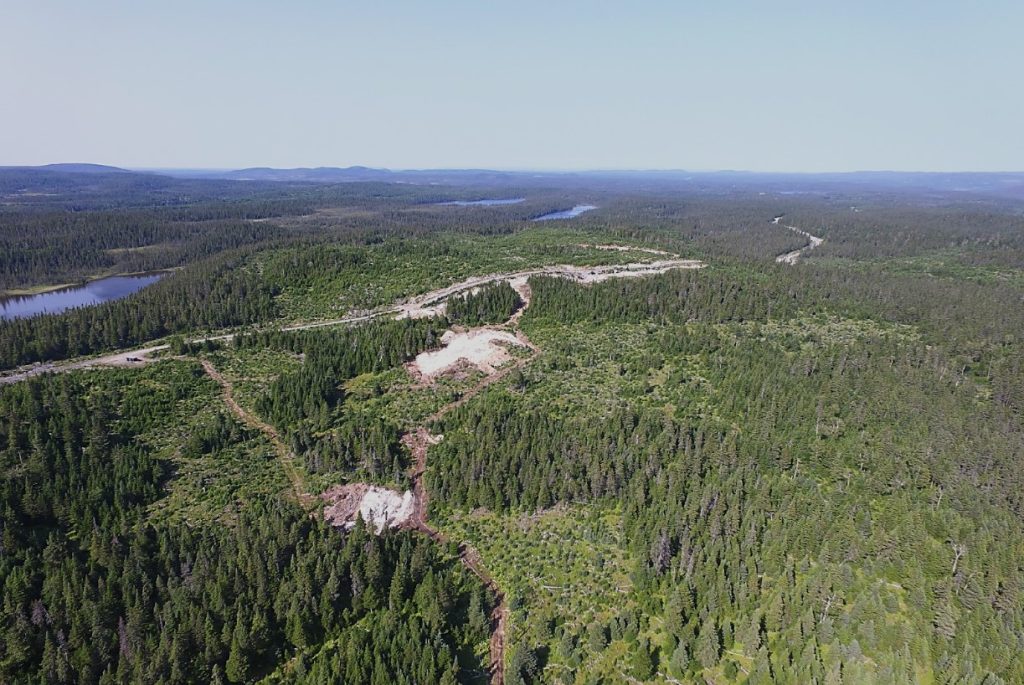
Sterling Metals Corp. [TSXV: SAG; OTCQB: SAGGF] reported the discovery of a high-grade copper zone at its Soo Copper Project located in Batchewana Bay, northern Ontario. Drill hole MEPS-25-02, part of the company’s Phase 2 exploration program, discovered a high-grade copper and gold zone within a continuous, bulk-tonnage copper-molybdenum-silver-gold porphyry system.
Highlights: Discovery hole intersects 262.5 metres of 1.05% CuEq starting from 47.5 metres downhole, including a new high-grade bornite zone with 68.3 metres grading 3.25% CuEq starting at 179.7 metres downhole, featuring semi-massive bornite and chalcopyrite grading up to 9.3m of 19.98% CuEq.
Highest copper and gold grades encountered to date at Soo Copper, included 33% Cu over 0.55 metres starting at 220.45 metres depth; and 196 g/t Au and 21.3% Cu over 0.6 metres starting at 219.85 metres depth.
Newly discovered high-grade Cu-Au mineralization, characterized by bornite and associated porphyry dykes, indicates a robust, large-scale Cu-Au-Ag-Mo system with the potential to transform the Project.
The phase 2 drilling has been expanded from a minimum of 3,000 metres to at least 6,000 metres. A core photo gallery is now available on Sterling’s website.
The MEPS target was selected for its surface mineralization at the Cave Showing where Sterling Metals sampled veins with up to 15.9% Cu in 2024, its coincidence with a large resistivity low, and its proximity to the GFP Porphyry discovered in Phase 1 (hole MJ-25-01). The first hole drilled at MEPS provided critical geological context, refining the interpretation of the mineralized trend and guiding adjustments to subsequent drill angles.
Building on this foundation, MEPS-25-02 was designed to test a more favourable portion of the target. The hole revealed bornite within the first 25m and intersected continuous visible mineralization to over 350m downhole. Assays confirmed a 68.3m high-grade copper zone within a broader mineralized interval, including the highest copper and gold grades ever recorded at Soo Copper. Importantly, the reported interval contained no pyrite or pyrrhotite, reinforcing the high tenor of the system.
Jeremy Niemi, Senior Vice President Exploration and Evaluation, commented: “By integrating surface geology, resistivity data, and insights from our Phase 1 drilling, we refined our targeting model and were able to adjust in real time. MEPS-25-02 immediately delivered bornite from near surface and went on to produce the highest copper and gold grades drilled to date. This validates our geological approach and confirms the GFP Porphyry as a key driver of mineralization at Soo Copper.”
Dr. Neil O’Brien, Technical Advisor, added: “This discovery clearly indicates the potential for a giant magmatic hydrothermal (porphyry) Cu-Au-Mo deposit within the Batchewana peninsula. The high Cu-Au grades due to bornite, coupled with strongly developed potassic alteration and extensive porphyry dykes, all point to a robust and focused mineralizing event that we have just begun to tap.”
Mathew Wilson, CEO and Director, concluded: “The decision to drill MEPS-25-02 was not part of the original plan, but the team recognized the opportunity and had the conviction to act on it. That ability to combine rigorous science with decisive execution is exactly what positions Sterling to continue unlocking discoveries of this caliber.”
Geological observations in MEPS-25-02: bornite mineralization observed from 24m downhole to 350m; highest gold and copper grades drilled to date.
Close association of the high tenor and high-grade copper mineralization with GFP porphyry, present as strongly potassic altered and multiply veined aplitic dykes that were discovered in phase one drilling in April. No pyrite or pyrrhotite observed in the reported section of the drill hole – only chalcopyrite, bornite and lesser molybdenite.
Broad extent of potassic (early biotite followed by potassic feldspar) alteration zone associated with GFP porphyry dykes and Cu-Au mineralization.
Strongly altered and foliated Archean mafic volcanics are preferred host to copper sulphides, and particularly bornite mineralization in proximity to GFP porphyry dykes.
Multiple stages and types of veining present, including early biotite, A-type quartz(-feldspar)-copper sulphides and copper sulphide-only veins, B-type quartz Mo-Cu sulphides veins and late quartz-carbonate-hematite retrograde veins.
The Soo Copper Project is just 20 minutes off the Trans-Canada Highway, one hour north of Sault Ste. Marie, and 20km from rail and deep-water access. With near-surface copper-one of the most critical of all critical metals-alongside gold, and with the project now demonstrating both scale and grade, Sterling sees the potential for Soo Copper to become a nationally significant asset.
Prime Minister Carney’s recent designation of copper as one of Canada’s first five strategic assets underscores the importance of this discovery and its potential to emerge as a key project of national interest.
Sterling Metals is advancing the 25,000-hectare Soo Copper Project which has past production, and multiple breccia and porphyry targets strategically located near robust infrastructure and the 29,000-hectare Adeline Project in Labrador which covers an entire sediment-hosted copper belt with significant silver credits.
Sterling Metals acknowledges that its exploration activities within the Soo Copper project are conducted on the traditional lands of the Batchewana, Garden River, and Michipicoten First Nations of the North Shore of Lake Superior. that is respectful, transparent, and inclusive.