
Trans Canada Gold to explore Harrison Lake Gold Project, British Columbia
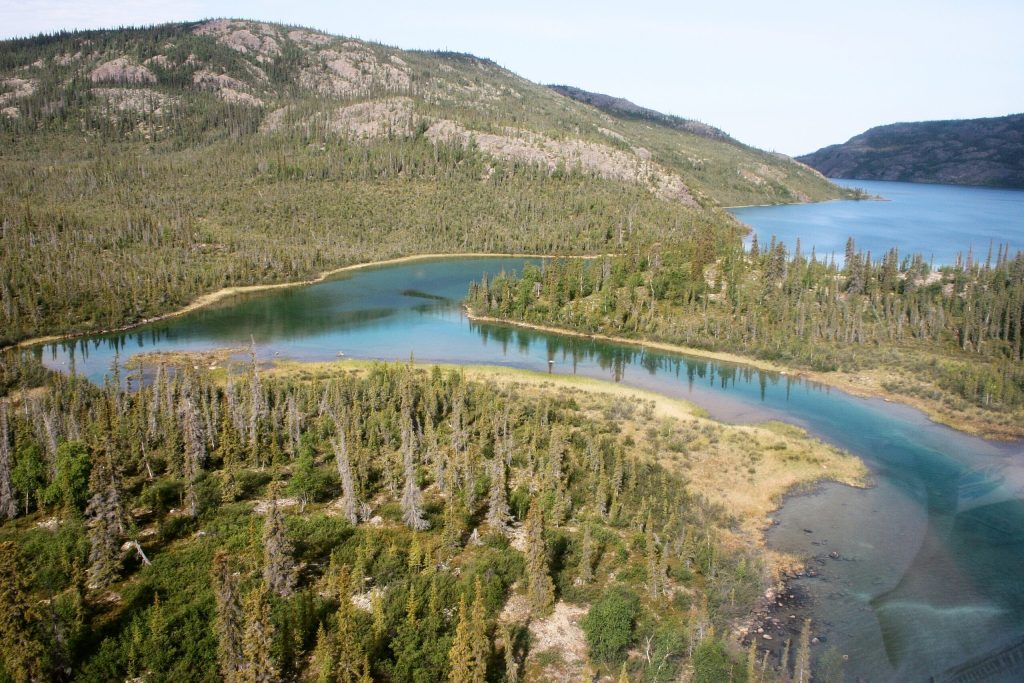
Trans Canada Gold Corp. [TSXV: TTG; OTCQB: TTGXF] provided a corporate update and announce its Spring 2026 drilling plans on the Harrison Lake Gold Project, southwestern British Columbia. The project is demonstrating the same characteristics as the Snowline Gold deposit situated in the Tintina Gold Belt in the Canadian, Yukon.
The Harrison Lake Gold Project in an advanced exploration and development setting, fully permitted targeting identified gold zones, increasing its gold resource. Detailed drilling planning is currently underway on the Harrison Lake Gold Project. The company is well positioned to capture and to capitalize on the forecasted ascending gold prices.
Phase 1-Drilling – 6-hole program targeting the highest-grade gold zone around intercept DDH-84-52: 102 metres grading 3.54 g/t gold.
Phase 2 Drilling – 8-hole drilling program targeting multiple high grade gold zones. DDH 88-76 which intersected 7.0 metres averaging 21.4 g/t and DDH 88-121 which intersected 9.0 metres averaging 13.5 g/t, are priority follow-ups.
The company currently has a non-compliant historical gold resource of 220,000 ounces of gold at the Harrison Lake Gold Project. These historic estimates are disclosed solely for context.
A summary of the estimate for the Jenner zone from Norman’s 1989 study is shown. Historical Tonnage and Grade Estimate for the Jenner Zone is 1,344,000 tonnes probable resources grading 2.67 g/t gold and possible resources of 457,000 tonnes of 2.83 g/t gold.
The total amount of drilling to 1989 on the Portal Stock was 6,978 metres (22,895 feet) in 50 drill holes. Additional diamond drilling by Bema during the fall of 1988 concentrated on the eastern portion of the stock (east of 11040 E) which had produced the best gold mineralization intercepts to date.
Similar Probable and Possible categories were calculated, as for the Jenner Zone, with “probable reserves” defined by projection of a known drill intercept up to 15 meters outward and “possible reserves” defined by projection of the probable block boundaries an additional 30 meters. The resource parameters were identical to those used in the Jenner study.
Historical Resources Estimate at Portal Stock are probable resources of 500,000 tonnes at 3.12 g/t gold and possible resources of 157,000 tonnes of 2.69 g/t gold.
The proposed 2026 drill program is comprised of 2-Phases of diamond drilling using large diameter NTW (2″+)drilling core.
Conduct systematic drilling along a fence in a known higher grade gold zone to demonstrate the use of metallic screen gold assaying to potentially establish higher gold grades. Recent work has demonstrated that historic gold assays may be understated by as much as 10- 40% on the project.
Update the existing geological database to modern GIS standards and identify additional gold drill targets over the 7.5-km trend in the Harrison Lake Corridor of Gold.
Tim Coupland, President and CEO, commented: “We are extremely pleased to laying out our detailed drilling plans for a 14-hole drill campaign targeting previously known areas of high-grade gold mineralization. The Harrison Lake Gold Project represents a high potential gold project with a historical gold resource and high-quality database of exploration and drilling data.
Trans Canada Gold is strategically positioned to expand its historic gold resource, potentially increasing its gold grade to bring these results to its existing shareholders and new investors. The company will embark on a program to accelerate investor awareness and branding of our unique gold investment opportunity, n this precious metal super-cycle.”
The Harrison Lake Gold Project contains a 7-km-long ridge with diorite/quartz bearing extensive intrusive related gold mineralization, situated near Harrison Lake, British Columbia. Historical drilling results confirm the presence of significant gold mineralization.
The Harrison Lake Mineral claims (5,025 ha or 7475 acre) are fully road accessible from the TransCanada Highway and Highway 7 in southwestern British Columbia, with numerous secondary logging roads and related power and rail service.
The property covers a 7-km strike length of the gold-rich Harrison Lake Structural Zone, with stockwork type gold mineralization within diorite intrusions (Jenner and Portal Zones), including DDH-84-52: 102 metres of 3.54 g/t gold.
Jenner and Portal Zones include DDH 88-76 which intersected 7.0 metres averaging 21.4 g/t and DDH 88-121 which intersected 9.0 metres averaging 13.5 g/t. (Note: the intercept in DDH 88-121 is more than 50 metres vertically below the historic resource estimate and requires additional drilling).
A corridor of similar diorite intrusions and “gold in soil” anomalies that extends for more than two kilometers to the south of the original discovery. Follow up drilling of some of these anomalies identified more diorite hosted stockwork type mineralization including DDH 88-130 which tested the Hill Zone and reportedly returned 30 metres averaging 3.0 g/t.
The style of mineralization is similar to the gold deposits of the Tintina Gold Belt that straddles the Yukon-Alaska border and it has also been recognized that the mineralized diorite intrusions are localized along a regionally extensive shear zone adjacent to a large diorite batholith. Snowline Gold’s recent discovery of the Valley deposit clearly demonstrates the potential of these types of occurrences.
Over $10.0 million in previous exploration drilling expenditures. The company has assembled a strong Technical Team in place experienced in underground exploration drilling for gold. Drilling permits have been approved and granted by the Province of British Columbia for 2026-2027.
Michael Magrum, P. Eng., is the Exploration Manager Mining, and as its key technical advisor (as a Qualified Person under NI NI #43-101). Mr. Magrum will be responsible for overseeing the technical management of all Trans Canada Gold’s mineral properties and will be carrying out all requisite oversight for all new gold exploration drilling.
The company’s option agreement is currently being reviewed by and is subject to TSX Venture acceptance of the TSX Exchange and completing the proposed drill programs will be dependent on a successful completion of the private placement announced concurrently with the property acquisition.