
West Point Gold drilling at Sheep Trail, Gold Chain Project, Arizona
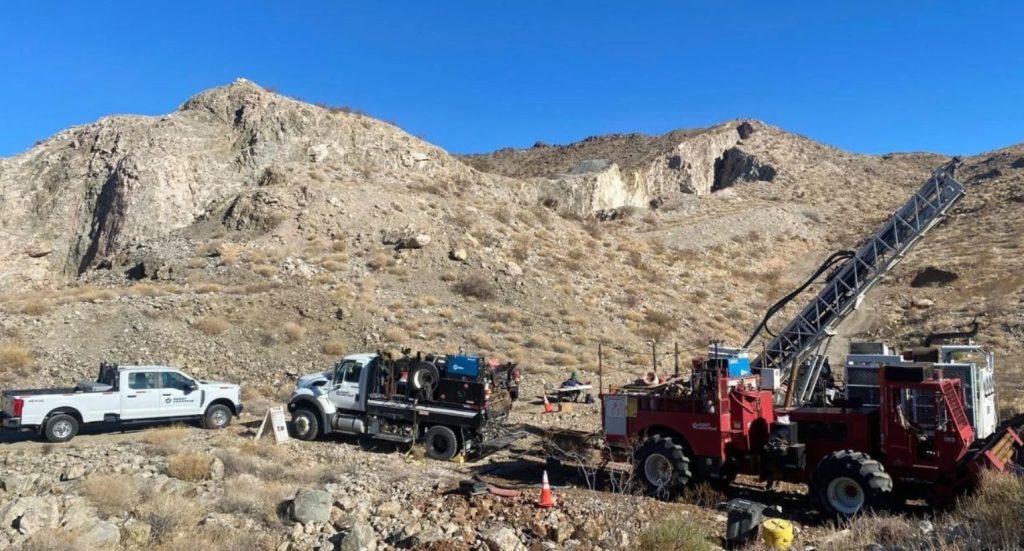
West Point Gold Corp. [TSXV: WPG; OTCQB: WPGCF; FSE: LRA0] reported initial drill results from its Sheep Trail and South Tyro targets. Shallow gold mineralization was intersected at the Sheep Trail target, which is located about 600 metres south of the Tyro Main Zone, at the company’s Gold Chain Project in Arizona.
The initial results across the upper portions of the Sheep Trail target are consistent with historical mining activities and surface sampling, which suggests that the Sheep Trail mine area likely represents a third area where a resource could be defined at the Gold Chain Project. The Sheep Trail and South Tyro targets are two of several gold targets tested in early 2026. This press release includes drill results from 4,517 metres; to date, 15,173 metres of the ongoing 20,000-metre drill program at the Gold Chain project have been completed. Results are pending from 32 holes or 5,859 metres from the Tyro Main and NE zones, Black Dyke, and Bull 8 targets.
Highlights: Sheep Trail is defined by a strike length greater than 1km and hosts between 1 and 3 zones of gold-bearing quartz veinlets and breccia in a rhyolite dike complex.
Hole GC26-106 intersected 32.0 metres of 1.05 g/t gold starting 9.1 metres from surface. In the same zone, Hole GC26-105 intersected 15.3 metres of 1.24 g/t Au from 19.8 metres, including a historical stope (no sample) from 19.8 to 21.3 metres. Hole GC26-111 intersected 19.8 metres of 1.42 g/t Au from 51.8 metres. Hole GC26-113 intersected 7.6 metres of 2.41 g/t Au from 61.0 metres.
The South Tyro target was tested, intersecting broad zones of quartz veining and associated alteration with anomalous arsenic and antimony values, suggesting mineralization may be deeper than tested. The company currently has three rigs operating at Gold Chain, with one core rig and two RC rigs focused on expanding the NE Tyro and the Main Tyro zones to depth.
“Sheep Trail has delivered meaningful grades over a strike length exceeding one kilometre at shallow depths, confirming it as a third potential resource area at Gold Chain. Results like these underscore the district-scale opportunity that West Point Gold is defining at Gold Chain. Separately, current drilling is focused on expanding the Tyro Main Zone, particularly the high-grade northeast Tyro Zone to depth and along strike. Step-out success at multiple targets, along with continued success at Tyro, suggests that it remains early days in defining the full potential of Gold Chain,” stated Derek Macpherson, President and CEO.
Hole GC26-103 returned 19.8 metres at 0.48 g/t gold. GC26-105 returned 15.3 metres at 1.24 g/t gold. GC26-106 returned 32.0 metres at 1.05 g/t gold. GC26-108 returned 24.4 metres at 0.84 g/t gold. GC26-111 returned 19.8 metres at 1.42 g/t gold.GC26-112 returned 13.7 metres at 0.39 g/t gold. GC26-113 returned 7.6 metres at 2.41 g/t gold, including 1.5 metres at 7.75 g/t gold. All widths shown are downhole; true widths are greater than 60% of downhole widths.
Several RC holes were drilled across accessible portions of the Sheep Trail target in areas where historical mine workings are widely scattered. These holes include GC26-103, GC26-105, GC26-106 and GC26-108 across the western extent of the mineralized zone and holes GC26-111, GC26-112 and GC26-113 further to the east and across what is referred to as the “Golden Elbow”. The target zone is shallow and within 60 metres of the surface; a couple of holes were extended deeper to test the possibility of additional veins in the Precambrian granite. To date, all gold mineralization is contained within the major rhyolite dike complex or at the contact with the Precambrian basement (Sheep Trail ledge).
Additionally, five holes were drilled across the down-dip extension of the Sheep Trail ledge about 200 metres to the south of the above-noted holes. All holes encountered extensive zones of quartz veinlets hosted in silicified rhyolite but did not contain gold values greater than 0.07 g/t Au. Additional work is likely required to better understand the relationship between these holes and the ones drilled at upper Sheep Trail.
The results of the upper Sheep Trail drilling are discussed below. Both areas drilled reveal intervals of up to 30 metres of multistage quartz veinlets, veins, and breccia in the rhyolite dike. This dike, which has been mapped over a strike of several kilometres, dips moderately to the south-southwest at 50 to 60 degrees and locally forms a dip-slope across which historical prospecting occurred. Mapping and sampling conducted by West Point Gold have identified widespread veins and breccia masses with values reported (3.7m at 19.52 g/t Au).
Mineralization in the holes drilled to date at Sheep Trail occurs as narrow (<5mm) white quartz veinlets over much of the dike complex. Within this envelope of generally barren, white quartz veinlets is a later quartz stage defined by lime green quartz-chalcedony veinlets, stockwork and breccia which hosted high grades (up to 5 ounces per ton Au) in the historical Sheep Trail mine. Additional quartz events include white-to-gray sucrosic quartz veins and breccia with low gold values.
The Sheep Trail mine was discovered in 1865 by Jack Mellen, a steamboat captain running on the Colorado River. The mine was later acquired by the New Comstock Mining Company, which improved the property, installed a 20-stamp mill at the river, and milled about 2,000 tons of ore. In 1909, the Sheep Trail mine was developed to a depth of 130 feet by drifts, tunnels and shafts with over 5,000 feet of underground development; the lower tunnel is about 230 metres long. The Sheep Trail “vein” system or “ledge” has invaded a nearly east-west ridge composed of a fine-grained rhyolite dike complex up to 400 metres wide, emplaced into the Precambrian granite. Schrader (1909) stated, “The vein (and dike) dips about 60° S. The ore consists mostly of quartz and hematite (limonite) gangue and is reported to be rich.”
Lausen (1931) states that mineralization consists of a number of small quartz stringers over a width of three to seven feet. This quartz is not all mineralized, and only certain portions of the vein stained with iron oxides were mined. Much of the quartz is fine-grained, and some of it shows a platy structure (lattice texture). The average width of the stopes was four feet. The best mineralization was found where manganese oxide occurred in the porous quartz, and such mineralization would carry up to 5 oz/ton Au. The best mineralization was found at the water table or at a short distance below it. Lausen (1931) concluded that this occurrence strongly suggests secondary enrichment of the gold. In the lower parts of the mine, the mineralization was too low-grade to be mined at a profit at that time.
South Tyro Vein System: A total of nine RC holes were drilled across the South Tyro vein system with a total of 2,477 metres. Extensive zones of silicification and illite-pyrite (limonite) alteration were traversed and hosted broad intervals of quartz veinlets; no significant gold values were encountered. Low-level (<0.066g/t Au) values and anomalous arsenic-antimony values were identified over the entire vertical span of the drilling. Results suggest that gold deposition occurred at greater depths and may reflect intra- and post-mineral movement along several important faults that cross the Katherine District. West Point Gold is awaiting additional detailed geochemical results, analysis of the recently completed gravity survey and plans to incorporate the recently completed structural geology study into the design of the next phase of drilling at South Tyro.
West Point Gold is an exploration and development company focused on four projects along the Walker Lane Trend in Nevada and Arizona, USA. The company’s near-term priority is advancing its flagship Gold Chain Project in Arizona.
Resource World Magazine Inc. has prepared this editorial for general information purposes only and should not be considered a solicitation to buy or sell securities in the companies discussed herein. The information provided has been derived from sources believed to be reliable but cannot be guaranteed. This editorial does not take into account the readers investment criteria, investment expertise, financial condition, or financial goals of individual recipients and other concerns such as jurisdictional and/or legal restrictions that may exist for certain persons. Recipients should rely on their own due diligence and seek their own professional advice before investing.