
West Point Gold posts positive metallurgy from Gold Chain Project, Arizona
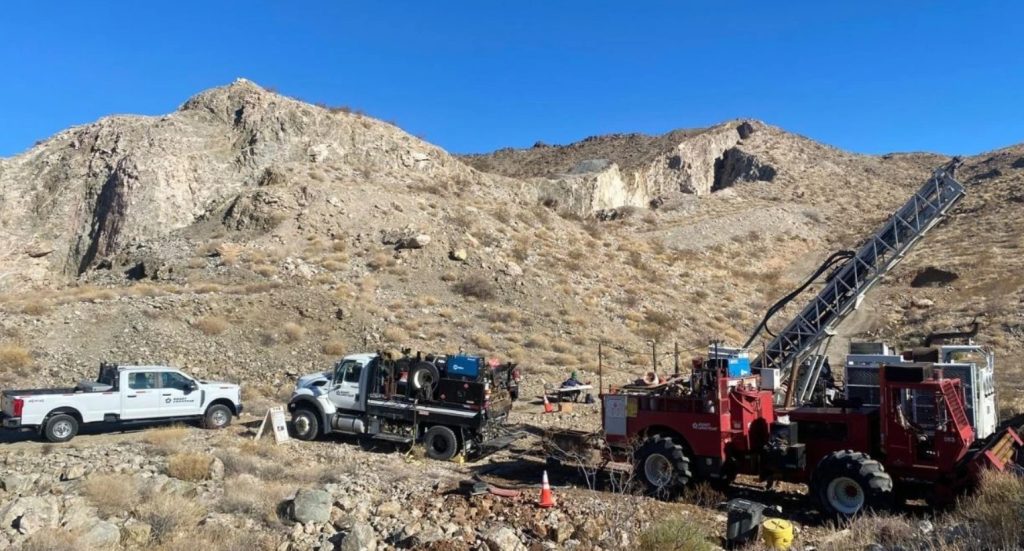
West Point Gold Corp. [TSXV: WPG; OTCQB: WPGCF; FSE: LRA0] reported positive results from a Phase 2 metallurgical testing program completed by Kappes, Cassiday & Associates (KCA) for the Tyro Main Zone at the company’s Gold Chain Project located in Arizona. Recoveries on average ranged from 87% to 92% for milled material, 39% to 68% for HPGR Crushed material and 39% to 69% for conventionally crushed material. Results confirm that gold from the Tyro Main Zone should be recoverable by conventional means (heap leach or mill) and that further optimization has the potential to improve recoveries with both potential processing methods.
Highlights: Gold recoveries up to 92% from material milled to 0.075mm. Gold recoveries up to 69% from material crushed to 1.7mm. Testing reported modest sodium cyanide and lime consumption. Results continue to demonstrate that crush or grind size is key to improving recovery. Low correlation between grade and recovery. Recoveries were similar across all zones. Results suggest that further optimization work on residence time and grind size could improve recoveries.
“These metallurgical results represent another important milestone for Gold Chain as we continue to demonstrate that gold can be recovered by heap leaching or conventional milling from the Tyro Main Zone. These results continue to suggest that there are multiple processing paths, and we plan to continue testing them to optimize the project. The combination of good gold recoveries, favourable reagent consumption, and multiple potential processing paths, supports our view that Gold Chain could host a scalable, low-cost gold project in one of the best mining jurisdictions in the world,” stated Derek Macpherson, President and CEO.
Gold extractions for the 0.075mm milled bottle rolls ranged from 87% to 92% after 96 hours of leaching, based on calculated heads ranging from 0.511 to 8.643 g/t Au. Silver extractions ranged from 55% to 83% based on calculated head grades ranging from 1.43 to 36.99 g/t Ag. The sodium cyanide consumptions ranged from 0.52 to 2.59 kg/t. Hydrated lime additions ranged from 0.50 to 0.65 kg/t.
Gold extractions for the 6.3mm HPGR crushed bottle rolls ranged from 39% to 68% after 168 hours of leaching, based on calculated heads ranging from 0.543 to 7.938 g/t Au. Silver extractions ranged from 27% to 68% based on calculated head grades ranging from 1.05 to 39.99 g/t Ag. The sodium cyanide consumptions ranged from 0.04 to 0.07 kg/t. Hydrated lime additions ranged from 0.50 to 1.25 kg/t.
Gold extractions for the 1.7mm conventionally crushed bottle rolls ranged from 39% to 69% after 96 hours of leaching, based on calculated heads ranging from 0.548 to 8.517 g/t Au. Silver extractions ranged from 27% to 67% based on calculated head grades ranging from 1.54 to 34.73 g/t Ag. The sodium cyanide consumptions ranged from 0.03 to 0.13 kg/t. Hydrated lime additions ranged from 0.50 to 1.00 kg/t.
Gold extractions for the 6.3mm conventionally crushed bottle rolls ranged from 25% to 63% after 168 hours of leaching, based on calculated heads ranging from 0.438 to 9.290 g/t Au. Silver extractions ranged from 15% to 62% based on calculated head grades ranging from 0.98 to 37.22 g/t Ag. The sodium cyanide consumptions ranged from 0.04 to 0.10 kg/t. Hydrated lime additions ranged from 0.50 to 1.00 kg/t
Gold extractions for the 12.5mm conventionally crushed bottle rolls ranged from 16% to 50% after 168 hours of leaching, based on calculated heads ranging from 0.458 to 10.034 g/t Au. Silver extractions ranged from 10% to 63% based on calculated head grades ranging from 1.51 to 44.96 g/t Ag. The sodium cyanide consumptions ranged from 0.01 to 0.07 kilograms/tonne. Hydrated lime additions ranged from 0.50 to 1.00 kilograms/tonne.
KCA evaluated 12 representative samples from multiple areas across both the Tyro Main and Northeast Tyro zones, including Trench 1, T9, T10, T15, Vein Outcrop and Tyro 200 level. Sampling was designed to test a range of gold grades.
Each sample was prepared individually for head analyses and leach testing. Coarse bottle roll leach tests were conducted utilizing conventionally crushed material to 100% passing 12.5mm, 6.3mm, 1.70mm, and HPGR crushed material to 100% passing 6.3mm. Duplicate bottle roll leach tests were completed on the lower grade samples at the 12.5mm and 6.3mm crush sizes. Additionally, milled bottle roll leach tests were conducted.
Conventionally crushed and HPGR crushed coarse bottle roll leach tests, as well as fine milled cyanide bottle roll leach tests were completed on each of the 12 individual samples.
West Point Gold has engaged Equity Catalyst Partners, LLC (ECP), an arm’s-length service provider, to provide to the company certain investor relations and marketing services for a six-month term for a one-time fee of US$45,000, payable at the commencement of services. The company will not issue any securities to ECP as compensation for its services. The marketing agreement with ECP is subject to TSX Venture Exchange approval.
West Point Gold is an exploration and development company focused on unlocking value across four projects along the prolific Walker Lane Trend in Nevada and Arizona.