
You Can’t Defend a Place You Can’t Keep Warm
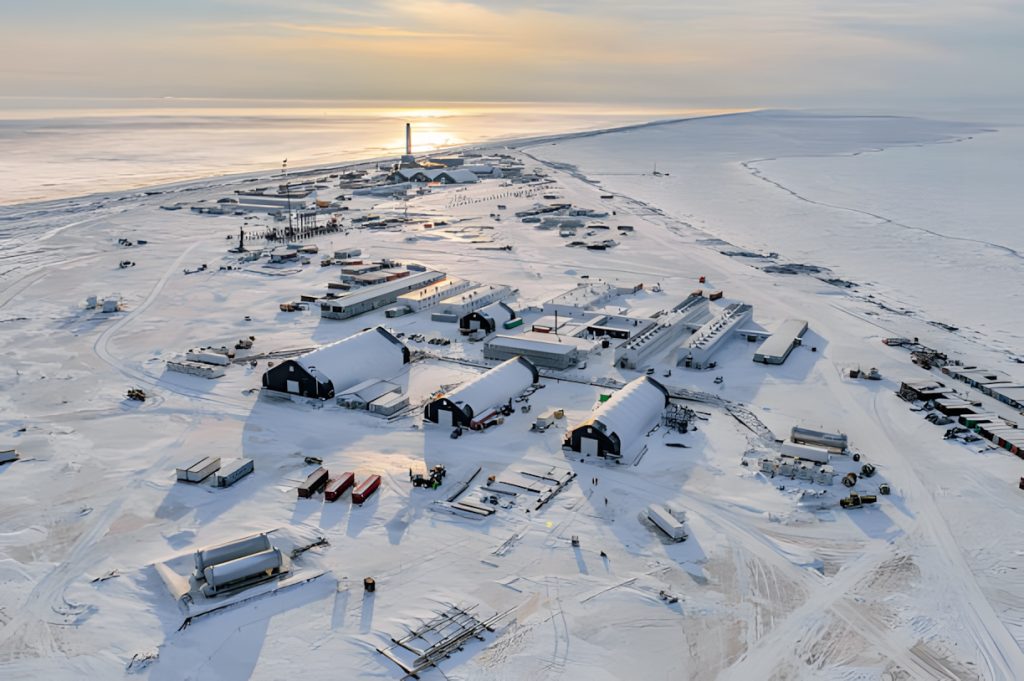
Across Canada’s North, that still depends on what the fuel plane can carry
Canada has the uranium, the expertise and the need, but its competitors are moving faster. Mark Carney can close that gap by giving the North a mission and a date.
Part 4 of a four-part series on Canada’s Arctic opportunity. Parts 1 to 3 covered the energy puzzle, the raw materials and the route to the first reactors; this part looks at the innovation layer and what Ottawa should do next.
By David Parry
Radar stations do not run on good intentions, and neither do ports, villages or mines; across Canada’s North many still depend on diesel brought in by ice road, barge or aircraft. Anyone who has lived in a remote exploration camp knows that everything, down to the menu, is decided by what the fuel plane can carry. Without dependable heat and power nobody keeps a lasting presence in the North, however many flags are planted.
Small modular reactors (SMRs) and micro modular reactors (MMRs) belong at the centre of Canada’s Arctic, defence and marine plans. Both are factory-built, ranging from a few megawatts, enough for several hundred homes, to a few tens of megawatts, and both run for years on a single load of fuel. That matters where transport is seasonal and a fuel shortage soon becomes a military weakness.
Others saw this sooner. The US Army’s Janus Program aims to put commercially run microreactors on bases from 2028, its officials pointing to electricity at close to 40 US cents per kilowatt-hour in Hawaii and Alaska, three or four times the continental rate, and the Air Force is pursuing a microreactor at Eielson Air Force Base near Fairbanks. Defence buying supplies customers and deadlines, which is what moves a technology out of the presentation room.
Britain, a country not famous for rushing its infrastructure, named Rolls-Royce SMR its preferred technology partner in 2025, and in 2026 Great British Energy Nuclear signed a contract to start work on three reactors at Wylfa in Wales. Canada, with its uranium, its regulator, its shipyards and decades of working in remote places, is arguably better placed than either for the Arctic and marine end of this market.
Floating and transportable plants may matter most. Towing a power station to a village sounds faintly absurd until you remember that navies have been putting reactors in ships since the 1950s. A plant built in a shipyard could be delivered to a northern port or a mine, sparing everyone a reactor build squeezed into a short construction season. Prodigy Clean Energy is developing an Indigenous-led pilot of this kind at Belledune, New Brunswick, with the Pabineau and Eel River Bar First Nations, and the province has signed a letter of intent to buy the electricity.
HyprC Systems, the Aegis Critical Energy Defence (CSE: QESS) subsidiary working on nuclear-hybrid systems, pairs reactors with fast-responding batteries, microgrids (small local electricity networks) and cyber-secure control software. The batteries absorb sudden jumps in demand and carry critical equipment if something trips, leaving the reactor at the steady output it prefers. On a defence base the controls matter as much as the megawatts, since a power system that can be hacked is a liability.
At Ontario Tech, Professor Kirk Atkinson’s team brings nuclear, marine and digital-twin expertise, a digital twin being a detailed computer copy of a real system used for testing. At McMaster, Professor Saeid Habibi’s team works on battery testing and intelligent controls. That research still needs paying customers.
Ports may offer the best early opening. Their demand lasts for decades, from shore power for ships to cold storage, desalination and data centres, and in an emergency a port could keep defence logistics and community services running. Federal money is easiest to justify where commercial and strategic value sit together, and a northern port is one of the few places where they plainly do.
Mark Carney has told Canadians to stop relying on a partner whose signature is written in pencil, and a northern base burning shipped-in diesel is a dependency written about as faintly as pencil allows. Canada should launch an Arctic and Marine Nuclear Energy Mission with the sort of hard deadline the Americans gave Janus. Ottawa and its Indigenous partners should name demonstration sites and the power each needs, then line up funding, licensing and government buying behind them, with Indigenous ownership built into the governance from the start.
That buying has to reward deployment, because technology with no route to operation ends up as photographs in an annual report. Each demonstration needs a committed customer, realistic cost targets and plans for fuel, waste, maintenance and decommissioning, so the model can be repeated once the first cheque runs out.
Safety, waste, physical security and lifetime costs all have to be settled before the first plant is switched on. Some northern sites will never justify nuclear power, and no microreactor should be called commercially proven until its demonstrations are finished. Caution is a good reason to choose the first sites carefully and a poor one for sitting still while Washington and London press ahead.
The decision belongs to Mark Carney and his ministers, and the sooner they name a site, a customer and a date, the sooner the North gets power it can count on.
Disclosure: David Parry is Chief Operating Officer of HyprC Systems, an adviser to Aegis Critical Energy Defence and Managing Partner of Malahat Energy Systems.