
Koryx Copper Announces Pre-Feasibility Results for the Haib Copper Project, Southern Namibia
135,000 Mt Annual Cu Production (1st 10 Years)
17,000 Oz Annual Au Production (1st 10 Years)
1.22 Million lb Annual Payable Mo (1st 10 Years)
$1.72/Lb C1 Cost and $2.07/lb Aisc (1st 10 Years)
$14,985 Mt Cueq Capital Intensity (1st 10 Years)
$2.5 Billion After-Tax Npv8% and 25% Post-Tax IRR
$2.06 Billion Build CAPEX and 24 Year Mine Life
M&I&I Resources of 4.35 Million Mt Contained Cu
Probable Reserves of 3 Million Mt of Contained Cu
PFS Highlights
- Post-tax NPV8% of US$2.5bn (pre-tax US$4.2bn) and post-tax IRR of 25% (pre-tax 31%), at base-case price of US$5.00/lb Cu, US$3,500/oz Au, and US$22/lb Mo
- 145ktpa of gross annual CuEq production (average first 10 years) and 117ktpa (life-of-mine, (“LOM”)), and 2.61 Mt total LOM copper in concentrate production
- 130ktpa of average annual payable copper production (average first 10 years) and 105ktpa (LOM)
- US$2.06bn upfront capital cost, incl. US$133m of project contingency and US$152m of capitalised pre-strip, with sustaining capital of US$639m over the LOM.
- Average annual payable Au production of 15,000 oz (first 10 years) and 12,000 oz per annum (LOM)
- Average annual payable Mo production of 1.22 million lb (first 10 years) and 1.13 million lb (LOM)
- C1 cash cost of US$1.72/lb (net of byproducts, first 10 years) and US$2.19/lb (LOM)
- All-in sustaining cost (AISC) of US$2.07/lb (first 10 years) and US$2.52/lb (LOM)
- Capital intensity of $14,985/mt of annual payable CuEq production (Years 1 – 10) and $18,584/mt of annual payable CuEq production (LOM)
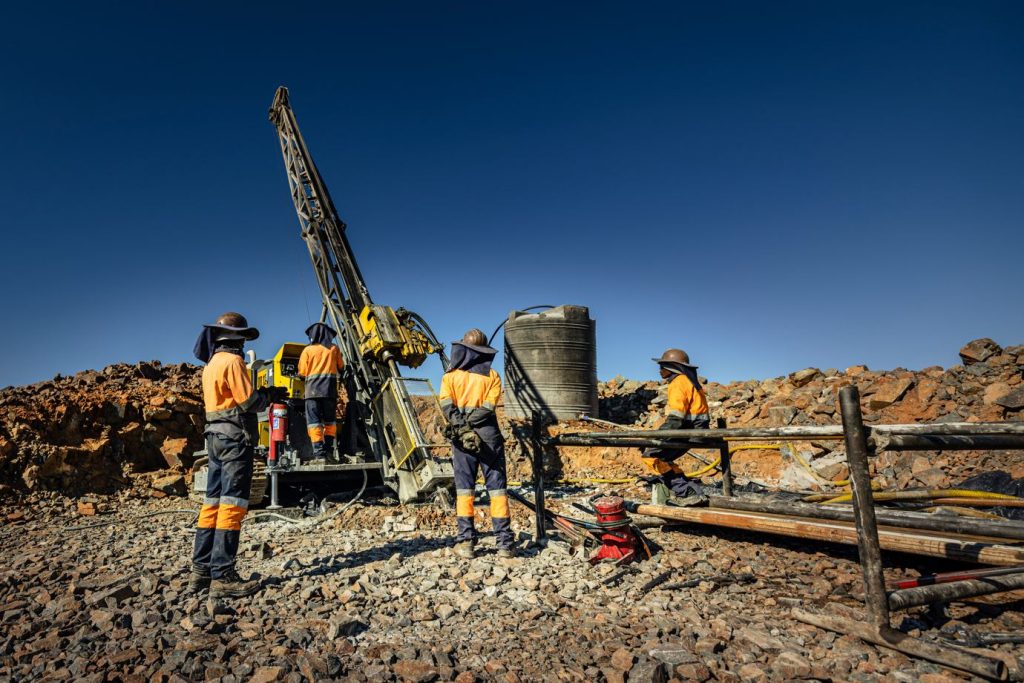
- Conventional open pit with staged pushbacks and trolley-assisted haulage, mined by contractor, with a life-of-mine strip ratio of 0.98:1
- A conventional copper sulphide processing route using three-stage crushing (including HPGR), ball milling with coarse gangue rejection of 25% of ROM mill feed, followed by a common hybrid Jameson and Tank Cell flotation circuit configuration
- LOM production schedule of 48Mtpa crushing throughput for approximately 1.1bn tonnes over 24 years, prioritising higher-grade feed (approximately 0.32% Cu) in the early years
- LOM copper recovery of 87.3% (89.5% 1st 10 years) to a bulk concentrate grading 21.8% Cu, with molybdenum and gold recovered as by-products
- Tailings Storage Facility selected from nine alternatives, with capacity of approx. 1.15 billion tonnes, located close to the processing plant to minimise pumping costs
- 220kV overhead powerline connection to NamPower’s Harib substation combined with approximately 417MWp of on-site solar PV and 361MWh of battery storage, supplying approximately 45% of life-of-mine energy
- Water supply of 20Mm3 per annum from the Orange River incl. off-channel storage dam to manage seasonality. Permitting underway and signed NamWater MOU in place
- All key permits (Mining License & Environmental Clearance Certificate) are targeted to be completed by mid 2027, paving the way for commencement of early works construction by end of 2027.
- Definitive Feasibility Study to support project financing and a construction decision to begin in early 2027 and expected to take one year to complete

Koryx Copper S.A. (TSXV:KRY) (NSX:KYX) (OTCQX:KRYXF) (“Koryx” or the “Company”) is pleased to announce the results of the Pre-Feasibility Study (“PFS”) for the wholly-owned Haib Copper Project (“Haib” or the “Project”) in southern Namibia.
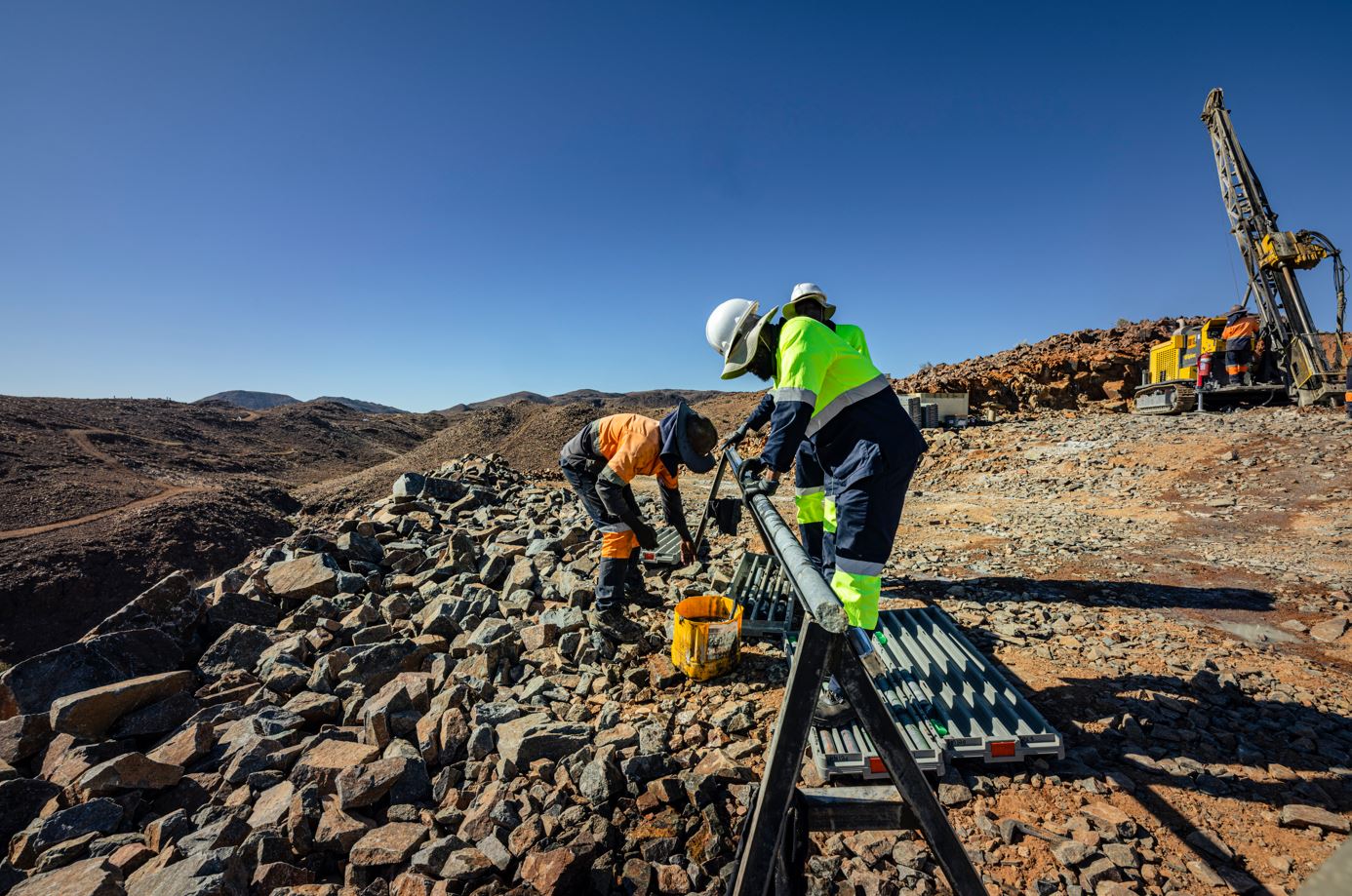 Haib is a massive, disseminated porphyry copper (“Cu”) deposit with associated molybdenum (“Mo”) and gold (“Au”) and is planned as a large-scale open pit mining and conventional sulphide milling and flotation, producing separate Cu and Mo concentrates.
Heye Daun, Koryx President & CEO commented: “We are very pleased with the excellent results of this PFS, which have far exceeded our initial expectations. With a total mineral resource of 4.35mt of contained copper (plus significant by-product credits) and an average annual gross CuEq production rate of 145ktpa (first 10 years), this PFS undoubtedly benchmarks Haib as a truly world-class copper development project in a premium jurisdiction, Namibia.
I am very proud of our dedicated and highly professional Koryx team, with assistance from various excellent Namibian and Southern African professional service providers, especially DRA Global Limited, Knight Piésold and Qubeka Mining Consultants, who together delivered the Haib Cu/Mo/Au project as a tier 1 copper development project of global stature.
Major project improvements comprise (i) the completion of a bigger and significantly higher-grade mineral resource and maiden ore reserve (ii) process simplification via the abandonment of the heap leach facility and associated production, (iii) the use of coarse particle flotation and Jameson Cell technology in flotation and (iv) extensive flow sheet optimization which has materially improved the Haib project across all metrics compared with the Preliminary Economic Assessment (“PEA”) completed in September 2025.
The next twelve (12) months will be focused on (i) the completion of the Definitive Feasibility Study (“DFS”), (ii) raising finance, (iii) finishing permitting in preparation for early works commencement late in 2027 and construction commencement in 1Q 2028.”
Property Description and Ownership
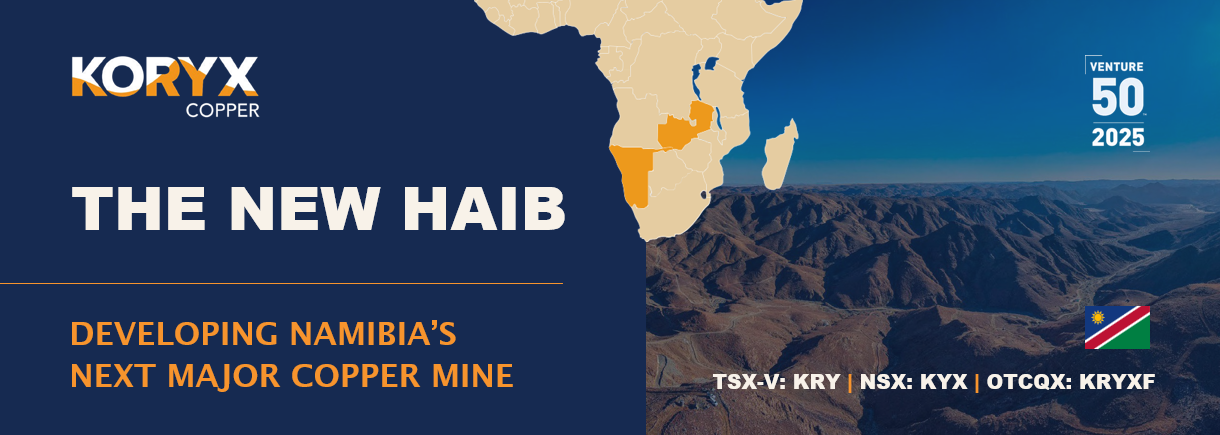
Haib is a porphyry copper exploration project located in the Karas Region of southern Namibia approximately six kilometres north of the border with South Africa and between 12km and 15km east of the tarred B1 highway that connects Namibia with South Africa. Koryx has a 100% interest in Deep South Mining Company (Pty) Ltd., a Namibian subsidiary which in turn has a 100% interest in Haib Minerals (Pty) Ltd. (“Haib Minerals”), which holds the exploration rights to the Project. Exclusive Prospecting Licence (“EPL”) 3140 allows for the exploration of base, rare and precious metals over an area of 36,589 hectares.
Results of PFS Financial Evaluation
Mining is expected to run for 15 years after a pre-strip period and feed the processing plant, which has been sized in the PFS base case for a capacity of 48 million tonnes per annum (“Mtpa”) of run of mine (“ROM”) material for 24 years including 9 years to process reclaimed low-grade stockpiles from Year 16 to Year 24.
A PFS financial model was developed from the updated studies with the following techno-economic results.
Continue reading Complete News Release…