
CanAlaska Uranium posts preliminary results from summer drilling at West McArthur JV Project, Saskatchewan
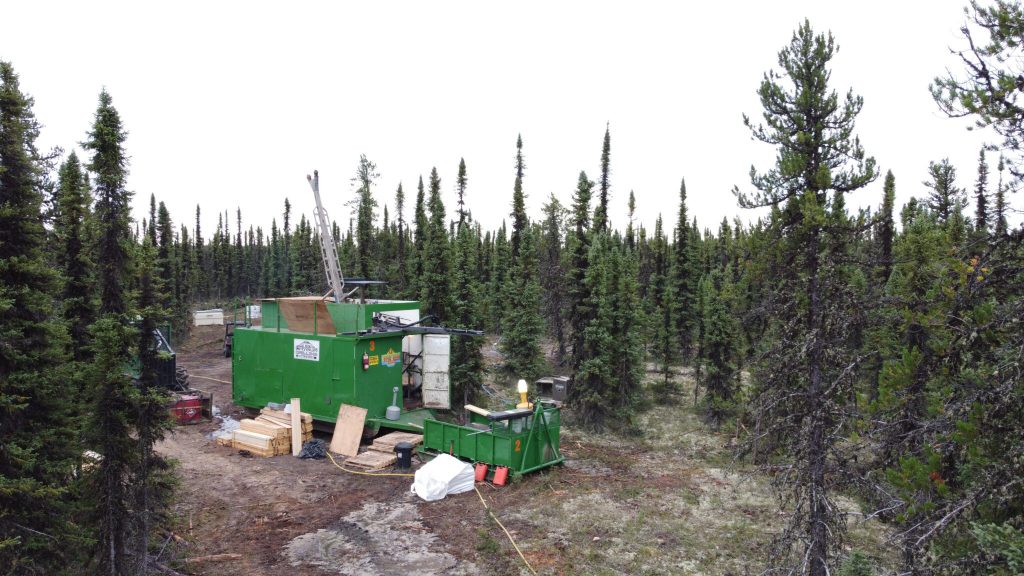
CanAlaska Uranium Ltd. [TSXV: CVV; OTCQX: CVVUF; FSE: DH7] reported that it has completed the summer drill program on the West McArthur Joint Venture Project in the eastern Athabasca Basin, Saskatchewan. The summer program was multi-purposed to continue step out drilling along the unconformity to the southwest and northeast of the high-grade uranium Pike Zone, test for uranium mineralization potential along a sub-parallel hanging wall conductor to the Pike Zone conductor and confirm the newly modeled conductors in the southwest of the Grid 1 area. The company successfully completed 12,652 metres in 16 drill holes, including four abandoned drill holes, within two main targets areas; Pike Zone and Grid 1.
Cory Belyk, CanAlaska CEO, commented, “The summer drill program has continued to expand CanAlaska’s knowledge of the Pike Zone mineralizing system. The mineralizing system is now over 1,000 metres in length along the unconformity target and remains open in both directions. Importantly and significantly, a deep test 120 metres below Pike Zone high-grade mineralization yielded an intercept of strong radioactivity within an area that has no drilling for at least 100 metres in any direction. A faulted hanging wall conductor is just starting to be evaluated, and early results are very encouraging. I look forward to the next phase of fully funded exploration in 2027.”
James Sykes, CanAlaska’s Vice President, Exploration, added, “The results from the summer drill program, especially drill hole WMA115, support the idea that the unconformity-hosted, high-grade uranium of the Pike Zone is part of a larger structural system that penetrates at least 120 m beneath the unconformity and remains open in all directions. The basement rocks are an important consideration at Pike because there’s potential for more space available for high-grade uranium expansion. Also, the evidence of a structurally-controlled hydrothermal fluid system along a sub-parallel conductor to the main C10S conductor suggests the basement rocks to the northeast and southwest of the Pike Zone could also be fertile for high-grade uranium mineralization. I am excited to be part of the planning stages for CanAlaska’s fully-funded, follow-up winter drill program on the West McArthur JV Project.”
The 2026 summer drill program on the West McArthur project is now complete. In total, 12,652 metres in 16 drill holes were completed, including four abandoned drill holes.
The program consisted of five exploration target strategies that included two completed drill holes for 1,149 metres to systematically test the unconformity along the northeast extension of the C10S conductor from the Pike Zone, one completed and one abandoned drill holes for 1,561 metres to test the down dip extension of the Pike Zone to the southeast,
six completed and two abandoned drill holes for 4,619 metres to test the mineralization potential of a hanging wall, sub-parallel conductor to the southeast of the C10S conductor hosting the Pike Zone, five completed and one abandoned drill holes for 3,420 metres to systematically test the unconformity along the southwest extension of the C10S conductor from the Pike Zone and two completed drill holes for 1,903 metres to test newly interpreted conductors in the south of the Grid 1 area.
Drill hole WMA112 was abandoned in the sandstone before reaching the unconformity and was re-started as WMA115. WMA115 successfully intersected elevated radioactivity (9,494 cps over 1.0 m) approximately 120 metres down dip of unconformity-hosted, high-grade uranium of the Pike Zone, and at least 100 metres from some of the nearest drill hole pierce points, representing a new basement target area for future uranium mineralization expansion. The structurally-controlled uranium veins and hydrothermal alteration system intersected in WMA115 are similar to the high-grade uranium basement-hosted veins at the Pike Zone that have all been 10 to 50 metres from larger uranium intersections.
For example, WMA074-01 intersected 1 metre at 0.29% U3O8, and an offcut from the same pilot hole, WMA074-04, intersected 9.59% U3O8 over 17.4 metres only 30 metres away from the lower grade intercept. An ongoing structural reinterpretation of Pike Zone will hopefully identify basement targets for high-grade uranium potential as this area has become an immediate priority for follow-up drill programs.
Drill holes WMA105-02, WMA107, WMA107-01, WMA107-01A, WMA109-01 and WMA110 were all collared to test for uranium mineralization at the unconformity along the southwest extension of the C10S conductor. Both WMA105-02 and WMA110 intersected intervals of elevated radioactivity in the sandstone at least 1 to 5 metres above the unconformity, suggesting these drill holes may have overshot their intended target.
WMA107-01 intersected elevated radioactivity in the basement rocks approximately 7 metre beneath the unconformity, also suggesting this drill hole has undershot it’s intended target at the unconformity. In addition, WMA107-01 demonstrated similar structure, alteration and clay speciation observed in the sandstone to that over the main Pike Zone, suggesting this drill hole could be close to a new mineralized zone. The southwest extension of the C10S conductor beyond WMA107-01 remains a priority target area for unconformity and basement-hosted uranium mineralization potential.
Drill holes WMA100-06, WMA108, WMA108-01, WMA109, WMA114, WMA116 and WMA116-01 were all collared to test a sub-parallel, hanging wall conductor southeast of the C10S conductor that hosts the Pike Zone. All drill holes intersected brittle-reactivated structures and significant hydrothermal alteration, including clay alteration, silicification, and dravite in the lower sandstone and highly altered basement rocks. Although elevated radioactivity was not intersected in any of these drill holes, the degree of alteration and structures intersected along this trend suggest a significant volume of hydrothermal fluids have moved along this corridor.
Additional work is required to better understand the importance of this sub-parallel trend; to understand if the alteration is directly related to the Pike Zone or possibly, another nearby undiscovered uranium occurrence.
Drill holes WMA085-01 and WMA106-01 were designed to further test the unconformity along the northeast extension of the C10S conductor from the Pike Zone. Although both drill holes successfully intersected their targets, neither drill hole intersected elevated radioactivity. The company believes both drill holes overshot parallel targets as the structures and alteration encountered in the sandstone suggest that a favourable structural system for uranium deposition may exist to the southeast of these drill holes. This interpretation suggests the sub-parallel, hanging wall conductor noted in the section above continues this far to the northeast of the Pike Zone, adding ~1.0 km of untested structures and hydrothermal alteration prospective for new possible uranium occurrences.
The company completed two exploration drill holes, WMA111 and WMA113, in the Grid 1 area of the West McArthur Project to test newly defined conductors. Both drill holes were collared at least 1.0 km south of historic drill holes in the area. WMA111 successfully intersected elevated radioactivity in the basement rocks approximately 25 m beneath the unconformity. WMA111 is on trend with four historic drill holes that have anomalous uranium geochemistry mostly within 5 to 20 metres of the unconformity, including WMA010 that intersected basement-hosted uranium mineralization (0.28% U3O8 over 0.5 m) associated with strong white clay hydrothermal alteration also enriched with anomalous boron, arsenic, molybdenum, nickel and zinc, and WMA024 which intersected 0.02% U3O8 over 0.5 metres in the sandstone approximately 200 metres above the unconformity. These results suggest the Conductor B trend of the Grid 1 area is fertile for unconformity-hosted and basement-hosted uranium mineralization. Grid 1 will continue to be an area of interest for future drill programs.
Geochemical samples from the 2026 summer exploration program have been submitted to the lab and assay results are pending.
The West McArthur project, a Joint Venture with Cameco Corporation, is operated by CanAlaska, which holds an 88.89% ownership in the Project. The 2026 exploration program is being co-funded by Cameco and CanAlaska under the Joint Venture.
The company defines “radioactivity” as a measurement of total gamma radiation from drill core measured in counts per second (cps) and detected with a CT007-M gamma-ray spectrometer/scintillometer. The Company cautions that drill core radioactivity is an indication of the presence of radioactive materials (uranium, thorium, and/or potassium) but may not directly correlate with uranium chemical assays. Total gamma cps readings are preliminary and may not be used directly to quantify or qualify uranium concentrations of the rock samples measured. The Company considers all CT007-M readings greater than 300 cps to be “elevated radioactivity”.
All assay drill core samples from the program, completed as NQ-sized core, were shipped to the Saskatchewan Research Council Geoanalytical Laboratories (SRC) in Saskatoon, Saskatchewan in secure containment for preparation, processing, and multi-element analysis by ICP-MS and ICP-OES using total and partial digestion, boron by fusion, and U3O8 wt% assay by ICP-OES using higher grade standards.
Assay samples are chosen based on downhole probing radiometric equivalent uranium grades and scintillometer (CT007-M) peaks. Assay sample intervals comprise 0.3 – 0.8-metre continuous half-core split samples over the mineralized intervals. With all assay samples, one half of the split sample is retained and the other sent to the SRC for analysis.
All depths and distances reported in the text are true depths and distances.
CanAlaska is a leading explorer of uranium in the Athabasca Basin of Saskatchewan. With a project generator model, the company has built a large portfolio of uranium projects in the Athabasca Basin. CanAlaska owns numerous uranium properties, totaling approximately 400,000 hectares, with clearly defined targets in the Athabasca Basin covering both unconformity and basement uranium deposit potential.
The company recently concentrated on the West McArthur high-grade uranium expansion with targets in 2024, 2025 and 2026 leading to significant success at Pike Zone. Fully financed for 2027, CanAlaska is focused on uranium deposit discovery and delineation in a safe and secure jurisdiction.