
Asante Gold posts open pit extension potential at Bibiani Main Pit, Ghana
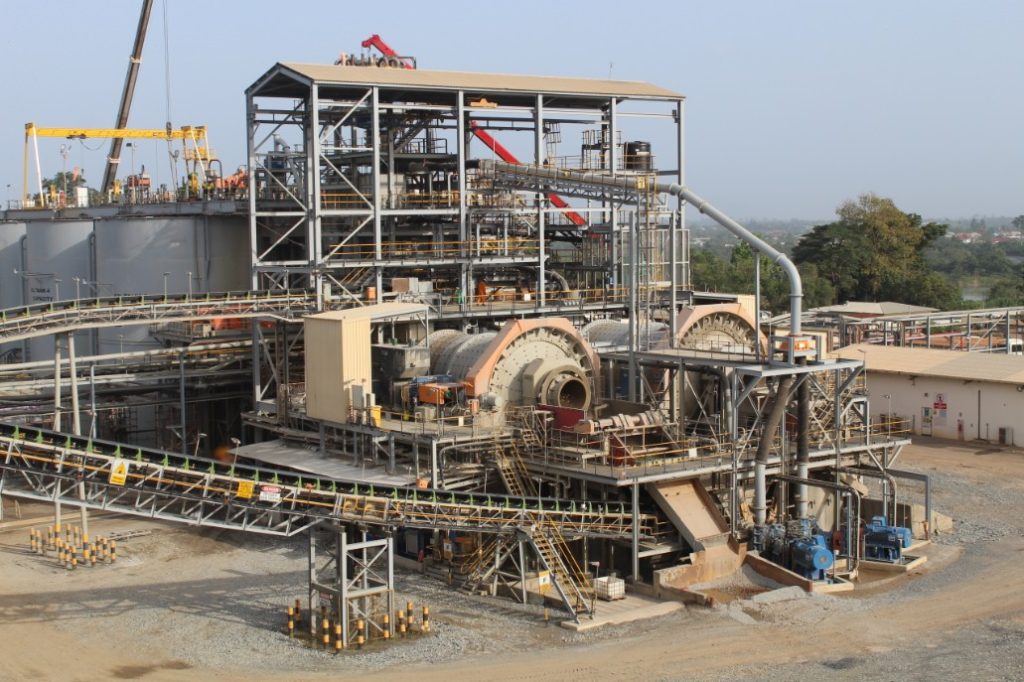
Asante Gold Corp. [TSXV: ASE; GSE: ASG; OTCQX: ASGOF] reported strong results from its reverse circulation (RC) and diamond drilling program at the Main Pit Bridge area at its Bibiani Gold Mine in Ghana.
Extending the Main Pit through the Bibiani Bridge would enable portions of the northern Main Pit underground Mineral Resource to be accessed from surface, potentially bringing additional Mineral Resources into the LOM plan and deferring underground development capital expenditure currently planned for 2027-2028. Management plans to accelerate drilling, assaying, and mine planning in this area, which Management believes could represent a significant positive development for Bibiani’s open-pittable material.
Highlights: Encouraging initial RC results from infill drilling at the Main Pit “Bridge”, between the Main Pit and Cut 5 has returned significant intercepts, including 60 metres at 3.13 g/t gold from 103 metres in hole MGRC26-763, 48 metres at 2.12 g/t Au from 42 metres in hole MGRC26-741, which ended in mineralization at 90 metres, including 24 metres at 2.77 g/t Au from 53 metres, 34.0 metres at 3.59 g/t Au from 140 metres in hole MGRC26-758, 40 metres at 2.76 g/t Au from 65 metres in hole MGRC26-743, 25 metres at 4.95 g/t Au from 119 metres in hole MGRC26-762B, 6 metres at 62.48 g/t Au from 136 metres in hole MGRC26-765, 16 metres at 5.25g/t Au from 80.0 metres and 17 metres at 4.36 g/t Au from 119 metres in hole MGRC26-747.
Results to date support the continuity of broad zones of gold mineralization within the Bridge area, targeting the upgrade of Inferred Mineral Resources to Indicated up to 150 metres below surface.
The total program includes 8,000 etres of planned RC drilling and diamond drilling, covering approximately 350 metres of strike to 150 metres depth, testing the Bridge, the gap between Cut 5 and Cut 6, down dip extensions beneath Cut 5, as well as the northern strike extent of the parallel Elizabeth trend.
Results will inform an updated Main Pit Mineral Resource model and support a review of the mine plan, including the potential to extend open-pit mining and defer significant underground development expenditure.
Glenn Baldwin, Chief Development Officer, commented: “We’re very pleased with these results, which are building our confidence in the extent and continuity of mineralization between existing pits and in the potential for accessing an attractive source of open pit material, while simultaneously deferring a large capital expenditure commitment associated with initiating underground mining at Bibiani.
“Indicated and Inferred Mineral Resources have already been defined in the Bridge area, but they are modelled as being associated with the Main Pit underground Mineral Resource. Until now, this and any other near-surface mineralization, has not been considered for open-pit mining. Alongside the remaining drilling and test work, we are now prioritizing how best to mine this mineralization. This is an important example of our broader objective to maximize the potential of the Bibiani mine plan, improve capital efficiency, and strengthen the longer-term economics at Bibiani. We hope to update the market again as soon as possible, with further results and conclusions about the Bibiani Bridge.”
In Q3-2026, the company initiated a broader review of brownfield and greenfield exploration opportunities across its 83km Chirano-Bibiani Corridor (CBC). The review identified a number of priority near-mine targets with the potential to support open-pit extensions and future resource growth at Bibiani. These include the Bridge between Main Pit and Cut 5, the gap between Cut 5 and Cut 6, the down dip extension beneath Cut 5, and the northern strike extent of the Elizabeth trend.
Historically, drilling had focused on defining the Main Pit and underground Mineral Resources beneath the Main Pit and Cut 5. The Bridge area hosts an Indicated Mineral Resource and an Inferred Mineral Resource, which are currently incorporated into the current underground mine design. However, with previous mine planning focused on underground development, the Bridge received comparatively limited drilling, and the potential for an expanded open-pit operation was not fully evaluated.
The current 8,000-metre RC and diamond drilling program is designed to improve confidence in the extent, grade and continuity of mineralization between the existing pits and at depth, with a view to upgrading portions of the Inferred Mineral Resource to the Indicated category. The program will also assess the potential to incorporate mineralization currently contemplated for underground extraction into an expanded open-pit design.
Initial infill drilling at the Bridge has returned positive results, supporting the existing geological interpretation and providing greater confidence in the continuity of mineralization between the Main Pit and Cut 5. Significant intercepts include 60m at 3.13 g/t Au from 103 metres in hole MGRC26-763 and 48 metres at 2.12 g/t Au from 42 metres in hole MGRC26-741, including 24 metres at 2.77 g/t Au from 53 metres and 7 metres at 5.26 g/t Au from 69 metres.
Hole MGRC26-741 was terminated prematurely following a drill-rig malfunction, with mineralization remaining open at the end of the hole. Additional significant results include 25 metres at 4.95 g/t Au from 119 metres in MGRC26-762B and 40 metres at 2.76 g/t Au from 65 metres in MGRC26-743.
The results will be incorporated into the updated Mineral Resource model to refine the geometry and grade distribution of mineralization within the Bridge and assess the potential for resource classification upgrades. The program is also testing extensions to mineralization at depth beneath Cut 5, where historical drilling, including holes intersected mineralization beyond the current open pit shell.
Historical intercepts include 42.8 etres at 6.30 g/t Au from 345.0 metres in hole RCD-04-600, 12.0 metres at 5.40 g/t Au from 334.2 metres in hole RCD-04-595A, and 32.6 metres at 4.01g/t Au from 236.0 metres in hole RCD-04-597. Further drilling will test the continuity and extent of these deeper zones, their potential contribution to future Mineral Resources and an expanded open-pit design.
A review of the Main Pit mine plan is underway. The current Bibiani underground plan is based on the 2025 Definitive Feasibility Study, described in the technical report entitled “NI 43-101 Technical Report and Updated Mineral Resource Estimate, Asante Gold Bibiani Limited, Ghana, West Africa” with an effective date of 31 December 2025 which favoured an earlier transition from open pit to underground mining beneath the Main Pit. Results will be evaluated as part of this review, with the potential to inform future resource model updates and revisions to the Bibiani life-of-mine plan.
Drilling has now moved north of Cut 5 to test the gap between Cut 5 and Cut 6, and the Cut 5 down dip extension, where 129 metres of diamond drilling has been completed to date, with results pending. Drilling will also test the northern strike extent of the parallel Elizabeth trend as a potential new source of open pit mineralization. The remaining drill holes are expected to be completed in Q4 2026, with further assay results to be reported as they become available.
Any revisions to the mine plan, including potential open-pit extensions and the deferral of underground development, remain subject to further drilling and a more detailed technical and economic evaluation. No estimate of additional tonnes, grade, mine life or deferred capital expenditure has been established at this stage.
Drilling was conducted by GTS Drilling Services and was supervised by the Asante exploration teams.
Asante Gold is a growing mid-tier gold producer, developer and explorer with a portfolio of assets located on two of West Africa’s most prolific and prospective gold belts in Ghana.
The company operates the Bibiani and Chirano Gold Mines on the Sefwi-Bibiani Gold Belt in Ghana’s Western North Region, where it holds an extensive and underexplored land position spanning more than 80 km of strike. Asante is also advancing its Kubi Gold Project on the Ashanti Gold Belt, extending the company’s footprint across Ghana’s most productive gold corridor.
Bibiani is an operating open pit gold mine situated in the Western North Region of Ghana, with historical gold production of more than 5 million ounces. The mine is fully permitted with mining and processing infrastructure on-site, including a refurbished process plant and associated mining infrastructure. Asante commenced mining at Bibiani in late February 2022, with commercial production announced on November 10, 2022.
Chirano is an operating open pit and underground mine located in the Western Region of Ghana. The mine was first explored and developed in 1996 and began production in October 2005. Chirano comprises multiple open pit and underground operations and has produced over 3 million ounces of gold. Asante acquired the Chirano operation in August 2022.