
CanAlaska Uranium posts winter geophysical program results at West McArthur Project, Saskatchewan
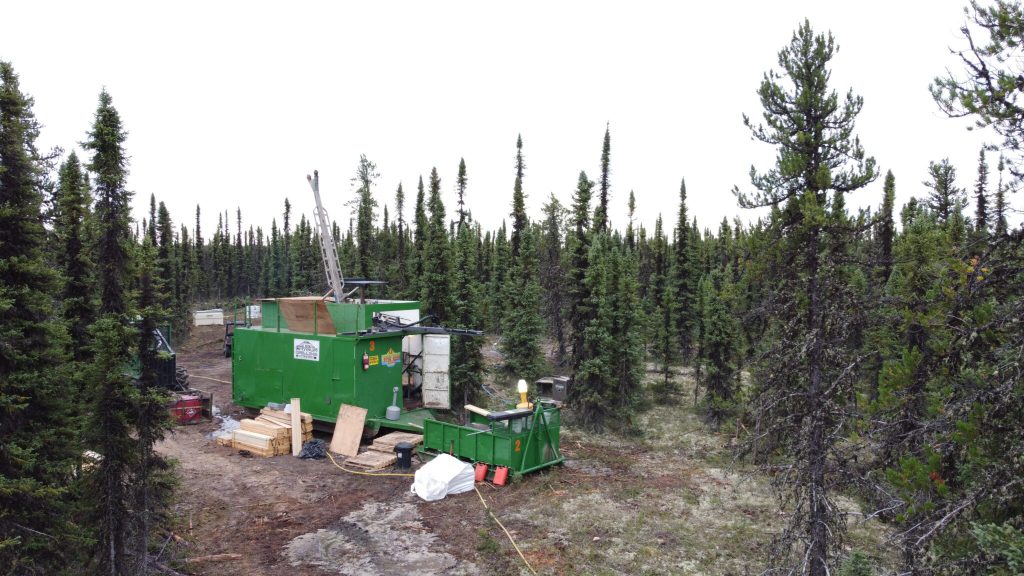
CanAlaska Uranium Ltd. [TSXV: CVV; OTCQX: CVVUF; FSE: DH7] reported results from the recently completed geophysical program on the West McArthur Joint Venture Project in the eastern Athabasca Basin, Saskatchewan. During the winter exploration program, the company completed a modern Stepwise Moving Loop Time Domain Electromagnetics (SWML-TDEM) survey on the Epp Lake Corridor.
The goal of the survey was to map a historical ZTEM conductivity anomaly that is associated with a magnetic low corridor using high-resolution ground-based survey methods. The survey identified multiple strong conductors stacked within a broad magnetic low corridor. As a result of the winter geophysical survey and the historical drilling completed immediately to the north of the survey area, the company believes that these newly generated conductor targets represent a significant opportunity for the discovery of high-grade unconformity uranium mineralization.
CanAlaska CEO, Cory Belyk, commented, “The identification of 20 km of previously unknown and untested strong conductor targets on the West McArthur project in an area with nearby previously drilled uranium and clay pathfinder anomalism is a great outcome for the joint venture. The Epp Lake corridor has long been recognized as a strongly conductive graphitic-basement corridor in the eastern Athabasca Basin. The resolution and extension of this corridor on the West McArthur project provides another high priority set of drill-ready targets and discovery opportunity for future drill testing.“
CanAlaska VP Exploration, Nathan Bridge, commented, “The winter geophysical survey on the West McArthur project highlighted multiple kilometres of stacked strong conductor anomalies along the Epp Lake Corridor. Combined with the pathfinder anomalism in the historical drilling, the newly defined geophysical targets represent a significant discovery opportunity. The team is currently analyzing the new geophysical data with our historical knowledge to refine the best potential exploration targets in this target area. In addition, the team is working diligently to prepare for our upcoming summer drill program on the West McArthur project.“
The 2026 winter geophysical program on the West McArthur project consisted of four survey lines totaling 78.0 km of SWML-TDEM surveying across the Epp Lake corridor. Historical work on this portion of the West McArthur project identified a broad ZTEM conductivity corridor associated with a magnetic low. The winter survey highlighted multiple strong northwest-dipping and southwest-trending conductors stacked within a broad magnetic low.
In total, over 20 km of new conductor strike length was identified during the survey. After the data collection, the Company completed Maxwell plate modelling of the conductive features which shows a strong association between the magnetic low corridor and the conductors. Generally, the conductors are strongest in the northern lines of the survey.
In Athabasca unconformity-associated uranium deposits, sandstone alteration halos are typically defined by several key pathfinder elements including spectral clay identification of illite, dravite, and kaolinite, and geochemical pathfinder enrichment consisting of various metals including uranium, arsenic, cobalt, nickel, lead, and copper. Historically, in this portion of the project, 20 drillholes have been completed testing various targets along the Epp Lake Corridor.
Along the northern edge of the winter geophysical survey area, several of these historical drillholes map a prominent lower sandstone illite anomaly that is associated with a broader pervasive uranium pathfinder halo.
In addition, northeast/southwest-trending structural corridors in the Eastern Athabasca Basin are host to several prominent high-grade unconformity-associated uranium deposits including McArthur River, Phoenix, and the Eagle Point system. As a result of the geophysical survey results and the pathfinder anomalies identified in the nearby historical drilling, the Company believes that these newly-mapped conductor targets are typical Athabasca Basin unconformity-associated uranium targets and represent a significant opportunity for the discovery of high-grade unconformity-associated uranium mineralization.
The West McArthur project, a Joint Venture with Cameco Corp. [TSX: CCO; NYSE: CCJ], is operated by CanAlaska, which holds an 88.89% ownership in the project. The 2026 exploration program is being co-funded by Cameco and CanAlaska under the Joint Venture.
This news release refers to neighbouring properties in which the Company has no interest. Results, discoveries, or mineralization on proximate land or neighboring properties, whether in stated current resource estimates or historical resource estimates, are not necessarily indicative of results, discoveries, or mineralization on the company’s properties.
CanAlaska, a project generator, has built a large portfolio of uranium projects in the Athabasca Basin. CanAlaska owns numerous uranium properties, totaling approximately 340,000 hectares, with clearly defined targets in the Athabasca Basin covering both basement and unconformity uranium deposit potential.
The company recently concentrated on the West McArthur high-grade uranium expansion with targets in 2024 and 2025 leading to significant success at Pike Zone. Fully financed for the 2026 drill season, CanAlaska is focused on uranium deposit discovery and delineation in a safe and secure jurisdiction.
Resource World Magazine Inc. has prepared this editorial for general information purposes only and should not be considered a solicitation to buy or sell securities in the companies discussed herein. The information provided has been derived from sources believed to be reliable but cannot be guaranteed. This editorial does not take into account the readers investment criteria, investment expertise, financial condition, or financial goals of individual recipients and other concerns such as jurisdictional and/or legal restrictions that may exist for certain persons. Recipients should rely on their own due diligence and seek their own professional advice before investing.