
Capitan Silver drills 1,071 g/t silver equivalent over 2.0 metres at Cruz De Plata Project, Mexico
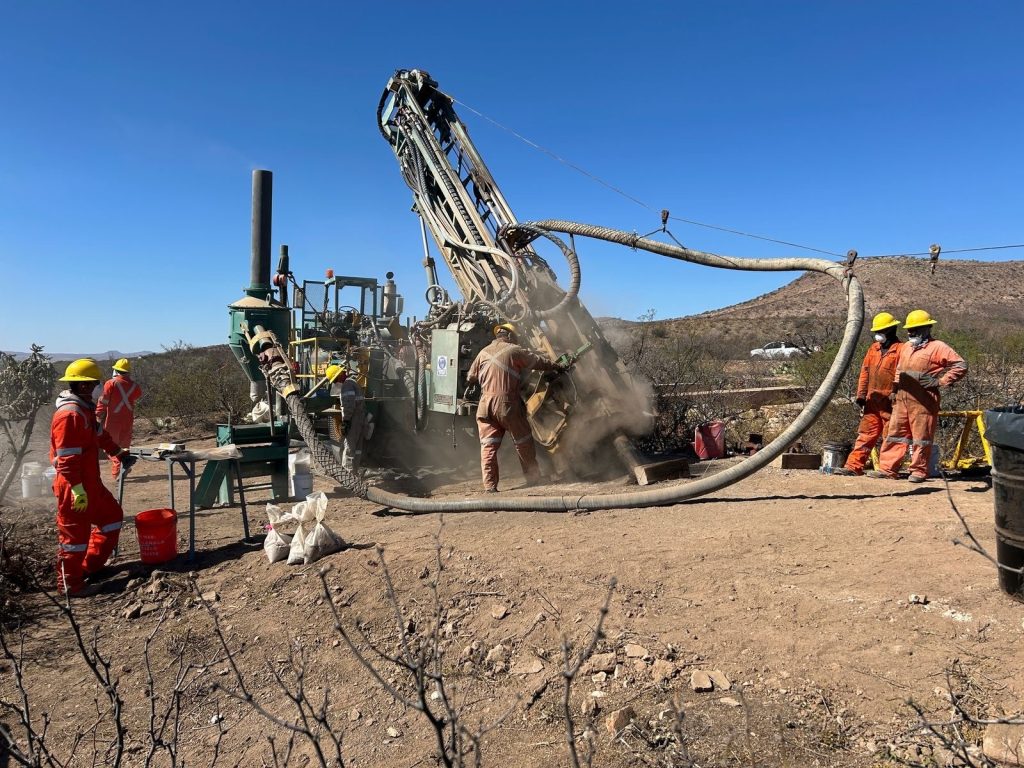
Capitan Silver Corp. [TSXV: CAPT; OTCQX: CAPTF] reported additional results from its 60,000-metre drill program at its Cruz de Plata silver-gold project, located in Durango, Mexico. The company is reporting assay results from eight drill holes.
Highlights: High-grade mineralization at the Jesus Maria Silver Trend continues to expand down-dip, showing improving widths and grades at depth.
Drill hole 26-ERDD-10 intersected a broad zone of mineralization, returning 1,071.1 g/t AgEq over 2.0 metres, within a wider interval of 15.8 metres of 250.1 g/t AgEq, extending high-grade mineralization 50 metres down-dip.
Drilling along the Jesus Maria Silver Trend (east and west of the Peñoles Fault) shows strong vertical continuity; silver mineralization extending down-dip in multiple new drill holes.
Drill hole 26-ERDD-01 intersected 394.4 g/t AgEq over 1.7 metres in the upper zone and 620.3 g/t AgEq over 2 metres within a wider interval of 7.9 metres of 182.6 g/t AgEq in the lower zone.
Drill hole 26-SRRC-12 intersected 280.5 g/t AgEq over 6.1 metres, within a broader zone of 16.8m of 167.2 g/t AgEq, extending mineralization 90 metres down-dip.
Capitan has confirmed drilled continuity over 2.5 km of strike with an average depth of 250 metres, at the Jesus Maria Main Vein; one of several silver mineralized veins that are part of the Jesus Maria Silver Trend. To date over 21 km of cumulative mineralized vein structures have been identified at the Jesus Maria Silver Trend through surface mapping and sampling programs
Upcoming Catalysts: Assays pending for 54 drill holes: 29 core and 25 RC holes, with more arriving weekly; four rigs drilling: three diamond (core) drill rigs and one reverse circulation (RC) rig.
Alberto Orozco, CEO of Capitan Silver, commented: “Our 2026 drilling program continues to deliver robust, high-grade results at the Cruz de Plata project. Drilling continues to build on our previous exploration success, extending mineralization further down-dip, where we are seeing both mineralized widths and grades improving.
“We are also encountering new zones of mineralization further at depth, which speak to the strong vertical continuity and deep-rooted scale potential of this project. We expect further drilling will continue to confirm our current geological thesis and structural interpretations, as we look to extend mineralization further.”
Drilling at the Jesus Maria Silver Trend west of the Peñoles Fault reported in this press release, continued to expand previously known mineralization deeper, intersecting high-grades further down-dip, with mineralized zones widening.
Drill hole 26-ERDD-10 was drilled to test the down-dip projection and expand the Jesus Maria high-grade zone. Drill hole 26-ERDD-10, drilled on the same section as previously reported drill hole 26-ERRC-48 intersected strong, broad, high-grade silver mineralization, returning 1,071.1 g/t AgEq over 2.0 metres within 884.3 g/t AgEq over 3.0 metres, all within a wider interval of 15.8m of 250.1 g/t AgEq. Drill hole 26-ERDD-10 extended mineralization from drill hole 26-ERRC-48 by 50m down-dip, with mineralization remaining open at depth.
Drill holes 26-ERDD-01 and 26-ERDD-06 were drilled to test the continuity of mineralization down-dip from previously completed drill holes to confirm the company’s geological and structural interpretations. These drill holes continued to intersect multiple sub-parallel zones of high-grade mineralization close to surface and at depth.
Drill hole 26-ERDD-01 returned strong silver grades over multiple broad intervals, including two upper zones, a lower zone down-dip, and a new high-grade zone (see Figure 4). The first upper zone intersected 140.2 g/t AgEq over 2.0 metres, while the second upper zone returned 394.4 g/t AgEq over 1.7 metres, within a wider interval of 18.2 metres of 100.6 g/t AgEq. The lower zone intersected 179.5 g/t AgEq over 2.0 metres, within a wider interval of 13.7 metres of 60.5 g/t AgEq. The company also discovered a new high-grade zone of mineralization at depth within the skarn/hornfels unit, returning 620.3 g/t AgEq over 2.0 metres, within a wider interval of 7.9 metres of 182.6 g/t AgEq.
Drill hole 26-ERDD-01 extended mineralization 55m down-dip from previously announced drill hole 25-ERRC-37 which returned 1,833.1 g/t AgEq over 1.5 metres, within a broader zone of 21.3 metres of 340.4 g/t AgEq.
Drill hole 26-ERDD-06, drilled on the same section as drill hole 26-ERDD-01, returned multiple strong intervals of silver mineralization, intersecting 461.5 g/t AgEq over 1.1 metres, within a wider interval of 5.1 metres of 122.6 g/t AgEq, and 218.2 g/t AgEq over 3.0 metres, within a wider interval of 9.5 metres of 106 g/t AgEq.
Drill hole 26-ERDD-06 also extended mineralization from drill hole 26-ERDD-01 by 25m down-dip. Cumulatively, drill holes 26-ERDD-01 and 26-ERRC-06 extended mineralization from drill hole 25-ERRC-37 by 85m down-dip. For both drill holes 26-ERDD-01 and 26-ERDD-06, the Company has observed increasing base metal tenors compared to shallower drilling, indicating that mineralization is beginning to cross over to a style more consistent with what the Company has seen at the historic, high-grade Jesus Maria mine to the west.
Drill hole 26-ERDD-04 returned multiple intervals with strong silver grades, intersecting mineralization in an upper zone of 237.4 g/t AgEq over 1.3 metres, within a wider interval of 5.3 metres of 72.4 g/t AgEq, and a lower zone of 394.4 g/t AgEq over 1.0 metres, within a wider interval of 3.9 metres of 141.8 g/t AgEq.
Drill hole 26-ERDD-04 also extended mineralization from previously announced drill hole 25-ERRC-52 by 43 metres down-dip. Drill hole 25-ERRC-52 had multiple high-grade silver intercepts, including 1,450.5 g/t AgEq over 1.5 metres, within a broader zone of 3.0 metres of 1,131.5 g/t AgEq, 468.3 g/t AgEq over 4.6 metres, 574.6 g/t AgEq over 3.0 metres, all contained within a broad interval of 41.1 metres of 211.0 g/t AgEq.
Drill hole 26-ERDD-09, drilled on the same section as previously announced drill hole 26-ERRC-39, intersected two zones of mineralization, an upper zone of 184.7 g/t AgEq over 2.0 metres, and a 105 metres down-dip extension to the main Jesus Maria zone, including 313.0 g/t AgEq over 1.4 metres and 198.1 g/t AgEq over 2.6 metres, within a wider interval of 25.5 metres of 86.0 g/t AgEq.
RC drilling east of the Peñoles Fault continued to increase the Company’s confidence in its mineralization model, with silver grades continuing to improve in width and grade at depth. Lack of base metals in this area indicates that current drilling is still high (elevation) in the epithermal system, with zones remaining open at depth, indicating the potential for further expansion. RC drilling in this area was intended to expand the mineralized footprint through large step-out drilling in the historic San Rafael mine area of the Jesus Maria Silver Trend, and to test continuity of stronger silver grades that were returned in previously announced drill holes 26-SRRC-11, 14, and 18 along the same section.
Drill hole 26-SRRC-12, drilled 120 metres to the west of the historic San Rafael mine workings, returned one of the widest and strongest intercepts east of the Peñoles Fault along the Jesus Maria Silver Trend, intersecting 280.5 g/t AgEq over 6.1 metres, within a broader zone of 16.8 metres of 167.2 g/t AgEq. Drill hole 26-SRRC-12 shows that grades and widths are improving with depth. This hole also extended mineralization down-dip from 26-SRRC-11 by 90 metres, and the zone remains open down-dip.
Capitan Silver is defining a new high-grade silver system at its Cruz de Plata project, located in the heart of Mexico’s primary silver belt. The company is led by a proven and accomplished management team that has previously advanced three projects into production, on time and on budget. The top three shareholders owning approximately 37% of the company’s share capital. Capitan Silver is fully funded and actively drilling its Cruz de Plata silver project.