
Hannan Metals doubles high-grade footprint at Previsto Central, Peru
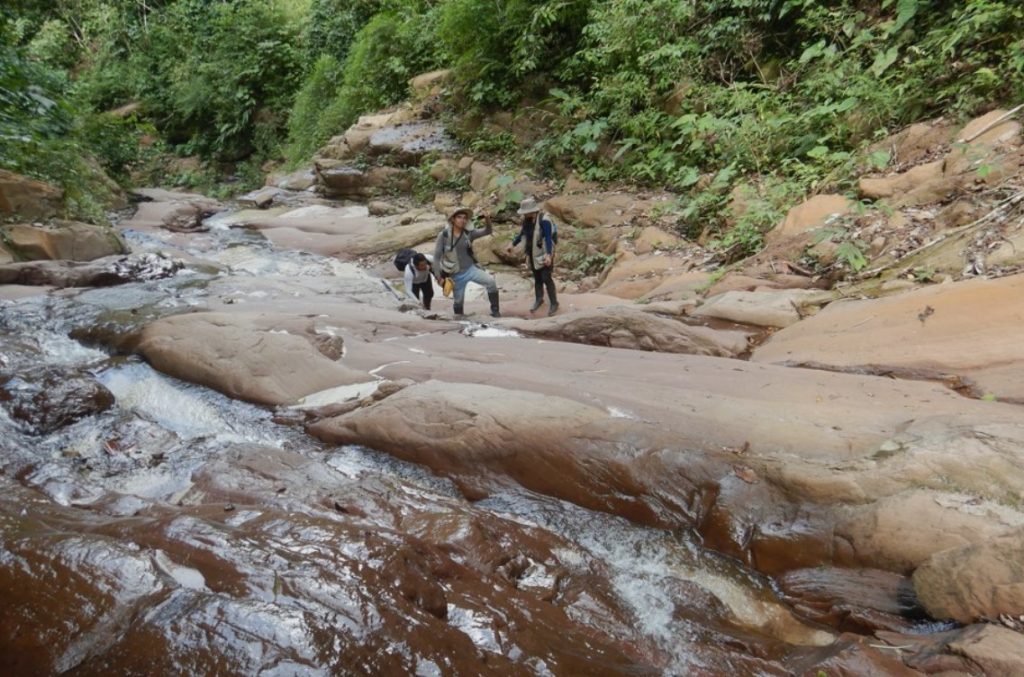
Hannan Metals Ltd. [TSXV: HAN; OTC Pink: HANNF] reported a material expansion of the high-grade gold prospect at its 100%-owned Previsto Central prospect, Peru. Following the previously reported principal channel of 135.2 metres at 1.3 g/t gold, the company made the decision to return to the high-grade core and systematically test the surrounding area perpendicular to the principal channel.
The result has exceeded expectations and defined a continuous high-grade footprint with peak grades of 11.2 g/t Au, channel intervals up to 18.7 metres at 2.1 g/t Au, and panel samples averaging 6.0 g/t Au. Sampling to date has been limited to where outcrops are exposed in the jungle, and all sampled areas represent minimum dimensions and remain open in all directions. Hyperspectral data across both Previsto Central and Mirador Creek indicates the current surface exposure sits at the apex of a preserved alkalic system with vertical scale potential of more than 500 metres.
Key Points: All 68 channel samples and two panel samples returned gold mineralization across the 110 m x 20 m area, with peak grades of 11.2 g/t Au and a continuous mineralized width of 12 metres laterally. The high-grade zone remains open to the east, west and south. Key channel results include sample CH18106 that returned 18.7 metres at 2.1 g/t Au and 9 g/t Ag, including 14.8 metres at 2.5 g/t Au and 10 g/t Ag.
CH17499 returned 18.0 metres at 0.9 g/t Au and 9 g/t Ag, including 4.9 metres at 3.2 g/t Au and 27 g/t Ag.
Panel Sample Grades: Two panel samples averaged 6.0 g/t Au (range 2.25 to 9.8 g/t Au), 34.7 g/t Ag and 19.3 ppm Te, reinforcing the alkalic Au-Ag-Te signature.
Direct Field Evidence of Alkalic Deposit Class: Mapped roscoelite (vanadium mica) with pXRF readings up to 8% V, pervasive adularia and potassium-feldspar alteration across all sampled channels, and a controlling N340-trending fracture system that hosts the highest-grade vanadium and manganese-oxide mineralization.
Visible Gold Identified: Sample 18111 at Previsto Central contained visible gold in a veined intrusive, with the channel sample assaying 0.53 metres at 1.4 g/t Au and 5 g/t Ag.
Mirador Creek: Systematic mapping identified a leakage zone (channel sample 15913: 1.7 g/t Au and 12 g/t Ag) indicative of a steam-heated or sinter zone at the top of a hydrothermal system.
Vertical Extension Potential: Hyperspectral analysis at both prospects identified abundant “water silica” and gibbsite-kaolinite signatures. These mineral assemblages/spectral signatures indicate proximity to a near-surface lithocap, suggesting the potential for mineralization to extend 500 m+ at depth.
Michael Hudson, CEO, stated: “We made a decision to return to where we already had grade, and to test the surrounding area further. The result is well beyond what we expected, every single channel sample is mineralized, with no barren shoulder identified in any direction. The 11.2 g/t Au peak grade and 18.7 metres and 18.0 metres channel widths that remain open confirm that Previsto Central is not a single vein, it is a substantial, coherent body. Combined with the hyperspectral evidence that we are sitting at the very top of a preserved alkalic system with vertical scale potential of 500 m or more, the prospect emerging here is becoming increasingly compelling.”
Following the previously reported principal channel at Previsto Central of 135.2 metres at 1.3 g/t Au, the company faced a choice between continuing to expand the regional footprint or returning to the high-grade core to confirm geometry and scale.
Management elected to return. Field work from two campaigns across Previsto Central and Mirador Creek is reported here. The Previsto Central campaign defined a 110 m x 20 m polygon around the principal channel and completed detailed E-W oriented channel sampling perpendicular to the original N-S intercept (Figure 2). The Mirador Creek campaign (650 m x 540 m polygon work area, 1 km south of Previsto Central) increased sample density across the catchment area while identifying controls on mineralization.
The Previsto Central field campaign delivered a step change in the company’s understanding of system geometry and scale. Recent work focused on a 110 m x 20 m polygon, completing 77.8 m (68 samples) of cumulative channel sampling and 2 panel samples through E-W oriented sampling perpendicular to the previously reported 135.2 metres at 1.3 g/t Au N-S principal channel. Every channel sample returned gold mineralization, with no barren intervals identified within the polygon. The campaign defined a continuous mineralized width of 12 metres and an apparent mineralized corridor of up to 100 m in the NE-SW orientation, with peak grades of 11.2 g/t Au, materially increasing the known high-grade volume of the Previsto Central gold zone. The high-grade zone remains open to the east, south and west.
Hannan interprets the high-grade gold outcrops at Previsto Central as the uppermost erosional levels of an alkalic epithermal system.
Mapping indicates that as elevations increase slightly to the south, east, and west, the grade tenor decreases. This spatial relationship, combined with hyperspectral data showing abundant “water-silica” (indicative of low-temperature, near-surface silica phases), suggests that the current surface exposure sits at the apex of the system. This interpretation is highly significant, as it implies the vast majority of the mineralized vertical column remains preserved at depth.
Key channel intervals included CH18106: 18.7 metres at 2.1 g/t Au, 9 g/t Ag, 218 ppm Cu, 14 ppm Te, including 14.8 metres at 2.5 g/t Au, 10 g/t Ag, 236 ppm Cu and 17 ppm Te. CH17499 returned 18.0 metres at 0.9 g/t Au, 9 g/t Ag, 882 ppm Cu, 10 ppm Te, including 4.9 metres at 3.2 g/t Au, 27 g/t Ag, 705 ppm Cu and 32 ppm Te. CH18124 returned 12.1 metres at 0.5 g/t Au, 7 g/t Ag, 153 ppm Cu and 8 ppm Te.
The southern end of the work area polygon (Channels CH18101 and CH18105) returned lower grades (0.1 to 0.2 g/t Au), interpreted as a higher, more distal erosional level relative to the high-grade core.
Panel samples returned average grades of 6.0 g/t gold, 34.7 g/t silver, 615 ppm copper and 19.3 ppm tellurium.
Mapping at Mirador Creek continues to define a large hydrothermal footprint. 151 channel samples were collected for a cumulative length of 187.6 metres. Hyperspectral analysis confirms the presence of chalcedonic or opalline minerals (water-silica). This signature, combined with elevated arsenic (161.5 ppm) and antimony (3.5 ppm) in high-grade sample 15913 (1.7 g/t Au, 12.3 g/t Ag), reinforces the interpretation of a “sinter zone” representing the uppermost leakage portion of a deeper, larger system. Rock chip and channel samples from the Mirador Creek campaign averaged 0.07 g/t gold, 1 g/t silver, 141 ppm copper and 1 ppm tellurium.
Rock Chips (40 samples) returned 0.05 g/t gold, 1 g/t silver, 488 ppm copper and 1.1 ppm tellurium.
Lithocap Interpretation and Implications: The combination of abundant water-silica (chalcedonic and opalline minerals) and a gibbsite-kaolinite alteration assemblage is diagnostic of a steam-heated lithocap environment. Lithocaps of this type form above the main boiling zones of epithermal deposits and the core of porphyry systems, and are a critical vector in alkalic porphyry-epithermal exploration.
Key implications for the prospect: System Preservation: Near-surface lithocap assemblages indicate the majority of the potential mineralized body is preserved at depth, not lost to erosion.
Target Scale: In analogous alkalic systems, the vertical extent of mineralization can exceed 500 metres.
Vectoring: The transition from water-silica zones at Mirador Creek and the higher elevations of Previsto Central toward the high-grade gold channels provides a clear vector to the higher-energy core of the system for future drill targeting.
Work by the company’s geological consultants has confirmed that the Previsto system displays the hallmark characteristics of an alkalic porphyry-epithermal district, a class of deposit that includes some of the world’s largest and highest-grade gold systems.
Key features include roscoelite-cemented hydrothermal breccias associated with Au-Ag-Te-V-Cu-Mo-Pb-Ba-As, with grades up to 33.1 g/t Au and 120 g/t Ag at Las Helenas.
Fluorite occurring as cement in roscoelite-cemented breccias, a diagnostic feature of alkalic systems.
Massive adularia alteration associated with Au-Ag-Te mineralization.
Pseudoleucite-bearing syenite porphyries, a silica-undersaturated intrusive suite that is globally rare and genetically linked to alkalic gold mineralization.
The geological parallels to Cripple Creek in Colorado, which has produced over 30 million ounces of gold from a similar alkalic igneous setting with roscoelite, adularia, and telluride associations, are direct and compelling. Emperor and Tuvatu in Fiji provide additional alkalic analogues. Previsto is the first system of this type to be recognized in Peru, and the doubling of its footprint with Previsto Far North substantially increases the project’s district-scale potential.
Hannan’s team is actively advancing multiple work fronts to capitalize on this material expansion of Previsto.
Structural Mapping: Detailed mapping and channel sampling of Previsto Central outcrops to further define high grade gold and understand the structural controls of mineralization.
Data integration: Integrating and ground truthing the high-resolution lithostructural interpretation completed by Gavin Daneel.
Mirador Creek Extensions: Further systematic sampling to locate extensions and repetitions of the confirmed high-grade mineralization along strike and in parallel structures.
Belen (DIA Valiente) Drilling Update: Final assays have been received for the follow-up drilling completed at the Sortilegio and Vista Alegre prospects.
Sortilegio (HDDSL002 – 300.05 m): Intercepted a 32-metre zone (from 31 m) of abundant pyrite/oxidized sulphide mineralization with quartz. Results showed individual samples up to 0.5 g/t Au and 0.2% Cu, with associated anomalism of Mo, Te, Bi, and W. This is interpreted as the “roots” of a hydrothermal system due to textural observations and geochemical association.
Sortilegio (HDDSL001 – 426.55 m): Targeted a chargeability high; the anomaly was attributed to abundant primary magnetite in diorites/monzonites.
Vista Alegre (HDDVA004 – 217.25 m): Tested a high-resistivity target; the anomaly was explained by variations in alteration mineralogy and did not intercept significant mineralization.
The 100%-owned Previsto prospect (AMANECER project) is located in central-eastern Peru. The area is characterized by steep topography on the eastern flank of the Central Cordillera with elevations between 800 and 2,000 metres above sea level. The prospect was discovered in 2021 during an extensive greenfields prospecting program initiated by Hannan targeting back-arc porphyry copper-gold systems.
Previsto has rapidly evolved from a greenfields prospect to an emerging alkalic porphyry-epithermal area. At Previsto and Belen, a significant-scale porphyry cluster is present within an area of 25 km by 10 km, with eight porphyry and/or epithermal targets now identified in detail with up to 10 earlier-stage targets awaiting further work. The identification of Previsto Far North further expands this already significant footprint.
The company is executing a multi-year strategy to systematically prospect and drill test its extensive land package in this emerging Miocene-aged, linked porphyry-epithermal mineral belt.
Resource World Magazine Inc. has prepared this editorial for general information purposes only and should not be considered a solicitation to buy or sell securities in the companies discussed herein. The information provided has been derived from sources believed to be reliable but cannot be guaranteed. This editorial does not take into account the readers investment criteria, investment expertise, financial condition, or financial goals of individual recipients and other concerns such as jurisdictional and/or legal restrictions that may exist for certain persons. Recipients should rely on their own due diligence and seek their own professional advice before investing.